6 Practical Battery‑Maintenance Tips For Rider‑Operated Reach Stacker
Frequent‑cycle reach forklifts may suffer rapid battery degradation and reduced runtime. Such issues are not always caused by defective battery hardware; improper charging‑discharging and storage habits also count. Reach stackers bear heavy workload and consume large power. Proper rider‑operated reach stacker battery maintenance cuts repair cost and slows battery aging.
Follow standardized charging procedures.
Use original matched charger for both lead‑acid and lithium‑ion batteries. Never mix different charger models.
For lead‑acid batteries, recharge when remaining capacity reaches 20‑30%, avoid full depletion. Lithium‑ion batteries shall avoid deep discharge; top‑up charging is recommended.
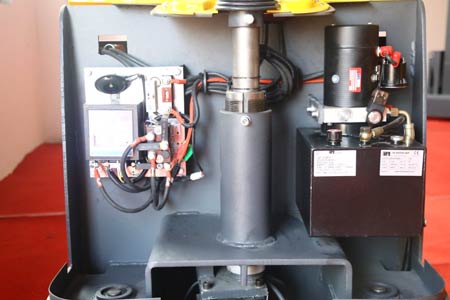
Keep charging area well‑ventilated and away from stored goods. Do not cover the charger during charging to prevent overheating damage to battery cells.
Control ambient temperature during charging. Reach forklifts mostly run in high‑density racking warehouses, and battery performance is sensitive to temperature. Recommended charging temperature ranges from 0‑40℃. Low temperature reduces charging efficiency while high temperature accelerates cell aging. Do not start charging immediately after heavy‑duty shifts; wait for half‑hour cooling to reduce thermal damage. For cold‑storage‑applied units, never charge batteries inside low‑temperature cold rooms.
Inspect battery terminals on regular basis. Check battery terminals in daily inspection. Loose or corroded screws cause unstable power output and fluctuating driving power. Clean terminals routinely. Apply special treatment agent for oxidation and coat protective grease against re‑oxidation. Fasten terminal screws with standard torque; excessive force will crack terminal posts.
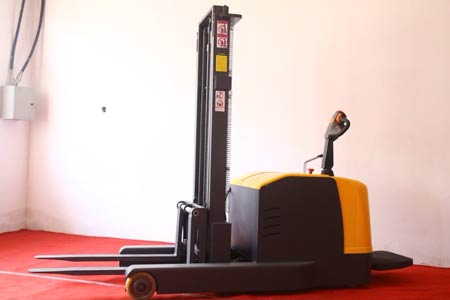
Rules for long‑term idle storage. Do not store batteries at full‑charge or zero‑charge status during equipment shutdown. Lead‑acid batteries are prone to sulfation failure under long‑term under‑charge storage. Long‑term full‑charge storage speeds up cell attenuation for lithium‑ion batteries. Choose dry and ventilated storage site away from moisture and dust. Disconnect main battery switch and perform periodic supplementary charging instead of leaving batteries unattended.
There are obvious performance differences between lithium‑ion and lead‑acid batteries. You may consult our professional team according to working environment and operation frequency of your full‑electric reach forklift.
-
 Reliability Of Newnewton Warehouse Forklifts For Heavy-Duty ShiftsWarehouse forklift reliability relies on industrial parts, reinforced frames and factory durability tests. Proper operation and maintenance reduce unexpected downtime.
Do you like ?0
Read more -
 Forklift Configuration Strategy For Dense Warehousing, Warehouse ForkliftDense warehousing needs matched forklifts besides racks. Reach and trilateral stackers fit different layouts, coordinate aisle, load curve and floor for smooth handling.
Do you like ?0
Read more -
 Full Container Supply For Export Forklifts, Forklift ManufacturerBulk forklift orders for overseas can ship by FCL or LCL. Newnewton FCL offers stable freight, safer packing and mixed models for large purchases.
Do you like ?0
Read more -
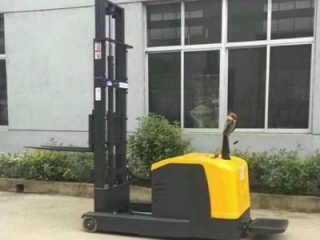 Stand-on Reach Stacker For Narrow Aisle Stacking, Mast Reach StructureStand-on reach stackers feature sliding masts that stay outside racks. They boost storage density in narrow aisles and require flat floors and standard pallets.
Do you like ?0
Read more -
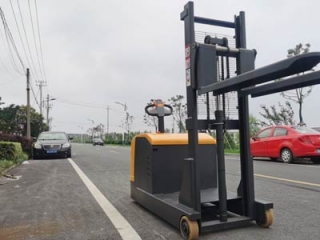 Stand-on Counterbalance Stacker For Various Pallets, Why No Leg RestrictionCounterbalance stackers have no front outriggers, using rear counterweight to avoid pallet interference. They fit various odd pallets yet need wider warehouse aisles.
Do you like ?0
Read more -
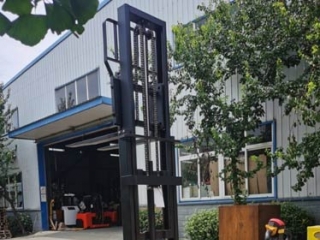 Custom Walk-Behind Counterbalance Stacker | Non-Standard ModificationsStandard walk-behind counterbalance stackers struggle with non-standard pallets and tight aisles. Customize load, lift, forks and structure, share working conditions for safe design.
Do you like ?0
Read more