Reach Electric Forklift Structure | Working Principle of Reach Mast
Reach electric forklift structure and mast working principle are explained in this article. Popular for narrow‑aisle compact warehouses, reach forklifts can help buyers make better procurement decisions and avoid common pitfalls.
As core equipment for narrow‑aisle high‑rack warehouses, the reach forklift picks goods via horizontally extending reach forklift mast, without requiring wide operating aisles and maximizing vertical storage space. Many purchasers and maintenance technicians only focus on load capacity and lifting height, lacking understanding of internal construction, which slows down fault diagnosis. Knowing machine and mast structure brings great benefits for both model selection and daily maintenance.
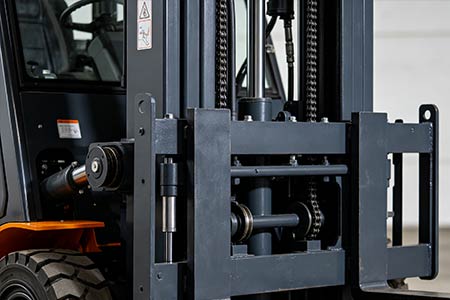
The whole machine consists of four major assemblies: traveling chassis, operation control system, battery power unit and reach lifting mast.
The chassis includes drive wheels, steering mechanism and support outriggers. During operation, outriggers stay in front of racks. The mast extends forward to pick pallets. After retraction, cargo gravity sits between two outriggers to guarantee stability, removing the need for counterweight at rear. The electronic control system outputs signals for travel, reach movement and lifting. Power battery supplies energy for all actions. Among all assemblies, the mast lifting system is the most complicated and high‑wear component.
The reach forklift mast is the key executive part and main difference from other forklift types. High‑lift models mostly adopt triple‑stage mast, composed of outer mast, intermediate mast, inner mast, reach cylinder, lifting cylinder, carriage, forks, guide rollers and lifting chains.
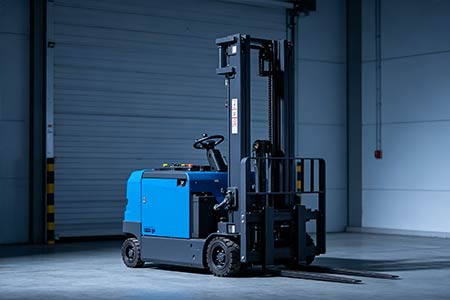
The outer mast is fixed to chassis as base. Reach cylinder pushes the whole inner mast for horizontal forward‑backward movement, so forks extend to pick goods and retract back. Lifting cylinder together with chains drives carriage sliding up and down along mast rails to lift or lower loads. Rollers guide movement between mast stages. Worn rollers will cause shaking and abnormal noise.
Many users confuse reach forklifts with ordinary straddle stackers. For regular straddle stackers, outriggers go underneath pallets and the mast only moves vertically without horizontal reach function. For reach forklifts, outriggers do not enter pallets. The reach electric forklift structure enables mast forward extension for loading and unloading, making it more suitable for dense high‑rack storage.
Feel free to leave messages for more questions about reach forklifts.
-
 Reliability Of Newnewton Warehouse Forklifts For Heavy-Duty ShiftsWarehouse forklift reliability relies on industrial parts, reinforced frames and factory durability tests. Proper operation and maintenance reduce unexpected downtime.
Do you like ?0
Read more -
 Forklift Configuration Strategy For Dense Warehousing, Warehouse ForkliftDense warehousing needs matched forklifts besides racks. Reach and trilateral stackers fit different layouts, coordinate aisle, load curve and floor for smooth handling.
Do you like ?0
Read more -
 Full Container Supply For Export Forklifts, Forklift ManufacturerBulk forklift orders for overseas can ship by FCL or LCL. Newnewton FCL offers stable freight, safer packing and mixed models for large purchases.
Do you like ?0
Read more -
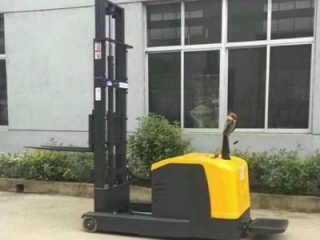 Stand-on Reach Stacker For Narrow Aisle Stacking, Mast Reach StructureStand-on reach stackers feature sliding masts that stay outside racks. They boost storage density in narrow aisles and require flat floors and standard pallets.
Do you like ?0
Read more -
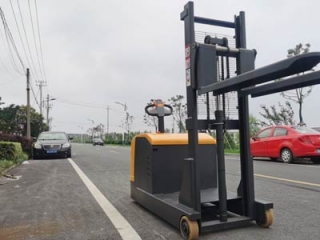 Stand-on Counterbalance Stacker For Various Pallets, Why No Leg RestrictionCounterbalance stackers have no front outriggers, using rear counterweight to avoid pallet interference. They fit various odd pallets yet need wider warehouse aisles.
Do you like ?0
Read more -
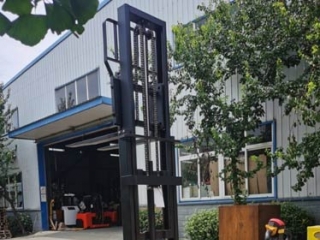 Custom Walk-Behind Counterbalance Stacker | Non-Standard ModificationsStandard walk-behind counterbalance stackers struggle with non-standard pallets and tight aisles. Customize load, lift, forks and structure, share working conditions for safe design.
Do you like ?0
Read more