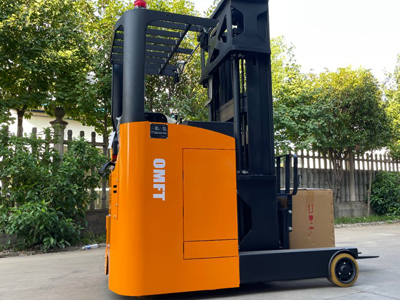
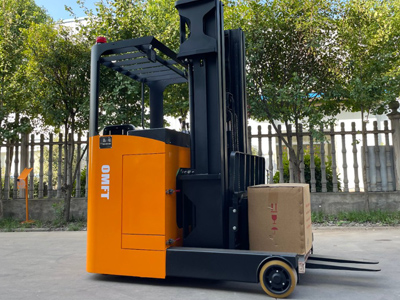
Many warehouses use seated reach truck every day but ignore regular maintenance. They only realize the problem when the machine breaks down, facing high repair costs and huge production losses from downtime. This is especially true for the legless seated reach truck, which often operates in narrow aisles under heavy workloads and is more prone to faults without proper care.
Reach truck maintenance is not as complicated as many people think. By focusing on a few key areas, you can extend the service life of your truck and avoid unnecessary expenses.
Key Component 1: Truck Battery
Many operators keep using the truck until the battery is completely dead, which causes serious damage. For proper use, recharge the battery when it reaches around 25% remaining power. The charging area should be well-ventilated and dry — never charge in direct sunlight or a closed, hot space. Also, check the battery terminals weekly; clean any oxidation and tighten loose connections to prevent unexpected power issues.
Key Component 2: Hydraulic System
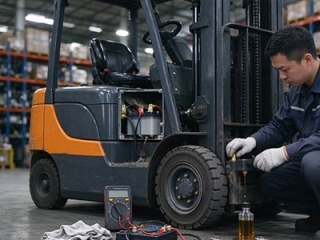
Perform daily inspections to avoid major repairs later. Check the hydraulic hoses and oil tank for leaks or seepage. Replace or repair hoses that are crushed, cracked, or damaged from long-term use. Avoid overloading or rough operation on the mast and hydraulic system, as a single harsh action can cause more damage than months of normal use.
Wear Parts: Steering, Brakes, and Chains
Lubricate and inspect these parts regularly. Since a seated reach truck runs daily with frequent turns, clean debris from tires promptly. Never ignore weak brakes or unusual steering noise — safety always comes first.Check the mast, reach mechanism, and forks for one minute each shift. Look for deformation, looseness, or abnormal noise. Fixing small issues early is much more cost-effective than major repairs.
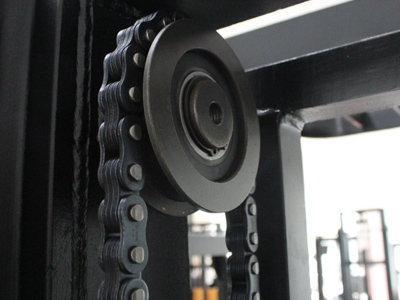
After each use, clean the machine thoroughly, especially the guide rails and chains that can trap dust and debris. A weekly deep clean works better than irregular repairs. In short, reach truck maintenance means frequent inspections, regular cleaning, avoiding full discharge, and no overloading. Following these steps will greatly reduce breakdowns and make your equipment more reliable and easier to operate.
-
 Reliability Of Newnewton Warehouse Forklifts For Heavy-Duty ShiftsWarehouse forklift reliability relies on industrial parts, reinforced frames and factory durability tests. Proper operation and maintenance reduce unexpected downtime.
Do you like ?0
Read more -
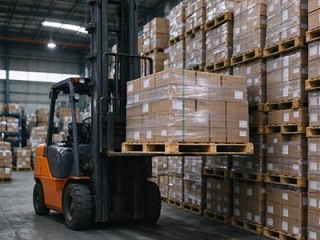 Forklift Configuration Strategy For Dense Warehousing, Warehouse ForkliftDense warehousing needs matched forklifts besides racks. Reach and trilateral stackers fit different layouts, coordinate aisle, load curve and floor for smooth handling.
Do you like ?0
Read more -
 Full Container Supply For Export Forklifts, Forklift ManufacturerBulk forklift orders for overseas can ship by FCL or LCL. Newnewton FCL offers stable freight, safer packing and mixed models for large purchases.
Do you like ?0
Read more -
 Stand-on Reach Stacker For Narrow Aisle Stacking, Mast Reach StructureStand-on reach stackers feature sliding masts that stay outside racks. They boost storage density in narrow aisles and require flat floors and standard pallets.
Do you like ?0
Read more -
 Stand-on Counterbalance Stacker For Various Pallets, Why No Leg RestrictionCounterbalance stackers have no front outriggers, using rear counterweight to avoid pallet interference. They fit various odd pallets yet need wider warehouse aisles.
Do you like ?0
Read more -
 Custom Walk-Behind Counterbalance Stacker | Non-Standard ModificationsStandard walk-behind counterbalance stackers struggle with non-standard pallets and tight aisles. Customize load, lift, forks and structure, share working conditions for safe design.
Do you like ?0
Read more