Daily Power Consumption Calculation for Fully Electric Self-loading Stacker
Small business owners and medium-sized factories adopt fully electric self-loading stackers to replace exhausting manual cargo handling. Before purchasing, calculating daily power expenditure prevents unexpected over-budget operation costs.
Power Calculation Formula
Battery energy (kWh) = Voltage (V) × Capacity (Ah) ÷ 1000 All self-loading stackers adopt 48V lithium batteries with three mainstream specs:
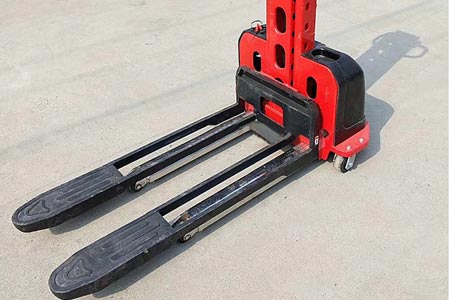
48V40Ah (500kg semi-electric model): 48×40÷1000 = 1.92 kWh
48V60Ah (700kg–1t fully electric bestseller): 48×60÷1000 = 2.88 kWh
48V80Ah (1.2–1.5t heavy-duty model): 48×80÷1000 = 3.84 kWh
Theoretical full-charge capacity ≠ actual daily consumption. Around 10% energy loss comes from wiring resistance, standby power and charge-discharge attenuation. Actual power consumption = Total battery capacity × Daily discharge ratio × 1.1 loss factor
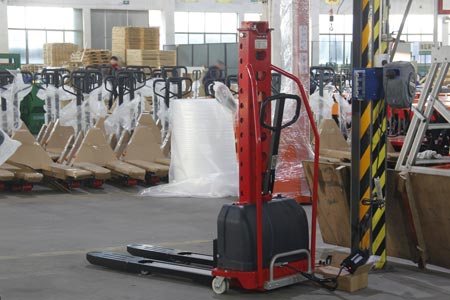
Example: 48V60Ah 1-ton Fully Electric Self-loading Stacker
Total battery energy: 2.88 kWh; 85% fully discharged under all-day frequent heavy unloading Actual consumption = 2.88 × 0.85 × 1.1 ≈ 2.7 kWh per day
Daily Power Breakdown
Climbing up & down truck beds (45%): Highest power draw due to peak motor load under heavy load. 15 daily trips consume ~1.22 kWh
Fork lifting & lowering during loading/unloading (30%): Repeated pallet lifting uses ~0.81 kWh
Short-distance flat ground transit (20%): Low-speed travel consumes ~0.54 kWh
Standby & circuit energy loss (5%): Waiting idle plus battery conversion loss ~0.13 kWh
Power Consumption for Other Models
500kg semi-electric model: No travel motor, power only for lifting & climbing; 1.8–2 kWh daily for frequent unloading
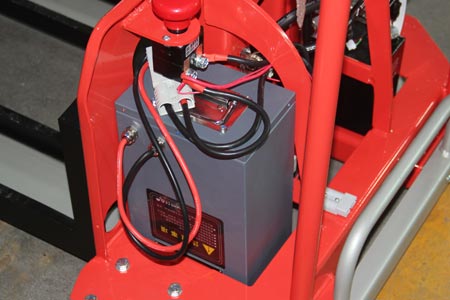
1.5t heavy-duty model: Higher load for climbing and lifting; 3.4–3.8 kWh daily under continuous heavy work
Key Factors That Influence Power Draw
Frequent heavy lifting and repeated truck climbing drastically raise electricity usage
Smooth constant-speed operation, low-fork transit and less idle lifting effectively save power
Original factory lithium batteries feature higher energy conversion efficiency and lower power consumption than cheap refitted third-party batteries
Proper daily maintenance also cuts energy loss and long-term operating costs. Check our previous articles for detailed maintenance guides!
-
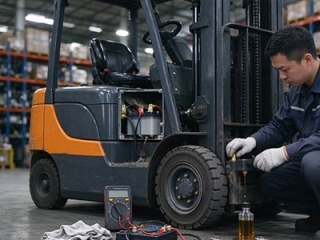 Reliability Of Newnewton Warehouse Forklifts For Heavy-Duty ShiftsWarehouse forklift reliability relies on industrial parts, reinforced frames and factory durability tests. Proper operation and maintenance reduce unexpected downtime.
Do you like ?0
Read more -
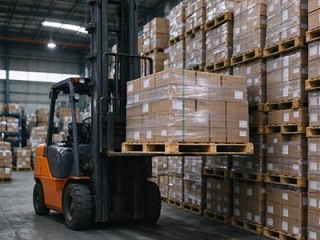 Forklift Configuration Strategy For Dense Warehousing, Warehouse ForkliftDense warehousing needs matched forklifts besides racks. Reach and trilateral stackers fit different layouts, coordinate aisle, load curve and floor for smooth handling.
Do you like ?0
Read more -
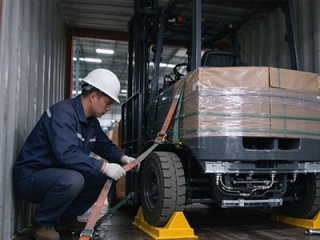 Full Container Supply For Export Forklifts, Forklift ManufacturerBulk forklift orders for overseas can ship by FCL or LCL. Newnewton FCL offers stable freight, safer packing and mixed models for large purchases.
Do you like ?0
Read more -
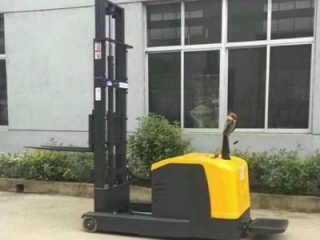 Stand-on Reach Stacker For Narrow Aisle Stacking, Mast Reach StructureStand-on reach stackers feature sliding masts that stay outside racks. They boost storage density in narrow aisles and require flat floors and standard pallets.
Do you like ?0
Read more -
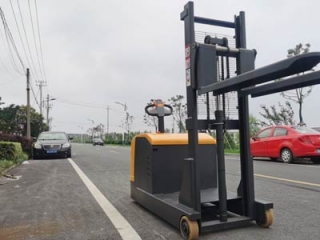 Stand-on Counterbalance Stacker For Various Pallets, Why No Leg RestrictionCounterbalance stackers have no front outriggers, using rear counterweight to avoid pallet interference. They fit various odd pallets yet need wider warehouse aisles.
Do you like ?0
Read more -
 Custom Walk-Behind Counterbalance Stacker | Non-Standard ModificationsStandard walk-behind counterbalance stackers struggle with non-standard pallets and tight aisles. Customize load, lift, forks and structure, share working conditions for safe design.
Do you like ?0
Read more