How Much Is Fully Electric Self-loading Stacker? 3 Price Tiers
Many business owners struggle with cargo loading and unloading. Today we introduce the practical self-loading stacker and answer two core questions: How Much Is A Fully Electric Self-loading Stacker and whether it is cost-effective. Factory prices are transparent for easy comparison, detailed pricing as below.
Exchange rate: 1 CNY ≈ 0.14 USD
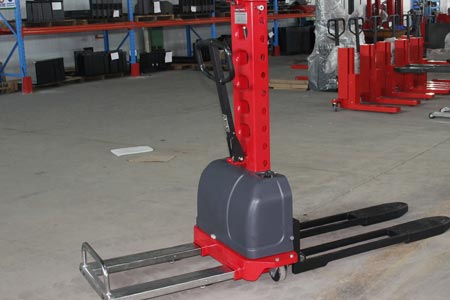
Tier 1: 500kg Semi-electric Basic Model
Factory price: $686 ~ $812; extra $112 for lithium battery upgrade. Electric lifting + manual pushing, lightweight body that fits truck tailgate. Ideal for intermittent unloading of cartons and small light parts. Equipped with lead-acid battery, max lifting height 1.3m, simple hydraulic system with cheap spare parts. Shortcoming: Manual pushing causes fatigue under frequent heavy loads. Best for individual vendors with less than 5 unloading cycles per day and tight budget.
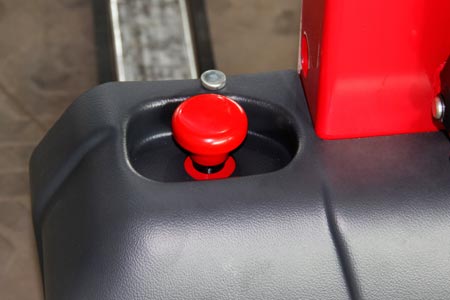
Tier 2: 700kg–1 Ton Popular Fully Electric Self-loading Stacker
Bare machine factory direct price: $1,204 ~ $1,512. Bestseller for logistics fleets and supermarket distribution centers. Full electric drive for traveling & lifting, self-climbing structure to mount trucks without crane or dock leveler. Standard large lithium battery supports all-day multi-vehicle loading work. Thick integrated mast and double sealed hydraulic cylinder, 1.5m lifting height with stable load handling. Built-in overload protection and anti-collision guards; core motors and controllers enjoy 1-year factory warranty. Top cost-performance option for most freight companies.
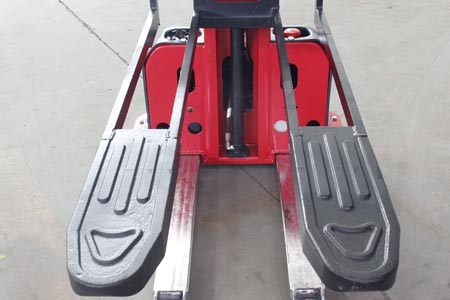
Tier 3: 1.2–1.5 Ton Heavy-duty Fully Electric Model
Factory price: $1,792 ~ $2,044. Designed for construction materials, hardware and full heavy pallet cargo. Reinforced thick frame and forks, anti-slip rough-terrain wheels adapt to bumpy construction and rural roads, max lifting height 1.7m. High-power climbing motor plus intelligent battery charge & discharge protection to extend battery service life. Upgraded materials and power system make it around 20% more expensive than 1-ton standard models, suitable for daily high-frequency heavy unloading for construction transporters and large wholesalers.
Selection Guide Based on Price of Portable Truck-mounted Forklift
Individual light unloading: Pick 500kg semi-electric model starting from $686
Regular logistics delivery: Choose 1-ton fully electric self-loading stacker under $1,512
Heavy construction cargo transport: Go for 1.5-ton heavy-duty model over $1,792
-
 Reliability Of Newnewton Warehouse Forklifts For Heavy-Duty ShiftsWarehouse forklift reliability relies on industrial parts, reinforced frames and factory durability tests. Proper operation and maintenance reduce unexpected downtime.
Do you like ?0
Read more -
 Forklift Configuration Strategy For Dense Warehousing, Warehouse ForkliftDense warehousing needs matched forklifts besides racks. Reach and trilateral stackers fit different layouts, coordinate aisle, load curve and floor for smooth handling.
Do you like ?0
Read more -
 Full Container Supply For Export Forklifts, Forklift ManufacturerBulk forklift orders for overseas can ship by FCL or LCL. Newnewton FCL offers stable freight, safer packing and mixed models for large purchases.
Do you like ?0
Read more -
 Stand-on Reach Stacker For Narrow Aisle Stacking, Mast Reach StructureStand-on reach stackers feature sliding masts that stay outside racks. They boost storage density in narrow aisles and require flat floors and standard pallets.
Do you like ?0
Read more -
 Stand-on Counterbalance Stacker For Various Pallets, Why No Leg RestrictionCounterbalance stackers have no front outriggers, using rear counterweight to avoid pallet interference. They fit various odd pallets yet need wider warehouse aisles.
Do you like ?0
Read more -
 Custom Walk-Behind Counterbalance Stacker | Non-Standard ModificationsStandard walk-behind counterbalance stackers struggle with non-standard pallets and tight aisles. Customize load, lift, forks and structure, share working conditions for safe design.
Do you like ?0
Read more