
Do Counterbalance Stackers Need Loading Ramps? Legless Walk-behind Models
Many small factories and warehouses wonder: Conventional reach stackers rely on loading ramps, so Do Counterbalance Stackers Require Loading Ramps? The answer is no. This brings huge flexibility for cargo handling with zero terrain restrictions.
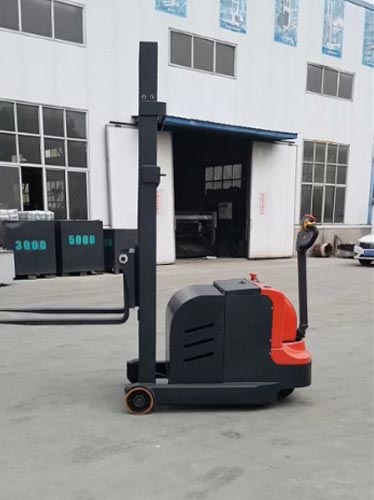
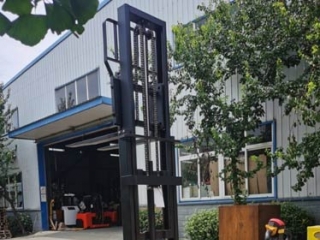
Standard leg-equipped stackers insert support legs under pallets. Height gaps between ground and truck beds easily jam the legs, making loading ramps essential for level operation. However, the Walk-behind Counterbalance Stacker features a fully legless design. A cast iron counterweight at the rear offsets front fork load. With no protruding legs underneath, it operates freely regardless of height differences.
It smoothly moves on flat ground, inside truck containers and over simple slopes. Warehouses without standard loading ramps can finish full truck loading/unloading independently. Two core ramp-free working scenarios:
Flat warehouse stacking: Compact walk-behind body passes through 1.8m narrow aisles for multi-level rack storage. Stable counterweight prevents rollover when lifting high loads.
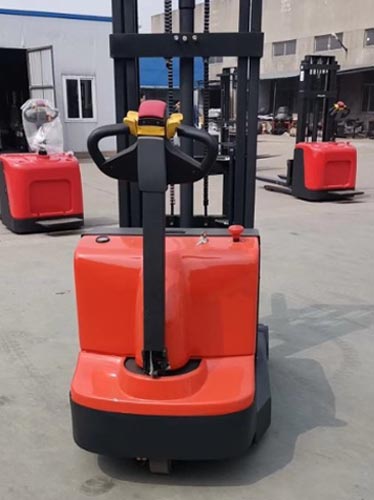
Ground-level truck unloading: Drive directly to truck tail and insert forks into pallets. One operator completes all unloading and warehousing steps without ramps. Factories skip costly civil engineering for ramp construction and cut site renovation investment drastically.
The Legless Electric Stacker also works perfectly on sites with existing loading ramps. Ramps only deliver smoother handling and higher efficiency for bulk long-distance cargo transfer as optional accessories, not mandatory equipment. Compared with reach and straddle stackers, it has minimal infrastructure requirements. It is the top stacking solution for old workshops, street retail stores and temporary storage areas where ramps cannot be built.
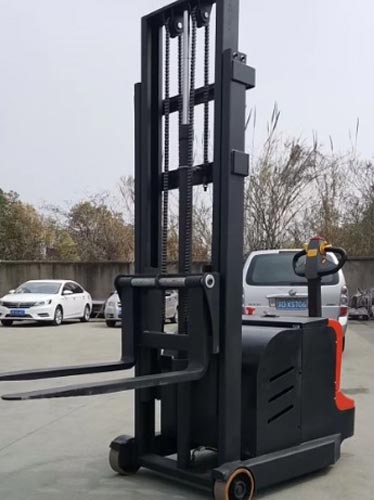
Standard load capacities: 1t & 1.5t, lifting height range: 1.6–3.5m. Full electric travel and lifting with an all-in-one control handle integrating emergency stop, speed adjustment and lifting buttons; new operators master operation quickly without training. Precision-calculated counterweight maintains vehicle balance even at maximum lifting height under full load. Built-in overload relief valve and anti-slip drive wheels avoid slipping and tipping on uneven floors.
Contact us anytime for specifications or further questions!
-
 Reliability Of Newnewton Warehouse Forklifts For Heavy-Duty ShiftsWarehouse forklift reliability relies on industrial parts, reinforced frames and factory durability tests. Proper operation and maintenance reduce unexpected downtime.
Do you like ?0
Read more -
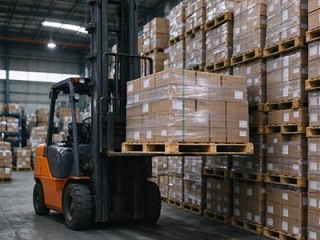 Forklift Configuration Strategy For Dense Warehousing, Warehouse ForkliftDense warehousing needs matched forklifts besides racks. Reach and trilateral stackers fit different layouts, coordinate aisle, load curve and floor for smooth handling.
Do you like ?0
Read more -
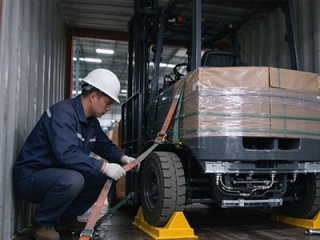 Full Container Supply For Export Forklifts, Forklift ManufacturerBulk forklift orders for overseas can ship by FCL or LCL. Newnewton FCL offers stable freight, safer packing and mixed models for large purchases.
Do you like ?0
Read more -
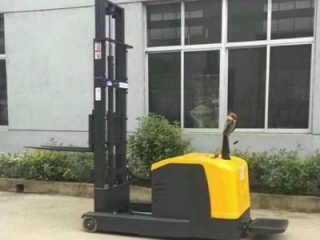 Stand-on Reach Stacker For Narrow Aisle Stacking, Mast Reach StructureStand-on reach stackers feature sliding masts that stay outside racks. They boost storage density in narrow aisles and require flat floors and standard pallets.
Do you like ?0
Read more -
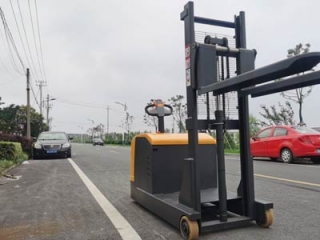 Stand-on Counterbalance Stacker For Various Pallets, Why No Leg RestrictionCounterbalance stackers have no front outriggers, using rear counterweight to avoid pallet interference. They fit various odd pallets yet need wider warehouse aisles.
Do you like ?0
Read more -
 Custom Walk-Behind Counterbalance Stacker | Non-Standard ModificationsStandard walk-behind counterbalance stackers struggle with non-standard pallets and tight aisles. Customize load, lift, forks and structure, share working conditions for safe design.
Do you like ?0
Read more








