3 Ton diesel forklifts are mainly used for heavy and oversized cargo transport. Without standardized safe driving operations, heavy-load accidents often lead to equipment damage, cargo loss and personal injury, resulting in huge unnecessary losses. Below is a full set of Safety Operation Rules For Heavy Load Forklift to guide standard operation, boost efficiency and guarantee onsite safety.
1. Pre-shift Heavy-load Vehicle Inspection
Complete full vehicle inspection before heavy-duty handling to avoid operation with faulty equipment:
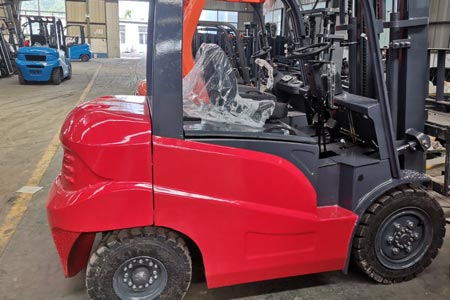
Check tire pressure and solid tires for cracks; insufficient tire pressure causes easy skidding under heavy weight.
Test service brake and handbrake; huge inertia of heavy loads leads to high risk of brake failure.
Inspect hydraulic cylinders and hoses for oil leakage, ensure sufficient lubrication for mast chains.
Confirm rated load capacity is 3 tons, never overload. Check intact overhead guard and safety belt. Only certified operators are allowed to drive.
2. Basic Loading Safety Requirements
Place cargo in the center of pallet, fully insert both forks under the pallet. Never single-fork lifting or eccentric loading, which will break vehicle balance.
Tilt mast backward after lifting goods, keep forks 10-20cm off ground. Do not travel long distance with raised forks, as high gravity center greatly increases rollover risk.
If oversized cargo blocks forward vision, drive backward at low speed all the way or assign a ground guide. No staff are allowed to stand within 1m under forks or around cargo.
3. Site Speed & Operation Rules for 3 Ton Diesel Forklift
Speed limit by zones: Max 5km/h on main factory roads for heavy loads; reduce to 3km/h inside warehouses, corners and crowded areas. Cut speed in half on rainy slippery ground.
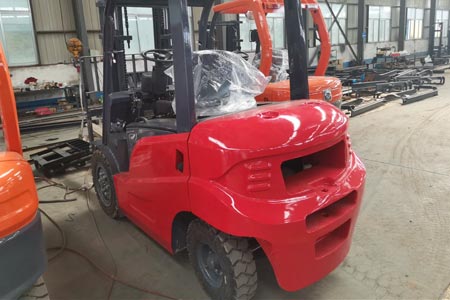
Accelerate gently, no sudden acceleration, emergency braking or sharp steering in place. Slow down in advance and turn at small angles; high-speed sharp turns are forbidden under heavy load.
Keep to the right during travel, reserve safe distance from racks, walls and pedestrians; do not cut through crowded walkways.
4. Special Rules for Ramps & Uneven Ground
Drive uphill slowly with cargo facing forward; no gear shift, stop or U-turn halfway.
When going downhill, keep cargo forward and control speed by engine resistance. Neutral coasting is strictly prohibited to prevent overheated brake failure. Do not turn or load/unload sideways on slopes.
Slow down in advance when passing pits, thresholds and gravel roads to reduce impact on chassis and tires. Reduce load weight on extremely rough ground instead of forcing full-load transit.
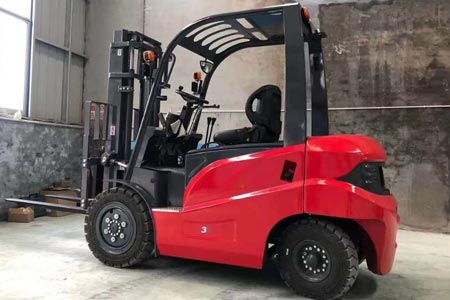
5. Rules for Carrying Passengers, Parking & Emergencies
No passengers are allowed on forks, vehicle body or overhead guard; never lift staff with forks for high-altitude work.
Lower forks completely and pull handbrake tightly for temporary stop. Chock wheels with wedge blocks when parking on slopes to prevent sliding; do not park with suspended cargo for long periods.
Pull over steadily, turn off engine and place warning signs before maintenance if breakdown occurs on the way; do not stay on main passageways.
Follow all above safety rules for heavy-load diesel forklift operation to minimize onsite risks. Feel free to contact us for more technical or safety inquiries.
-
 Reliability Of Newnewton Warehouse Forklifts For Heavy-Duty ShiftsWarehouse forklift reliability relies on industrial parts, reinforced frames and factory durability tests. Proper operation and maintenance reduce unexpected downtime.
Do you like ?0
Read more -
 Forklift Configuration Strategy For Dense Warehousing, Warehouse ForkliftDense warehousing needs matched forklifts besides racks. Reach and trilateral stackers fit different layouts, coordinate aisle, load curve and floor for smooth handling.
Do you like ?0
Read more -
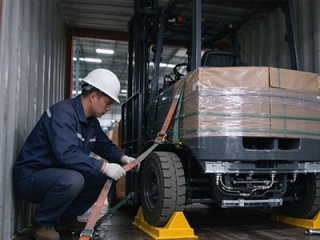 Full Container Supply For Export Forklifts, Forklift ManufacturerBulk forklift orders for overseas can ship by FCL or LCL. Newnewton FCL offers stable freight, safer packing and mixed models for large purchases.
Do you like ?0
Read more -
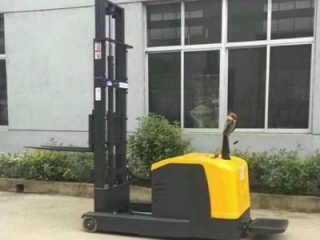 Stand-on Reach Stacker For Narrow Aisle Stacking, Mast Reach StructureStand-on reach stackers feature sliding masts that stay outside racks. They boost storage density in narrow aisles and require flat floors and standard pallets.
Do you like ?0
Read more -
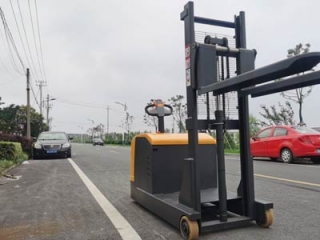 Stand-on Counterbalance Stacker For Various Pallets, Why No Leg RestrictionCounterbalance stackers have no front outriggers, using rear counterweight to avoid pallet interference. They fit various odd pallets yet need wider warehouse aisles.
Do you like ?0
Read more -
 Custom Walk-Behind Counterbalance Stacker | Non-Standard ModificationsStandard walk-behind counterbalance stackers struggle with non-standard pallets and tight aisles. Customize load, lift, forks and structure, share working conditions for safe design.
Do you like ?0
Read more