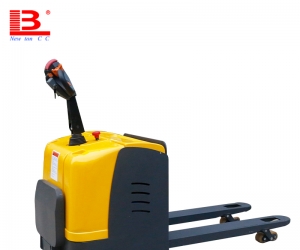
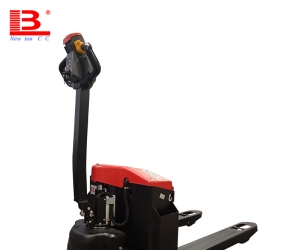
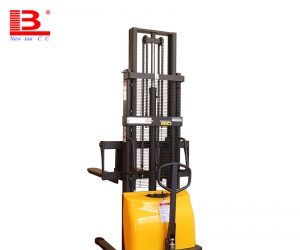
Electric stacker is a very common storage and logistics equipment, which is mainly used for stacking, loading and unloading of goods and short distance transportation, greatly improving work efficiency, safety and environmental protection. Electric stacker can be divided into fully electric stacker and semi electric stacker. Many enterprises may have questions. They are all electric driven devices with similar functions, what are the differences between them? What is a semi electric stacker? Today, the electric stacker manufacturer will introduce the semi electric stacker.
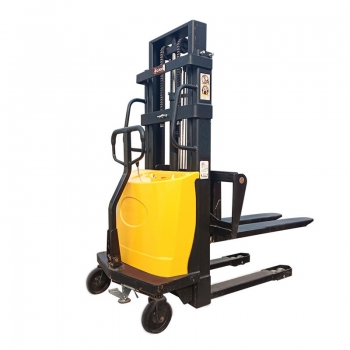
In terms of function, the semi electric stacker has the electric lifting function, but the walking requires manpower. The stacker is suitable for short distance transportation with low intensity. It is not suitable for lifting too high. Generally, it can reach about 4.5 meters. In terms of load, the electric stacker manufacturer suggests that the load of goods when lifted to 4.5m should not exceed 300-400kg. In particular, we should consider the model of semi electric stacker.
In terms of internal structure, the semi electric stacker also has some characteristics. The overall design of the semi electric stacker mainly considers the use cost of the enterprise. Although the all electric stacker is more time-saving and labor-saving, its price is also much higher, which is not suitable for enterprises that put low cost first. If the transportation distance is not long, it is mainly used for stacking goods. The electric stacker manufacturer recommends that one traveling motor be reduced and the lifting motor be retained when customizing the stacker. When the traveling motor is reduced, there is no doubt that the configuration requirements for the battery will be reduced, and the use cost of the battery will also be reduced.
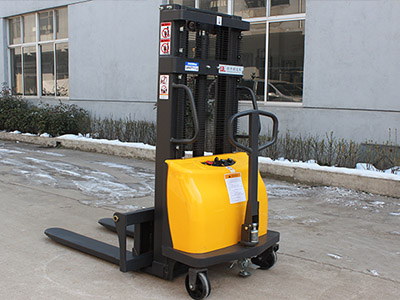
At present, there are low-cost semi electric stackers on the market, which belong to the low configuration version of ordinary semi electric stacker. This kind of stacker is electric when it rises and manual when it falls. Some friends may ask why it is also called semi electric stacker? Isn't it one less function than the semi electric stacker? The electric stacker manufacturer told us that the electric descent and manual descent are literally one electric and one manual, but there is no big difference in use. They are both used for stacking, loading and unloading and short distance transportation of goods. Although it will cost more manpower and reduce work efficiency, many enterprises still choose this semi electric stacker.
-
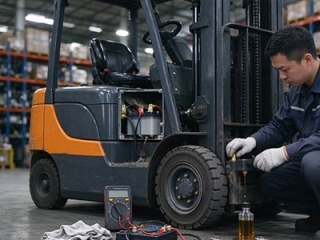 Reliability Of Newnewton Warehouse Forklifts For Heavy-Duty ShiftsWarehouse forklift reliability relies on industrial parts, reinforced frames and factory durability tests. Proper operation and maintenance reduce unexpected downtime.
Do you like ?0
Read more -
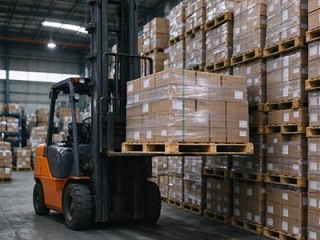 Forklift Configuration Strategy For Dense Warehousing, Warehouse ForkliftDense warehousing needs matched forklifts besides racks. Reach and trilateral stackers fit different layouts, coordinate aisle, load curve and floor for smooth handling.
Do you like ?0
Read more -
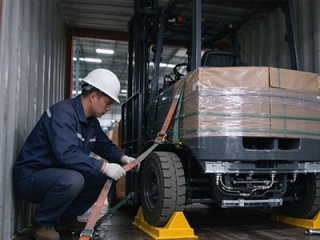 Full Container Supply For Export Forklifts, Forklift ManufacturerBulk forklift orders for overseas can ship by FCL or LCL. Newnewton FCL offers stable freight, safer packing and mixed models for large purchases.
Do you like ?0
Read more -
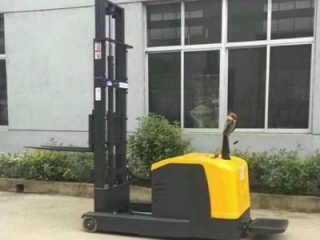 Stand-on Reach Stacker For Narrow Aisle Stacking, Mast Reach StructureStand-on reach stackers feature sliding masts that stay outside racks. They boost storage density in narrow aisles and require flat floors and standard pallets.
Do you like ?0
Read more -
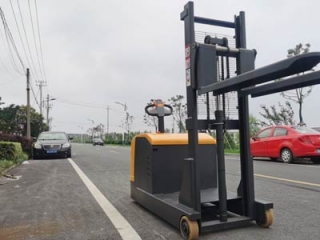 Stand-on Counterbalance Stacker For Various Pallets, Why No Leg RestrictionCounterbalance stackers have no front outriggers, using rear counterweight to avoid pallet interference. They fit various odd pallets yet need wider warehouse aisles.
Do you like ?0
Read more -
 Custom Walk-Behind Counterbalance Stacker | Non-Standard ModificationsStandard walk-behind counterbalance stackers struggle with non-standard pallets and tight aisles. Customize load, lift, forks and structure, share working conditions for safe design.
Do you like ?0
Read more