
Charging & Storage Taboos for Lithium-ion Double Pallet Electric Truck
Lithium-powered double pallet electric trucks constantly carry two pallets of cargo, which generates higher discharge current. The working environment and charging habits directly affect lithium battery service life. Lithium batteries have many usage restrictions. Improper operation will accelerate cell degradation and even bring potential safety risks. Below are the taboos you need to avoid during charging and storage.
Taboos during charging Do not wait until the battery is completely drained before charging. Deep discharge damages lithium cells, and frequent full depletion will greatly reduce battery cycle life. It is recommended to charge when the remaining power stays at 20%-30% after work. Avoid leaving the battery fully charged for a long time.
Never use non-original chargers. Generic chargers have unstable voltage and current control, which may cause overcharging and battery overheating.
Do not charge under direct sunlight, in high-temperature warehouses, humid or dusty areas.

If the battery case overheats or bulges during charging, cut off power immediately and stop operation. Do not continue charging.
Do not cover the battery while charging to guarantee heat dissipation. Running the truck while charging is strictly forbidden.
Taboos during storage Do not store the battery at full charge for a long period. If the equipment will be out of service for a while, adjust the state of charge to 40%-60% before storage. Long-term storage at full power speeds up cell aging.
Avoid long-term storage in extremely low or high-temperature environments. The recommended storage temperature ranges from 5℃ to 25℃. Open yards, cold storage rooms and hot workshops are not suitable for long-term lithium battery storage.

Do not leave the battery unattended during storage. Check the power level every month and top up the battery when power is low to prevent deep discharge. Keep the storage area away from oil stains and corrosive materials to avoid corrosion of battery terminals.
Battery usage taboos under heavy-load operation Double pallet trucks work under heavy-duty conditions. Do not drive continuously at full load for a long time. Continuous high-current discharge heats up the battery and accelerates degradation. Avoid frequent sudden starts and stops during travel to reduce instantaneous high current impact on the battery.
Do not strike or squeeze the battery pack. Never pry the battery housing during transportation or maintenance, to prevent internal cell damage. Stop using the battery right away if the shell is cracked or leaking, and contact professional factory staff for handling.
These battery maintenance methods for double pallet truck are clear. Standard charging and storage habits can extend lithium battery service life, cut battery replacement cost and ensure warehouse operation safety. Hope this guide brings help to you.
-
 Reliability Of Newnewton Warehouse Forklifts For Heavy-Duty ShiftsWarehouse forklift reliability relies on industrial parts, reinforced frames and factory durability tests. Proper operation and maintenance reduce unexpected downtime.
Do you like ?0
Read more -
 Forklift Configuration Strategy For Dense Warehousing, Warehouse ForkliftDense warehousing needs matched forklifts besides racks. Reach and trilateral stackers fit different layouts, coordinate aisle, load curve and floor for smooth handling.
Do you like ?0
Read more -
 Full Container Supply For Export Forklifts, Forklift ManufacturerBulk forklift orders for overseas can ship by FCL or LCL. Newnewton FCL offers stable freight, safer packing and mixed models for large purchases.
Do you like ?0
Read more -
 Stand-on Reach Stacker For Narrow Aisle Stacking, Mast Reach StructureStand-on reach stackers feature sliding masts that stay outside racks. They boost storage density in narrow aisles and require flat floors and standard pallets.
Do you like ?0
Read more -
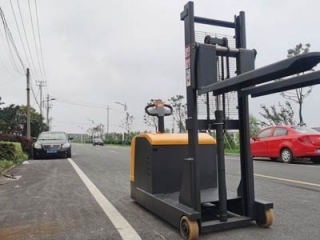 Stand-on Counterbalance Stacker For Various Pallets, Why No Leg RestrictionCounterbalance stackers have no front outriggers, using rear counterweight to avoid pallet interference. They fit various odd pallets yet need wider warehouse aisles.
Do you like ?0
Read more -
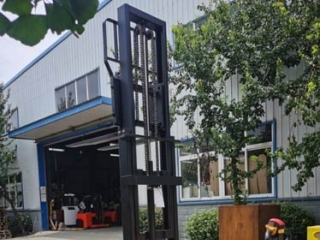 Custom Walk-Behind Counterbalance Stacker | Non-Standard ModificationsStandard walk-behind counterbalance stackers struggle with non-standard pallets and tight aisles. Customize load, lift, forks and structure, share working conditions for safe design.
Do you like ?0
Read more








