
Portable Semi-electric Stacker, Pros and Cons of Semi-electric Stacker
Semi-electric stacker is widely used light stacking equipment for small factories, store warehouses and e-commerce parcel storage. It adopts manual moving and electric lifting design, featuring light structure and simple operation. It fits light and intermittent stacking scenarios, and becomes the preferred stacking equipment for enterprises with limited budget. Now let's find out what are the advantages and disadvantages of semi-electric stacker.
Core advantages The whole machine is light and flexible as a portable semi-electric stacker. With compact body and small turning radius, it can easily work in narrow aisles and small warehouses. It takes little storage space when idle and easy to store. It saves labor and improves efficiency. The electric lifting function removes manual pumping work for cargo lifting, greatly reducing physical effort and bringing higher working efficiency compared with fully manual stackers. It has outstanding cost performance.
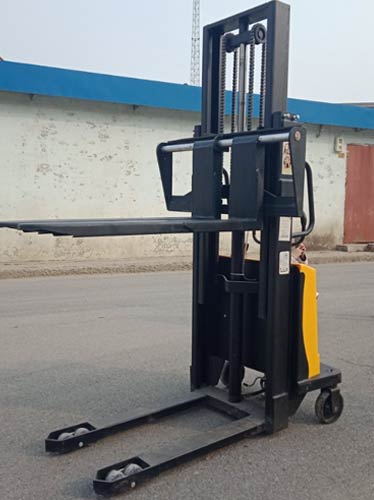
The purchase price is much lower than fully electric stackers, which helps small-scale warehouses cut costs. It has low failure rate and simple maintenance. The simple structure contains fewer hydraulic and electrical parts. Daily maintenance is easy and the later maintenance cost is very low.
However, portable semi-electric stacker also has obvious drawbacks. It relies on manual pushing and pulling for travelling. It is labor-intensive to move under heavy load, and not suitable for high-frequency and long-distance handling work. Its working capacity is limited. The common rated load is 1 ton and 1.5 ton with restricted lifting height.
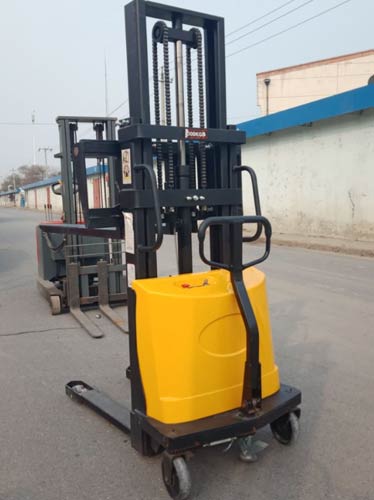
It cannot meet high-level, heavy-load and mass stacking requirements. The battery performance is average. It is equipped with small-capacity battery as standard, requiring frequent recharging under continuous heavy work, so it cannot support all-day continuous operation. It has high requirements on ground condition. Pushing resistance increases on bumpy and rough ground, which affects operation smoothness. It works better on flat indoor floors.
In general, portable semi-electric stacker is suitable for light-load, low-frequency and small-space warehousing. It is cost-effective and easy to operate. It is not recommended for heavy-load, high-frequency and high-density high rack storage. Enterprises can select the proper model according to cargo weight, stacking height and working intensity. Feel free to contact us, we provide free warehouse handling solutions.
-
 Maintenance Notes for Double Pallet Truck Under Heavy Warehouse LoadsOperators often ignore abnormal motor noise of double pallet trucks during rush orders. Continuous operation burns motors. Timely maintenance prevents failures.
Do you like ?0
Read more -
 How to Get Accurate Quotations for Stand-on Counterbalance StackerStand-on counterbalance stackers rely on rear weight for stability and cost more. Battery, load, lift height and custom options affect final quotations.
Do you like ?0
Read more -
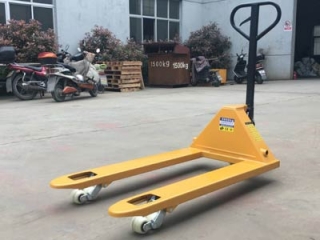 Manual Stacker Vs Pallet Jack: Key Operational Function DifferencesNew buyers confuse manual pallet trucks and manual stackers. They differ in lifting function. Pallet trucks for transfer, stackers for racking to avoid risks.
Do you like ?0
Read more -
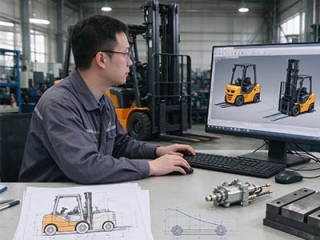 Custom Forklift Dimensions for Export to Fit Narrow Warehouse AislesForklift export faces size risks. Overseas orders may fail door, container or aisle fit. Customization needs balance of gravity, load and target market certifications.
Do you like ?0
Read more -
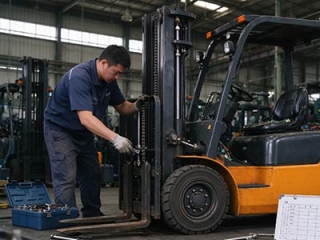 Forklift Safety Management Guide Based on Special Equipment SpecificationsForklifts are special equipment. Follow TSG 81 with training, records, inspection and on-site control to prevent accidents and penalties.
Do you like ?0
Read more -
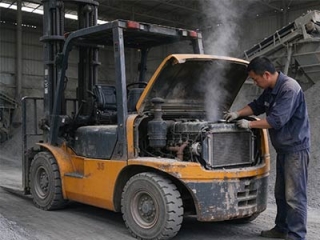 Heavy-Duty Diesel Forklift High Temperature Troubleshooting Guide3.5t diesel forklifts often overheat when handling sand and stone. Inspect cooling system step by step: radiator, belt, shroud, thermostat and water pump.
Do you like ?0
Read more








