
Get the Aisle Right: 3 Key Dimensions for Narrow Aisle Semi-Electric Stacker
Many warehouses face tight aisle space after rack installation and plan to buy narrow aisle semi-electric stacker. Buyers often mix up straight passage width, right-angle stacking width and outrigger width. Consequently, the truck can enter the aisle but cannot turn to pick pallets. Clarify these three core aisle parameters to reduce mistakes in rack layout and equipment selection.
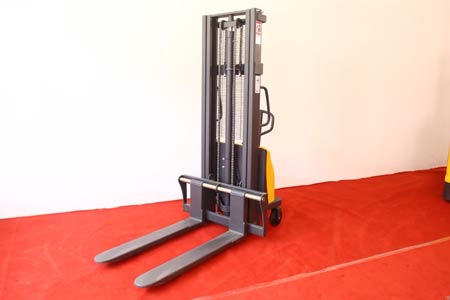
Right-angle stacking aisle width Ast This is the most vital indicator. It stands for the minimum clear space required for the truck with a standard pallet to complete 90-degree turning and stacking. For popular 1-ton semi-electric stackers paired with 1200mm pallets, Ast normally ranges from 2100mm to 2300mm. Do not use the theoretical minimum value directly. Reserve an extra 100–150mm for rack protectors, overhanging goods and operation tolerance for smooth handling.
Outrigger overall width Most semi-electric stackers come with front outriggers. The inner space between outriggers decides the minimum ground clearance of compatible pallets. If the outrigger span is too narrow, outriggers will hit pallets with low bottom cross beams and fail to load. Narrow aisle versions optimize outrigger layout to keep the overall body slim while fitting standard euro and Chinese pallets. Always check pallet bottom clearance before ordering.
Main body width for straight travel Straight travel only needs space for the truck to pass without turning, so it requires far less space than stacking aisles. The body width is usually around 800mm, and a 1100mm straight aisle is enough for passing. This width is only for transit and cannot support stacking, which is a common misunderstanding among buyers.
Here is a real case. An accessory warehouse only focused on the slim body and set aisle width at 2100mm without extra tolerance. Goods slightly overhanging pallets kept hitting racks during stacking. Stable operation was achieved only after rules were set to keep goods within pallet edges.
The semi-electric stacker features electric lifting and manual pushing. It balances low cost and high stacking performance and suits small warehouses with moderate inbound and outbound volume. Ask suppliers for official Ast data and calculate together with pallet size and rack type to maximize storage density of narrow aisles.
-
 Get the Aisle Right: 3 Key Dimensions for Narrow Aisle Semi-Electric StackerFor narrow-aisle semi-electric stackers, distinguish travel width, Ast stacking width and leg width. Reserve space to avoid turning failure after delivery.
Do you like ?0
Read more -
 Tight Budget for Stacking: Newnewton Manual Hydraulic Stacker for WarehouseManual hydraulic stackers suit low-budget small warehouses for occasional stacking. No charging required, easy to operate for sporadic restocking.
Do you like ?0
Read more -
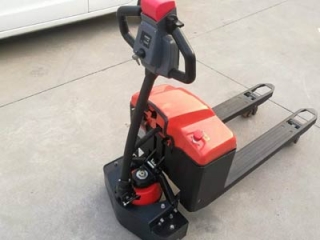 Avoid Wrong Selection: 4 Key Tips for Walkie Full Electric Pallet TruckCompare more than load and price for walkie pallet trucks. Check load margin, fork, battery and wheels, plus supplier qualifications and after-sales support.
Do you like ?0
Read more -
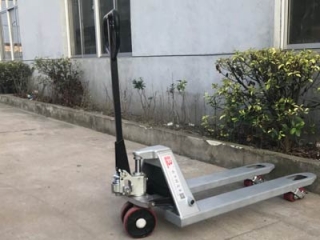 Cut Repair Costs: Must-Check Items for Manual Hydraulic Pallet TruckFrequent failures of manual pallet trucks stem from poor inspections. Check hydraulics, wheels and frames before shifts to fix jamming, weak lifting and leakage early.
Do you like ?0
Read more -
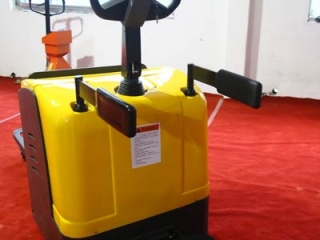 Guardrail Stand-on Full Electric Pallet Truck | Key Safety Features You NeedStand-on electric pallet trucks with integrated guardrails have multi electronic protections to reduce collision, rollaway and tipping risks in mixed pedestrian zones.
Do you like ?0
Read more -
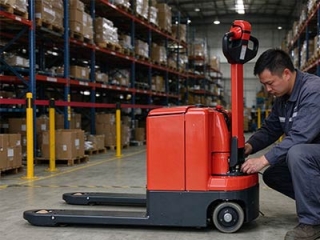 Maintenance Notes for Double Pallet Truck Under Heavy Warehouse LoadsOperators often ignore abnormal motor noise of double pallet trucks during rush orders. Continuous operation burns motors. Timely maintenance prevents failures.
Do you like ?0
Read more








