What Is The Difference Between Walk-behind Stacker And Semi-electric Stacker
Are you looking for stacking equipment for short-distance warehouse handling? Both semi-electric stackers and walk-behind stackers can meet basic needs. If you want to know What Is The Difference Between Walk-behind Stacker And Semi-electric Stacker, we will break down their applicable scenarios clearly.
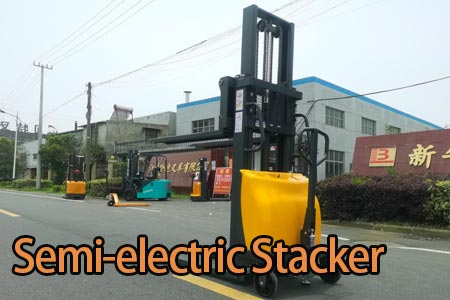
Semi-electric Stacker (Mainstream Model On Market)
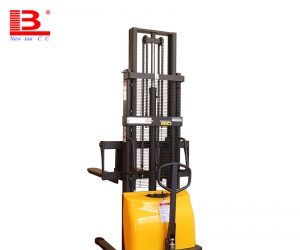
Electric lifting, manual moving. The fork rises and falls by hydraulic motor, while the truck has to be pushed manually. Advantages: Easy lifting, moderate purchase price and simple maintenance, perfect for short-distance transport. Disadvantages: It is labor-intensive to push heavy loads over long distances, and operators get tired easily. Application: Ordinary small warehouses with one-way travel less than 30 meters and dozens of stacking cycles per day.
Full Electric Walk-behind Stacker
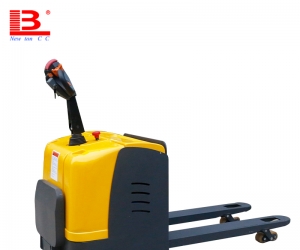
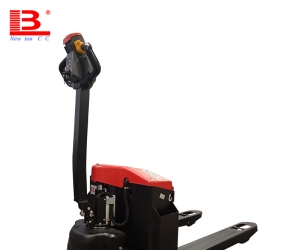
Both traveling and lifting are powered by motors. Operators only control the handle without manual pushing. Advantages: Labor-saving all the way, working efficiency increased by 60% for continuous shifts, and it can handle small slopes. Actual test data: Under the condition of 30-meter one-way distance, 1.5-ton load and 8-hour daily operation, the semi-electric model finishes 25 pallets per hour.
The Full Electric Walk-behind Stacker steadily completes 40 pallets, raising efficiency by 60%. Disadvantages: Equipped with extra travel motor, higher price and more electrical spare parts. Application: E-commerce warehouses with frequent back-and-forth transfer and 8-hour continuous daily operation.
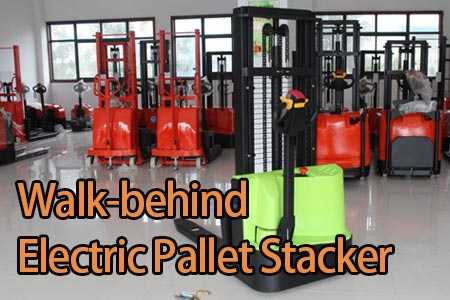
Accurate Selection For Short-distance Warehouses
One-way distance below 30 meters, less than 50 stacking cycles every day Choose the semi-electric model. Manual pushing will not cause too much fatigue. You can save thousands of dollars in procurement cost. The structure is sturdy with few electrical faults. Case: A hardware warehouse ran the semi-electric stacker for 3 years, only replaced tires with almost no circuit repairs.
Frequent transfer and 3 hours of continuous loading & unloading daily Pick the full electric walk-behind model. Repeated manual pushing leads to operator exhaustion. Electric travel keeps stable working speed and cuts labor cost in the long run.
Additional judgment: Choose full electric for bumpy ground and frequent heavy loading; pick semi-electric for ultra-narrow aisles and tight budget. Feel free to contact me if you need more test data and quotations.
-
 Reliability Of Newnewton Warehouse Forklifts For Heavy-Duty ShiftsWarehouse forklift reliability relies on industrial parts, reinforced frames and factory durability tests. Proper operation and maintenance reduce unexpected downtime.
Do you like ?0
Read more -
 Forklift Configuration Strategy For Dense Warehousing, Warehouse ForkliftDense warehousing needs matched forklifts besides racks. Reach and trilateral stackers fit different layouts, coordinate aisle, load curve and floor for smooth handling.
Do you like ?0
Read more -
 Full Container Supply For Export Forklifts, Forklift ManufacturerBulk forklift orders for overseas can ship by FCL or LCL. Newnewton FCL offers stable freight, safer packing and mixed models for large purchases.
Do you like ?0
Read more -
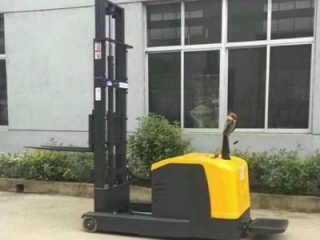 Stand-on Reach Stacker For Narrow Aisle Stacking, Mast Reach StructureStand-on reach stackers feature sliding masts that stay outside racks. They boost storage density in narrow aisles and require flat floors and standard pallets.
Do you like ?0
Read more -
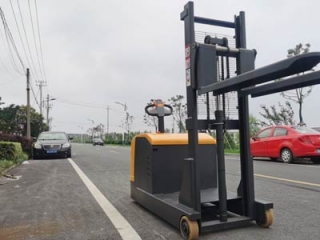 Stand-on Counterbalance Stacker For Various Pallets, Why No Leg RestrictionCounterbalance stackers have no front outriggers, using rear counterweight to avoid pallet interference. They fit various odd pallets yet need wider warehouse aisles.
Do you like ?0
Read more -
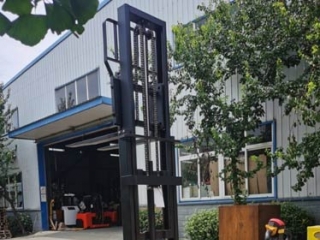 Custom Walk-Behind Counterbalance Stacker | Non-Standard ModificationsStandard walk-behind counterbalance stackers struggle with non-standard pallets and tight aisles. Customize load, lift, forks and structure, share working conditions for safe design.
Do you like ?0
Read more