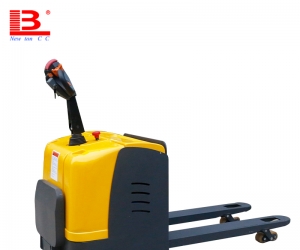
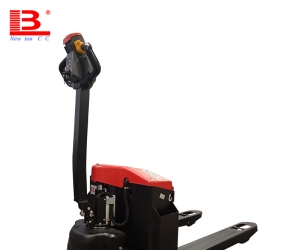
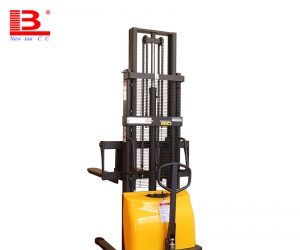
Few vehicles are better suited for navigating narrow warehouse aisles than stand-up forklifts. They are shorter, more compact, and have a smaller turning radius than their seated counterparts. This makes the forklift more maneuverable and provides better access for workers. Ride-on forklifts are now a must-have tool in warehouses and job sites around the world.
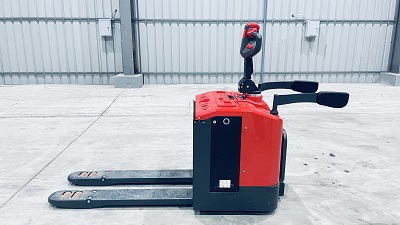
What is a stand-on forklift?
"Standing and driving" refers to the driver's position; In a stand-on forklift, the driver is standing, which is the opposite of a regular seated forklift, where the driver is seated.
According to the official OSHA (U.S. Occupational Safety and Health Administration) classification standard, stand-up forklifts are classified as Class III powered industrial trucks. Stand-up counterbalance forklifts are often used in warehouses, and they make the logistics process faster and more efficient when workers need to constantly load, unload, and stack goods.
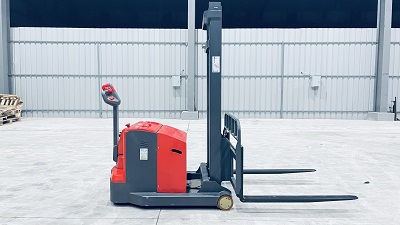
How to drive a stand-on forklift?
Ride-on forklifts operate similarly to standard types of forklifts. The main difference is the position of the operator on the forklift. As the name suggests, stand-on forklifts are driven by operators who remain stand-up while in use. Safety is always a key consideration when learning how to operate a ride-on forklift. There are a number of things an operator can do to ensure safe operation of a ride-on truck, including: making sure the forks are retracted before starting the truck, keeping the forks facing up, using the control handles for steering, tilting the handles in the direction you need to move forward, and keeping your feet on the accelerator pedals. When reversing, honk to warn other workers and pedestrians to reduce the risk of accidents, and when stopping, release the accelerator pedal and move the control handle back to its original position to carefully raise and lower the load.
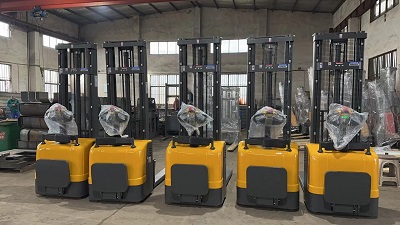
What is a standing forklift bottom collision?
Standing forklifts and telescopic forklifts are special forklifts used around warehouse shelves. Due to their design, they are susceptible to a hazard known as bottom collisions. You can see that the operating compartment is open at the rear; There is no protective structure from the top guardrail to the forklift body. The operator is exposed in the rear of the truck.
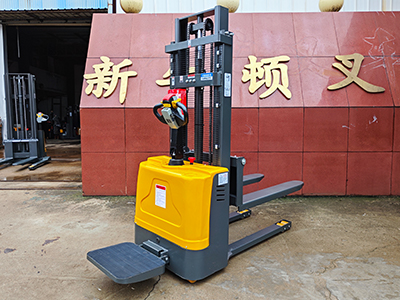
If the forklift backs up and hits the rack, the forklift body can travel under the horizontal beam, sandwiching the operator between the beam and the front of the operator's cabin.
What injuries can be caused by a forklift bottom collision?
A stand-up forklift bottom collision can result in serious injuries, including death, paraplegia, chest crush and trauma, suffocation, internal bleeding, rib fractures, spinal injuries, vertebral fractures, lung perforations, stomach injuries, neck and head injuries, spleen rupture, kidney damage, liver tears, contusions, pelvic and hip injuries, and more.
What are the advantages of stand-on forklifts?
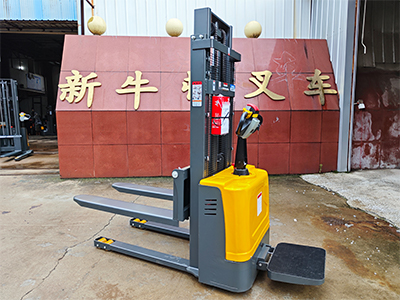
There are several key advantages to using a ride-on forklift on the job. Ride-on forklifts are an excellent choice for businesses that need to move goods quickly in narrow aisles. These trucks do not require the operator to set a parking brake.
Stand-up trucks provide greater visibility and allow the operator to gain better visibility when moving forward and reversing
-
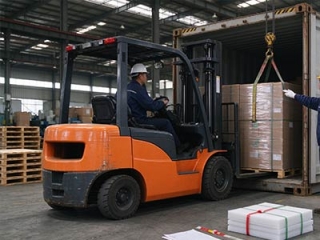 Newnewton Forklift Manufacturer, Forklift CE Certification for ExportNewnewton forklift factory offers full CE certification complying with EN ISO 3691, complete technical documents and OEM service to reduce customs detention risks.
Do you like ?0
Read more -
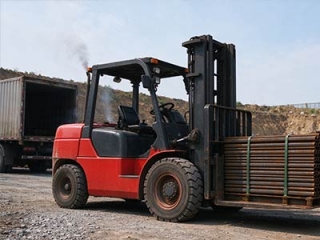 Electric Forklift Vs Diesel Forklift, Warehouse Selection GuideElectric forklift is zero-emission and quiet for indoor clean warehouses. Diesel forklift offers strong power for outdoor heavy-duty tasks.
Do you like ?0
Read more -
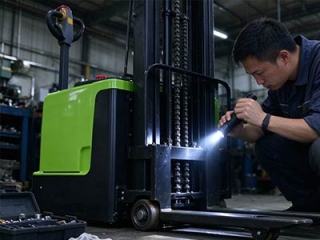 Narrow Aisle Stacker Forklift Custom Manufacturer for WarehouseCustom narrow aisle stacker for non-standard racking. Adjust body, mast and fork specs, upgrade power and protection, site survey available.
Do you like ?0
Read more -
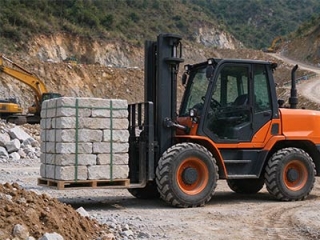 4WD All Terrain Rough Terrain Forklift Climbing for Mountain Sites4WD rough terrain forklift works on unpaved roads. Observe load climbing limit, attachments optional for forest and construction sites.
Do you like ?0
Read more -
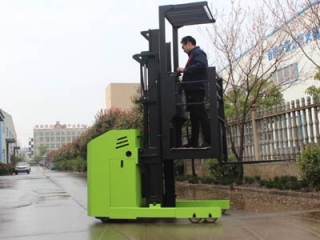 Man-Up Order Picker for High Level Picking, Suitable Warehouse ModesMan-up high level order picker for high-level split picking. Not for full pallet stacking, check rack, aisle and floor before selection.
Do you like ?0
Read more -
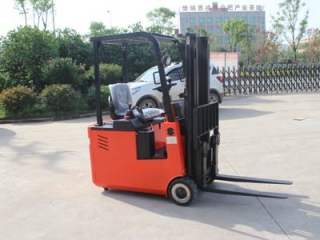 Narrow Aisle Operation Of Three-Wheel Forklift With Compact Turning RadiusThree-point electric forklift features small turning radius for narrow aisles. Reserve safety margin and check floor condition during selection.
Do you like ?0
Read more