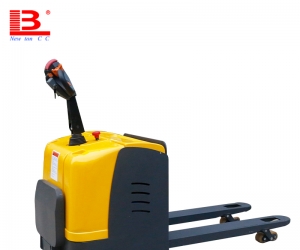
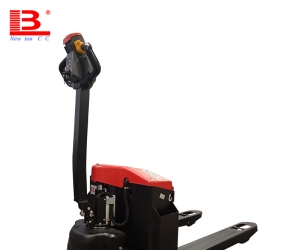
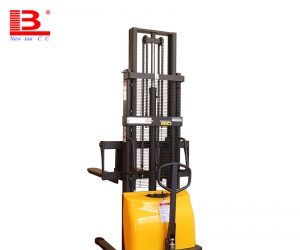
License Requirement for Warehouse Stand-on Counterbalance Stacker
Do you need an operation certificate for stand-on counterbalance stacker? The requirement mainly depends on equipment attributes. Many warehouse managers tend to get confused. Illegal operation may lead to regulatory penalties and safety risks. We need to check equipment parameters carefully to judge whether the warehouse stand-on counterbalance stacker falls under special equipment.
According to relevant specifications for on-site motor vehicles, if the stand-on counterbalance stacker meets the judging criteria of special equipment forklift, it is classified as factory special equipment. Operators need to hold N1 special equipment operation certificate for forklift drivers. The equipment also needs registration and periodic inspection before use in factory and warehouse.
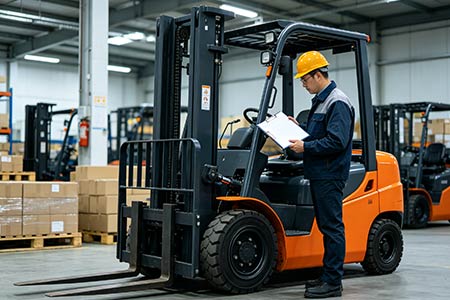
If the equipment parameters do not meet the definition of special equipment, the N1 certificate is not required. However, enterprises still need to carry out internal safety training. Operators can work only after passing assessment, and training records should be kept. Untrained staff are not allowed to operate the machine directly.
You can make a quick judgment before purchasing or using the equipment from several aspects. Equipment structure: Most counterbalance stackers with mast, self-powered system and stand-on operation mode are classified as factory forklifts. Application scenario: The machine works only in closed areas inside factories and warehouses, not for driving on public roads. Check the equipment nameplate and factory classification. If manufacturer documents mark it as counterbalance forklift, special equipment management rules must be followed.
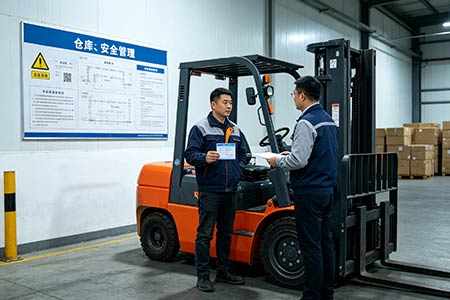
Enterprises cannot judge license exemption merely by the name "stacker". Do not take chances. In case of safety accidents caused by unlicensed operation, the enterprise shall bear corresponding liabilities. In daily management, no matter whether the N1 certificate is required or not, enterprises should establish equipment inspection systems, provide safety training for operators and standardize stacking procedures.
If you are selecting warehouse equipment and want to know qualification judgment and compliance solutions for stand-on counterbalance stacker, please contact us for consultation.
-
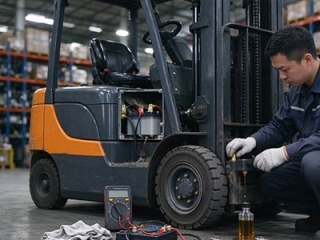 Reliability Of Newnewton Warehouse Forklifts For Heavy-Duty ShiftsWarehouse forklift reliability relies on industrial parts, reinforced frames and factory durability tests. Proper operation and maintenance reduce unexpected downtime.
Do you like ?0
Read more -
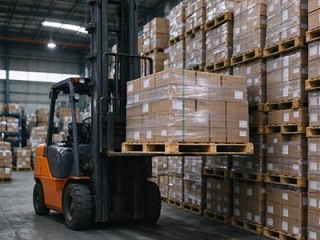 Forklift Configuration Strategy For Dense Warehousing, Warehouse ForkliftDense warehousing needs matched forklifts besides racks. Reach and trilateral stackers fit different layouts, coordinate aisle, load curve and floor for smooth handling.
Do you like ?0
Read more -
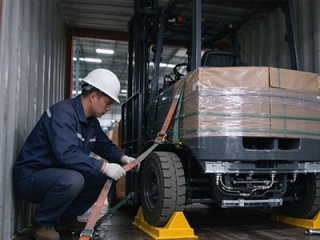 Full Container Supply For Export Forklifts, Forklift ManufacturerBulk forklift orders for overseas can ship by FCL or LCL. Newnewton FCL offers stable freight, safer packing and mixed models for large purchases.
Do you like ?0
Read more -
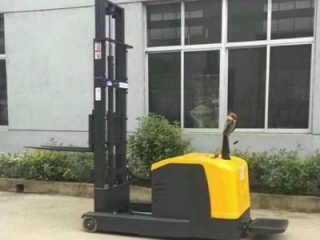 Stand-on Reach Stacker For Narrow Aisle Stacking, Mast Reach StructureStand-on reach stackers feature sliding masts that stay outside racks. They boost storage density in narrow aisles and require flat floors and standard pallets.
Do you like ?0
Read more -
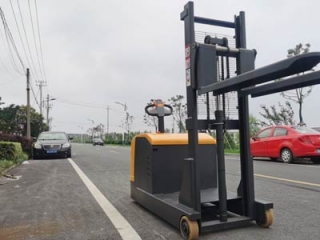 Stand-on Counterbalance Stacker For Various Pallets, Why No Leg RestrictionCounterbalance stackers have no front outriggers, using rear counterweight to avoid pallet interference. They fit various odd pallets yet need wider warehouse aisles.
Do you like ?0
Read more -
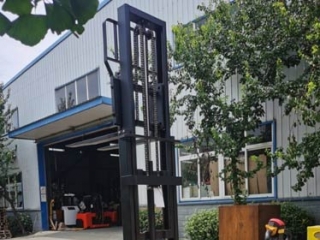 Custom Walk-Behind Counterbalance Stacker | Non-Standard ModificationsStandard walk-behind counterbalance stackers struggle with non-standard pallets and tight aisles. Customize load, lift, forks and structure, share working conditions for safe design.
Do you like ?0
Read more