
Ride-On Electric Reach Stacker | Advantages for Small Warehouses
Many warehouse owners wonder Is Reach Stacker Suitable for Small Warehouses. This detailed guide explains the practical value and core strengths of this equipment, covering its reach structure and electric driving performance to help you make the right choice.
One of the core Advantages of Ride-On Reach Stacker is space saving. Ordinary forklifts are bulky and require frequent forward and reverse adjustments at narrow aisle corners, moving cautiously to avoid shelf collision. With an extended mast design, this reach stacker shifts the mast backward to reserve extra passing space, delivering much more flexible steering in tight warehouse layouts.
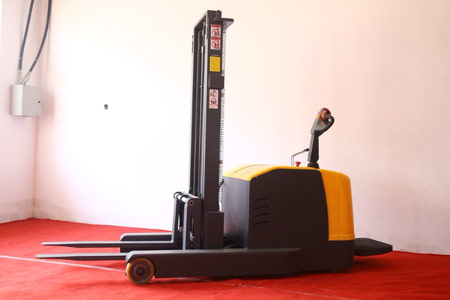
Environmental protection and energy efficiency are another key benefit. Most indoor warehouses and logistics parks have dense working staff. Excessive noise and exhaust fumes affect working comfort and long-term health, lowering overall enterprise efficiency. The Ride-On Electric Reach Stacker operates with low noise and zero emissions, fully meeting indoor environmental and hygiene standards.
It also provides outstanding cost performance. Compared with large forklift models, this electric reach stacker features lower initial purchase cost and minimal later maintenance expenses. It easily enters narrow aisles and compact storage areas where large forklifts cannot operate, offering wider application scenarios and better overall economic value.
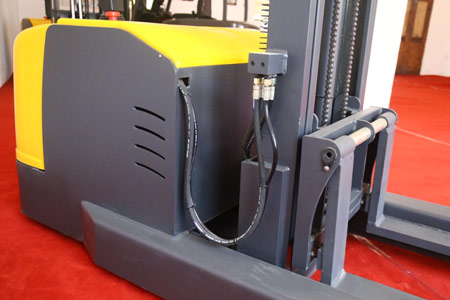
After learning these three major Advantages of Ride-On Reach Stacker, you can clearly understand its positioning in warehouse handling. Small and compact warehouses are perfectly matched with the ride-on electric reach stacker. It performs well in efficiency, safety, environmental protection and economy, fully meeting daily stacking and handling demands.
-
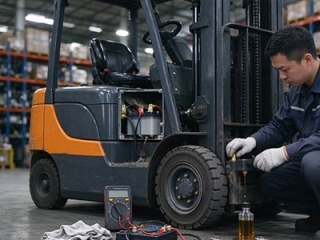 Reliability Of Newnewton Warehouse Forklifts For Heavy-Duty ShiftsWarehouse forklift reliability relies on industrial parts, reinforced frames and factory durability tests. Proper operation and maintenance reduce unexpected downtime.
Do you like ?0
Read more -
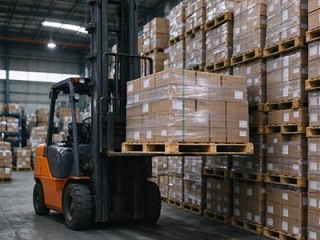 Forklift Configuration Strategy For Dense Warehousing, Warehouse ForkliftDense warehousing needs matched forklifts besides racks. Reach and trilateral stackers fit different layouts, coordinate aisle, load curve and floor for smooth handling.
Do you like ?0
Read more -
 Full Container Supply For Export Forklifts, Forklift ManufacturerBulk forklift orders for overseas can ship by FCL or LCL. Newnewton FCL offers stable freight, safer packing and mixed models for large purchases.
Do you like ?0
Read more -
 Stand-on Reach Stacker For Narrow Aisle Stacking, Mast Reach StructureStand-on reach stackers feature sliding masts that stay outside racks. They boost storage density in narrow aisles and require flat floors and standard pallets.
Do you like ?0
Read more -
 Stand-on Counterbalance Stacker For Various Pallets, Why No Leg RestrictionCounterbalance stackers have no front outriggers, using rear counterweight to avoid pallet interference. They fit various odd pallets yet need wider warehouse aisles.
Do you like ?0
Read more -
 Custom Walk-Behind Counterbalance Stacker | Non-Standard ModificationsStandard walk-behind counterbalance stackers struggle with non-standard pallets and tight aisles. Customize load, lift, forks and structure, share working conditions for safe design.
Do you like ?0
Read more








