
Narrow Aisle Operation Of Three-Wheel Forklift With Compact Turning Radius
Many old warehouses were built with narrow aisles. Ordinary four-wheel electric forklifts struggle to turn and access pallets, while rack reconstruction costs a lot. Buyers often ask about electric three-wheel forklift minimum aisle width and the operational advantages brought by its compact turning radius.
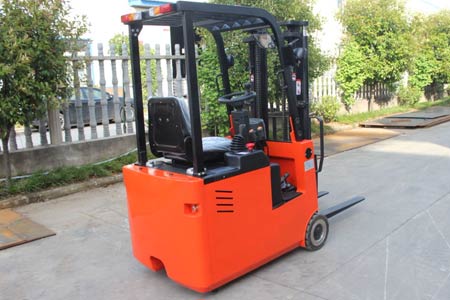
There is no fixed standard value for the safe working aisle of an electric three-wheel forklift. It mainly depends on rated load capacity, fork length and operation type. A typical 1.5 ton walk-behind three-wheel forklift needs around 1600 mm for right-angle stacking. A 1.5 ton seated three-wheel forklift usually requires 1800 mm to 2000 mm. A 2 ton seated three-wheel forklift generally needs about 2000 mm. These figures apply to loaded right-angle stacking. Add 100 to 200 mm safety margin in real use to avoid rack and cargo collision.
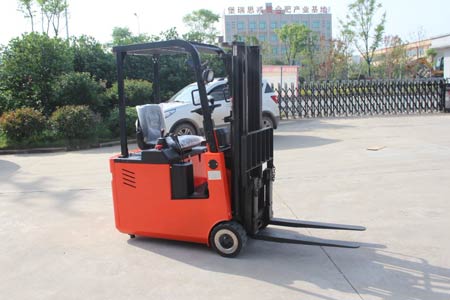
The three-wheel forklift small turning radius comes from its special three-point support design. The single rear steering wheel achieves a larger steering angle, without the limitation of dual rear wheels on four-wheel models. It has a small tail swing radius and flexible near-spot turning. It can finish stacking and shifting in tight aisles, cutting adjustment time and improving warehouse turnover.
This model raises aisle utilization well and fits old warehouse renovation, mezzanine storage and in-line transfer with limited space. Do not only focus on aisle size during selection. It demands flatter floors; uneven ground hurts driving stability. Also confirm lifting height and battery setup for your work.
Share your working conditions to get an accurate selection plan. We provide one-on-one support to solve your warehouse handling challenges.
-
 Narrow Aisle Operation Of Three-Wheel Forklift With Compact Turning RadiusThree-point electric forklift features small turning radius for narrow aisles. Reserve safety margin and check floor condition during selection.
Do you like ?0
Read more -
 Mixed Pallet Sizes? Walk-Behind Straddle Stacker Fits Different Pallet TypesWalk-behind straddle electric stacker with adjustable support legs fits various pallets. Check leg range, load, lifting height and aisle width for selection.
Do you like ?0
Read more -
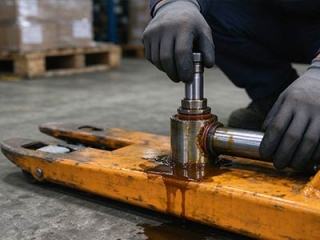 Troubleshoot Manual Hydraulic Pallet Jack Fault, Locate Oil Leak Points FastManual hydraulic pallet jack oil leakage can be checked by inspecting oil seals, hose joints and valves. Release pressure first, tighten or replace parts as needed.
Do you like ?0
Read more -
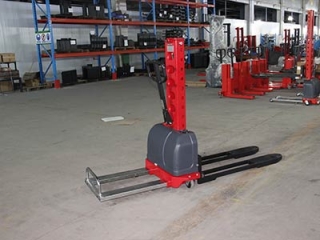 One Machine For Picking And Stacking, Benefits Of Self-Propelled Lifting StackerSelf-elevating stacker combines order picking and stacking, for high-level picking and pallet stacking. Check lifting height, load and width when selecting.
Do you like ?0
Read more -
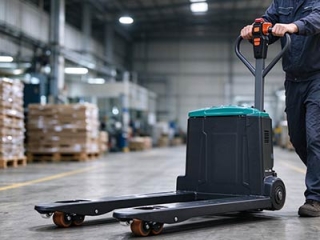 3 Key Parameters To Select Narrow Aisle Double Pallet Truck For Dense WarehouseHigh-density warehouses choose narrow aisle double pallet truck, check turning radius, load center and fork span, lithium battery optional to avoid operation risks.
Do you like ?0
Read more -
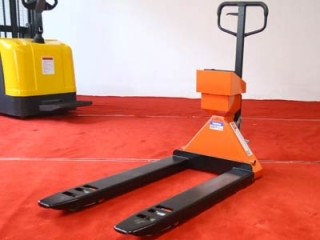 How To Calibrate Weighing Pallet Jack, Fix Inaccurate Readings & Weight DriftScale pallet jack with fluctuating readings & weighing errors needs cleaning, flat ground and circuit check. Calibrate zero and span with standard weights, replace sensors if faulty.
Do you like ?0
Read more








