
Many warehouse operators suffer rollover accidents on counterbalance stackers. If you are asking What Are The Safety Prohibitions For Walk-behind Counterbalance Stacker, strictly follow these five forbidden rules to avoid tipping risks.
A real accident case: An operator made a sharp turn right after lifting an off-center load. The front end tilted up and the whole stacker overturned, smashing racks and cargo. The truck was not overloaded, but offset load plus sharp steering destroyed balance. After enforcing these 5 rules, the workshop had zero rollover incidents for 18 consecutive months.
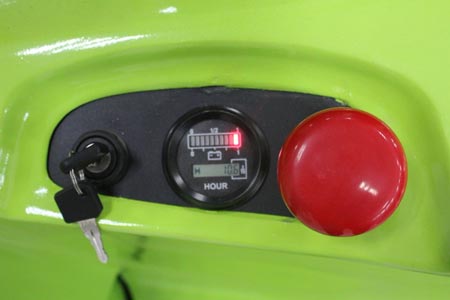
1. Load Restrictions (Key To Prevent Front-end Tipping)
No overloading. Always follow the rated load on the nameplate. Higher lifting height greatly increases tipping risk. Test data: A 1.5-ton stacker only safely carries less than 1 ton when lifted to 3 meters.
No off-center loading. Goods must sit squarely on both forks. One-sided weight breaks balance and easily causes side tipping.
No extended overhanging loads. Long outward cargo shifts the load center forward, and the rear counterweight cannot hold down the front mast.
2. Travel Operation Rules
No sharp turns or sudden brakes with raised loads. Slow down in narrow aisles, and keep speed below 3km/h under full load.
No cross travel or turning on ramps. Only drive straight uphill and downhill. Never park the truck on slopes for long periods.
Do not lift or lower forks while moving. Always come to a full stop before adjusting lifting height to avoid unstable shifting.
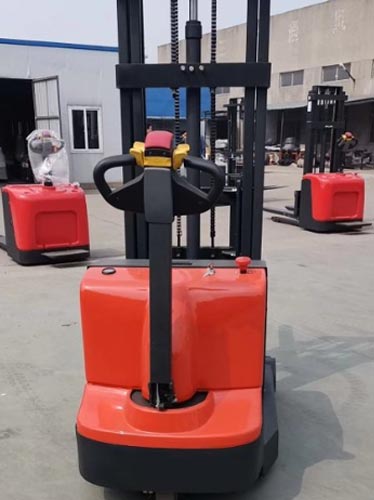
3. Operator Safety Rules
Never carry people on forks, and do not walk or work under lifted forks to avoid crushing injuries. Operators cannot work under fatigue or alcohol influence. Do not stick body parts into gaps between mast and frame. Only trained certified workers can operate the equipment, as counterbalance models have strict center-of-gravity characteristics.
4. Site & Environment Prohibitions
Do not operate on uneven or soft ground, which leads to uneven force and side rollover. Avoid overhead beams and pipelines when forks are raised to prevent mast collision damage. Do not leave the machine exposed to heavy rain for long hours. Water causes circuit failure and brake loss of control.
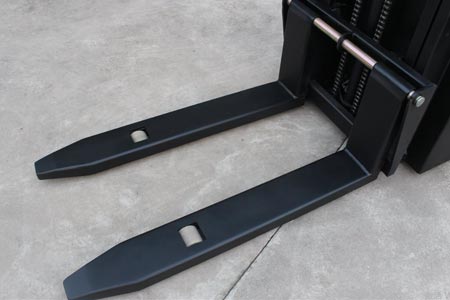
5. Parking & Maintenance Rules
Lower forks completely to the ground before parking, pull the handbrake firmly, and park on flat concrete ground. Stop using the stacker if counterweights are loose or missing; insufficient counterweight leads to complete loss of stability. Lock out and repair immediately if brakes fail or hydraulic pressure leaks. Never run the machine with known faults.
Following these 5 sets of rules will protect personnel and warehouse assets, cut downtime, and let you run the Legless Walk-behind Counterbalance Stacker steadily and smoothly.
-
 Reliability Of Newnewton Warehouse Forklifts For Heavy-Duty ShiftsWarehouse forklift reliability relies on industrial parts, reinforced frames and factory durability tests. Proper operation and maintenance reduce unexpected downtime.
Do you like ?0
Read more -
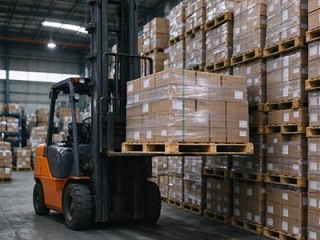 Forklift Configuration Strategy For Dense Warehousing, Warehouse ForkliftDense warehousing needs matched forklifts besides racks. Reach and trilateral stackers fit different layouts, coordinate aisle, load curve and floor for smooth handling.
Do you like ?0
Read more -
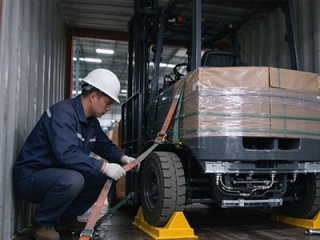 Full Container Supply For Export Forklifts, Forklift ManufacturerBulk forklift orders for overseas can ship by FCL or LCL. Newnewton FCL offers stable freight, safer packing and mixed models for large purchases.
Do you like ?0
Read more -
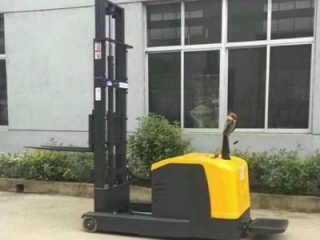 Stand-on Reach Stacker For Narrow Aisle Stacking, Mast Reach StructureStand-on reach stackers feature sliding masts that stay outside racks. They boost storage density in narrow aisles and require flat floors and standard pallets.
Do you like ?0
Read more -
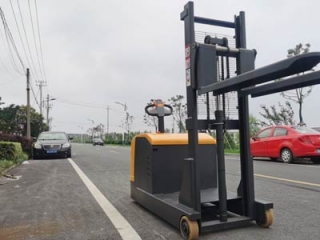 Stand-on Counterbalance Stacker For Various Pallets, Why No Leg RestrictionCounterbalance stackers have no front outriggers, using rear counterweight to avoid pallet interference. They fit various odd pallets yet need wider warehouse aisles.
Do you like ?0
Read more -
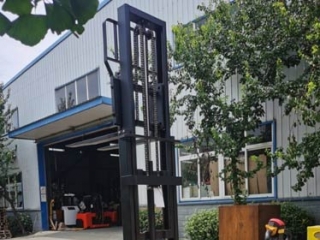 Custom Walk-Behind Counterbalance Stacker | Non-Standard ModificationsStandard walk-behind counterbalance stackers struggle with non-standard pallets and tight aisles. Customize load, lift, forks and structure, share working conditions for safe design.
Do you like ?0
Read more








