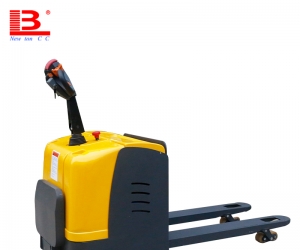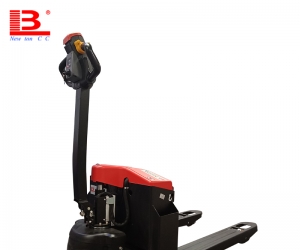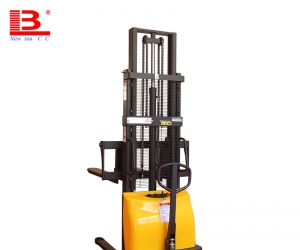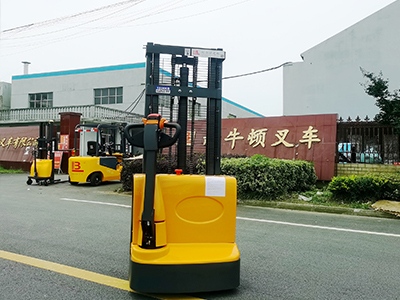
Our factory workshop is not very large, and the space is not rich. If you are a large electric forklift, you cannot enter and complete the work, so we produced a walk behind forklift for us, which is not as big as an electric forklift. However, he has the unloading and loading requirements that electric forklifts can meet, and when walk behind forklifts work at heights, they are more delicate and meticulous than electric forklifts, which greatly reduces the difficulty of manual work at heights. So do we think it's safe to do this? Let our electric forklift manufacturers give us a look at the usage specifications of the vehicle.
First of all, we need to walk behind forklift for pre-job training: our operators need to be trained and qualified before they can operate the equipment. During the operation, they need to comply with the relevant safety operation specifications. The equipment cannot carry personnel. When the fork is lifted, the goods No one can stand under and around the fork. You must study and strictly abide by the operating procedures, and be familiar with the vehicle performance and the road conditions in the operating area. Electric forklift manufacturers remind us to master the basic knowledge and skills of maintaining forklifts, and do a good job in vehicle maintenance according to regulations.
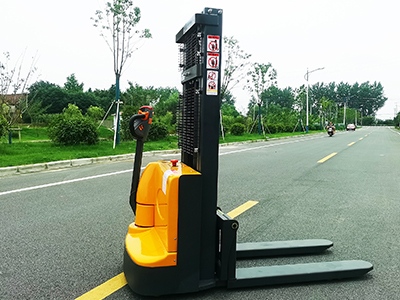
In the walk behind forklift vehicle operation, try not to use long-term and long-distance acceleration. When the vehicle starts and the speed increases, stabilize the accelerator pedal. If the road conditions are good, the vehicle will continue to accelerate. When the vehicle needs to decelerate, release the accelerator pedal and lightly step on the brake pedal, so that the energy of deceleration can be fully utilized. If the vehicle has a regenerative braking function, the kinetic energy during deceleration can be recovered. Electric forklift manufacturers tell us that when walk behind forklift is going down the slope, do not disconnect the circuit that drives the motor, gently step on the brake pedal to make the vehicle run in a regenerative braking state, use the kinetic energy of the vehicle to go down, and reduce the energy consumption of the battery .
After the work is over: the walk behind forklift needs to be parked on a dry and level site, the gantry of the equipment should be in a vertical position, lower the position of the oil cylinder; turn off the power switch. Check the tightness of the hydraulic system, check the battery power, and charge it in time.
-
 Reliability Of Newnewton Warehouse Forklifts For Heavy-Duty ShiftsWarehouse forklift reliability relies on industrial parts, reinforced frames and factory durability tests. Proper operation and maintenance reduce unexpected downtime.
Do you like ?0
Read more -
 Forklift Configuration Strategy For Dense Warehousing, Warehouse ForkliftDense warehousing needs matched forklifts besides racks. Reach and trilateral stackers fit different layouts, coordinate aisle, load curve and floor for smooth handling.
Do you like ?0
Read more -
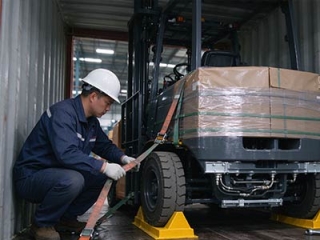 Full Container Supply For Export Forklifts, Forklift ManufacturerBulk forklift orders for overseas can ship by FCL or LCL. Newnewton FCL offers stable freight, safer packing and mixed models for large purchases.
Do you like ?0
Read more -
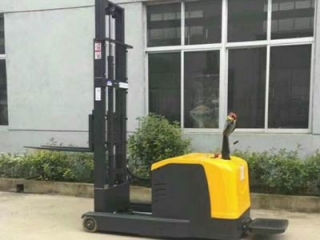 Stand-on Reach Stacker For Narrow Aisle Stacking, Mast Reach StructureStand-on reach stackers feature sliding masts that stay outside racks. They boost storage density in narrow aisles and require flat floors and standard pallets.
Do you like ?0
Read more -
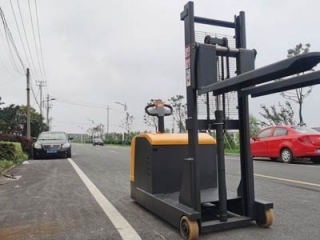 Stand-on Counterbalance Stacker For Various Pallets, Why No Leg RestrictionCounterbalance stackers have no front outriggers, using rear counterweight to avoid pallet interference. They fit various odd pallets yet need wider warehouse aisles.
Do you like ?0
Read more -
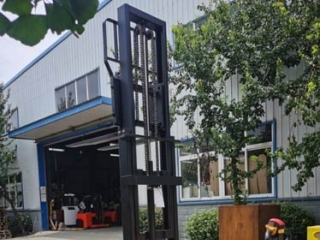 Custom Walk-Behind Counterbalance Stacker | Non-Standard ModificationsStandard walk-behind counterbalance stackers struggle with non-standard pallets and tight aisles. Customize load, lift, forks and structure, share working conditions for safe design.
Do you like ?0
Read more