
Daily / Weekly / Monthly Care Checklist For Walk-behind Counterbalance Stacker
The Walk-behind Counterbalance Stacker is widely applied in heavy-load and high-frequency handling scenarios. It consists of costly and vulnerable components including lithium batteries, hydraulic assemblies, travel controllers and wheel sets. Neglecting standardized daily maintenance easily leads to jamming, insufficient power, oil leakage, fake battery charge and other malfunctions, causing unnecessary losses. Below is the complete daily maintenance guide for reference.
Daily Basic Inspection
Overall Machine Cleaning Clear dust, debris and packaging scraps from mast chains, forks and frame gaps. Stuck foreign objects trigger lifting jams and accelerated wheel wear. Use dry cloths for cleanroom equipment; never spray high-pressure water directly onto control boxes and battery compartments.
Travel & Brake Test Push the truck with empty load to test sensitivity of auto-stop brake upon handle release and emergency stop button. Check deviation during straight travel and steering; clear debris on wheel axles once jamming occurs.
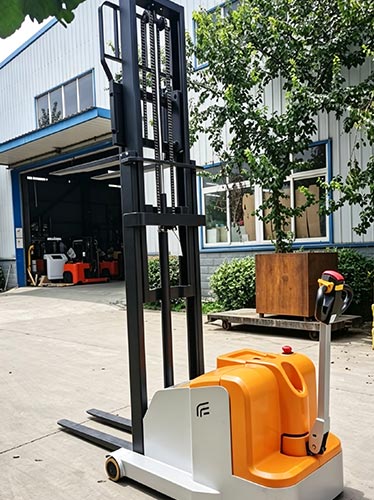
Simple Hydraulic Lifting Inspection Lift and lower empty forks repeatedly to verify smooth operation and abnormal noises on mast chains. Inspect oil cylinder and pipe joints for oil seepage; tighten loose connectors immediately for minor leakage.
Basic Battery Condition Check Monitor battery indicator and charge timely at low power. Check battery casing for bulges or liquid leakage, and loose/oxidized terminals; wipe off white oxide deposits promptly.
Fork & Safety Component Inspection Check forks for deformation and cracks, as well as severe wear on fork tips. Confirm lifting limit blocks and anti-collision parts are intact to avoid cargo falling and rack collision during stacking.
Weekly Maintenance
Lubricate Moving Transmission Parts Coat mast lifting chains, roller shafts and steering pins with special grease to remove rust, reduce friction noise and prevent chain elongation deformation.
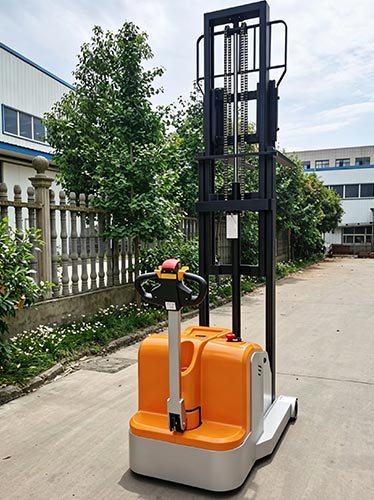
Full Wheel Set Inspection Check load and steering wheels for cracks and damaged surfaces, and loose wheel bearings. Remove tangled iron wires and plastic strips on tires; swap wheel positions if one-sided wear is severe.
Hydraulic System Inspection Fully inspect hydraulic hoses, oil seals and pumps for leakage. Top up with matching hydraulic oil if the oil level is low. Slow lifting or weak load capacity usually results from deteriorated oil or worn seals.
Electric Wiring Arrangement Open the control box to clear accumulated dust. Check loose plugs and damaged wire jackets; avoid squeezing or bending cables to prevent short circuits.
Battery Charge & Discharge Management Do not leave the charger connected for long after full charge. Add distilled water to lead-acid batteries when liquid level falls below the scale mark. Charge lithium batteries in well-ventilated areas; avoid high-temperature enclosed spaces.
Monthly In-depth Maintenance
Hydraulic System Deep Service Check hydraulic oil clarity; replace all oil if it turns black with impurities. Swap aged oil seals and hoses to thoroughly eliminate oil seepage.
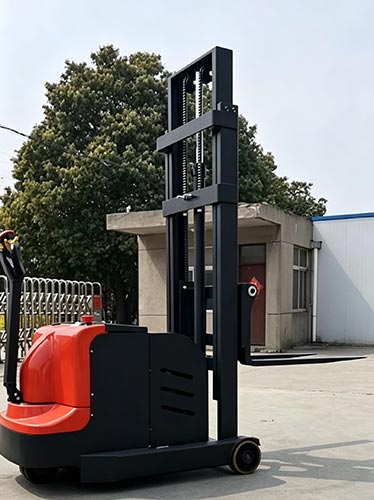
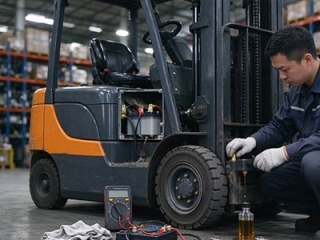
Battery Performance Test Measure voltage of each single cell. Repair the battery pack if voltage difference is excessive or runtime drops sharply. Polish oxidized battery terminals and apply anti-rust grease to resolve weak power caused by poor contact.
Brake System Adjustment Check brake pad thickness and replace worn pads. Adjust brake tightness to ensure no sliding on ramps and prevent rack collision in narrow aisles.
Mast & Frame Structural Inspection Check mast welding seams and main frame for deformation or cracks; fasten all loose bolts and pins. Stop heavy-duty operation if forks are severely deformed to avoid cargo tipping.
Motor & Controller Maintenance Clean dust on the travel motor cooling fan and check carbon brush wear. Keep controller heat dissipation channels unobstructed to avoid frequent power-off triggered by high-temperature overload protection.
This full checklist covers all routine maintenance items for the Walk-behind Counterbalance Stacker. Save this guide for daily operation, and contact us for more technical documents if needed.
-
 Reliability Of Newnewton Warehouse Forklifts For Heavy-Duty ShiftsWarehouse forklift reliability relies on industrial parts, reinforced frames and factory durability tests. Proper operation and maintenance reduce unexpected downtime.
Do you like ?0
Read more -
 Forklift Configuration Strategy For Dense Warehousing, Warehouse ForkliftDense warehousing needs matched forklifts besides racks. Reach and trilateral stackers fit different layouts, coordinate aisle, load curve and floor for smooth handling.
Do you like ?0
Read more -
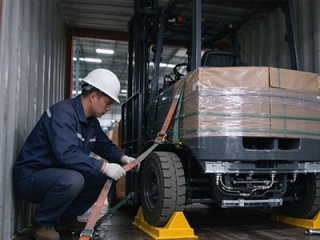 Full Container Supply For Export Forklifts, Forklift ManufacturerBulk forklift orders for overseas can ship by FCL or LCL. Newnewton FCL offers stable freight, safer packing and mixed models for large purchases.
Do you like ?0
Read more -
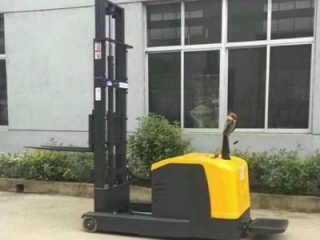 Stand-on Reach Stacker For Narrow Aisle Stacking, Mast Reach StructureStand-on reach stackers feature sliding masts that stay outside racks. They boost storage density in narrow aisles and require flat floors and standard pallets.
Do you like ?0
Read more -
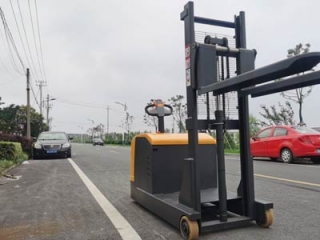 Stand-on Counterbalance Stacker For Various Pallets, Why No Leg RestrictionCounterbalance stackers have no front outriggers, using rear counterweight to avoid pallet interference. They fit various odd pallets yet need wider warehouse aisles.
Do you like ?0
Read more -
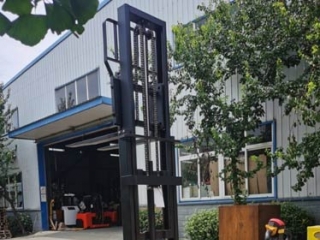 Custom Walk-Behind Counterbalance Stacker | Non-Standard ModificationsStandard walk-behind counterbalance stackers struggle with non-standard pallets and tight aisles. Customize load, lift, forks and structure, share working conditions for safe design.
Do you like ?0
Read more








