What is Pedestrian Counterbalance Stacker & Basic Operating Steps
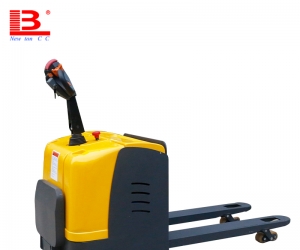
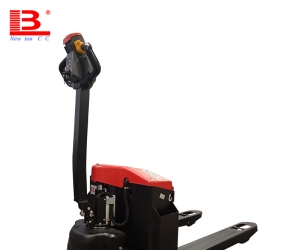
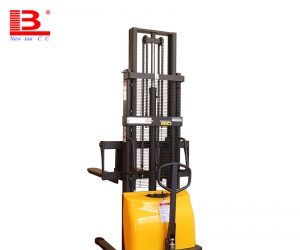
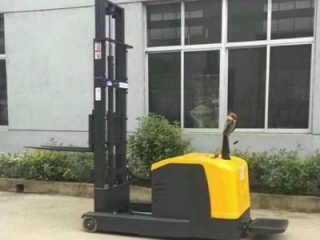
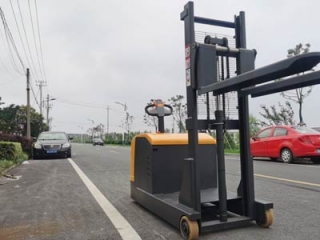
What is pedestrian counterbalance stacker? A counterbalance stacker relies on rear counterweight to offset cargo weight and requires no outriggers for stacking work. The pedestrian design means operators control the machine while walking alongside it. It suits warehouses with limited space for pallet lifting and stacking tasks. Compared with stand-on models, it has lower cost and is easy to learn.
This stacker has prominent operating advantages. You need to pay attention to every detail during operation. Complete pre-operation inspection before work. Check if the battery has sufficient power, inspect forks for deformation, and test the handle and brake for sensitive response. Examine counterweight and tires for damage. Confirm the working ground is flat and the aisle is free of debris.
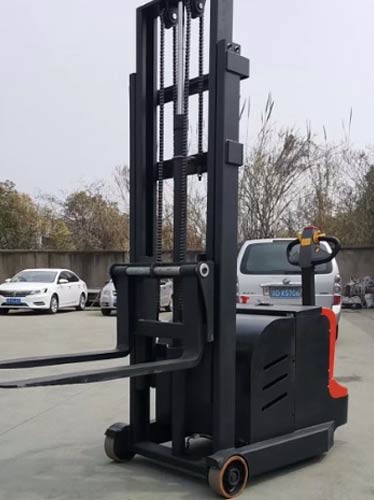
Starting and traveling operation. Hold the control handle, release the emergency stop button, and slowly operate the travel button to move forward or backward. Keep low speed all the time. Slow down in advance before turning, watch out for surrounding staff and goods, and sharp turning at high speed is forbidden.
Stacking and lifting operation. Align the forks with pallet openings and insert them smoothly under the pallet. Lift the forks to a proper height, move the machine to the target rack position, lower the forks slowly to place down the pallet, then pull out the forks to finish stacking. Unloading operation follows the reverse steps.
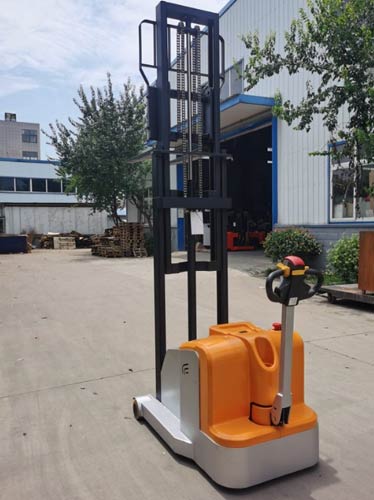
After operation, lower forks completely, park the machine in the designated area, cut off the power and engage the brake. Always follow safety rules during daily work. Do not overload, drive at high speed or park the machine on slopes for a long time.
This pedestrian stacker is simple to operate. It fits narrow aisles and compact warehouses with dense stacking work. It works with various pallet sizes to meet your needs and improve operation efficiency. Mastering how to operate pedestrian counterbalance stacker helps reduce cost and boost productivity.
If you have questions about warehouse selection or operation training, contact us to get professional selection advice based on equipment parameters and site conditions.
-
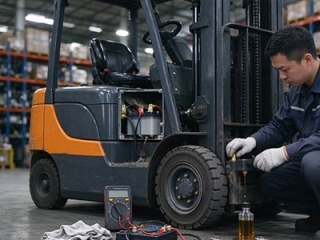 Reliability Of Newnewton Warehouse Forklifts For Heavy-Duty ShiftsWarehouse forklift reliability relies on industrial parts, reinforced frames and factory durability tests. Proper operation and maintenance reduce unexpected downtime.
Do you like ?0
Read more -
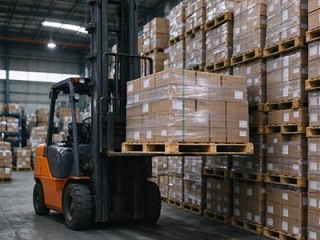 Forklift Configuration Strategy For Dense Warehousing, Warehouse ForkliftDense warehousing needs matched forklifts besides racks. Reach and trilateral stackers fit different layouts, coordinate aisle, load curve and floor for smooth handling.
Do you like ?0
Read more -
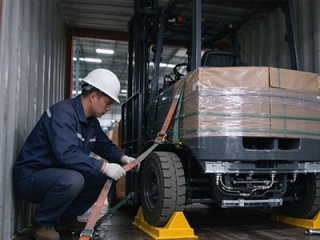 Full Container Supply For Export Forklifts, Forklift ManufacturerBulk forklift orders for overseas can ship by FCL or LCL. Newnewton FCL offers stable freight, safer packing and mixed models for large purchases.
Do you like ?0
Read more -
 Stand-on Reach Stacker For Narrow Aisle Stacking, Mast Reach StructureStand-on reach stackers feature sliding masts that stay outside racks. They boost storage density in narrow aisles and require flat floors and standard pallets.
Do you like ?0
Read more -
 Stand-on Counterbalance Stacker For Various Pallets, Why No Leg RestrictionCounterbalance stackers have no front outriggers, using rear counterweight to avoid pallet interference. They fit various odd pallets yet need wider warehouse aisles.
Do you like ?0
Read more -
 Custom Walk-Behind Counterbalance Stacker | Non-Standard ModificationsStandard walk-behind counterbalance stackers struggle with non-standard pallets and tight aisles. Customize load, lift, forks and structure, share working conditions for safe design.
Do you like ?0
Read more