
Many buyers ask how much does a counterbalance electric stacker cost and find wide price gaps for seemingly identical models. They may face vague configurations and extra hidden charges after placing orders. This outrigger-free stacker handles pallets with bottom cross beams that standard outrigger stackers cannot serve. Quotation differences mainly come from configurations, battery types, custom requirements and supply channels.
Load capacity and lifting height With the same setup, higher rated load and maximum lifting height require upgraded mast steel, cylinders and counterweights, pushing up total cost. Do not only check the nominal load. Confirm the residual capacity at your target lifting height. Many low-cost models suffer severe load drop when lifting high.
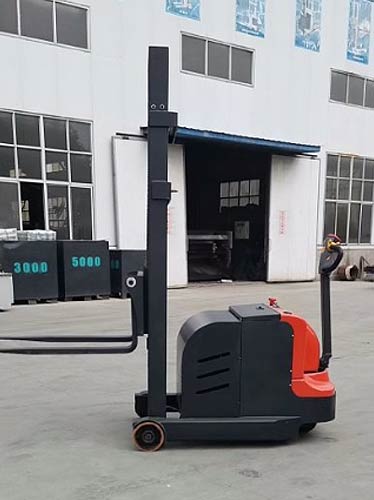
Battery option Batteries create the biggest price difference. Lead-acid versions have lower upfront cost for single-shift and light-duty use. Lithium models cost more at first, yet support fast charging and maintenance-free operation for two-shift warehouses with less long-term service expense.
Electric control and hydraulic components Basic versions use ordinary controllers, while upgraded AC control systems deliver better stability and fewer breakdowns. Optional extras such as extended forks, side shifters, anti-corrosion treatment and solid tyres incur separate fees. Traders often quote a low bare-unit price and charge extra for attachments later.
Based on domestic factory market conditions, a standard 1-ton walk-behind unit with 2.5–3 m lifting height has two typical price ranges. Lead-acid base models sit roughly between 13000–16000 CNY. Lithium standard versions of the same specification run around 17000–21000 CNY. Taller masts and custom functions push the price above 22000 CNY, and bulk orders enjoy negotiable rates.
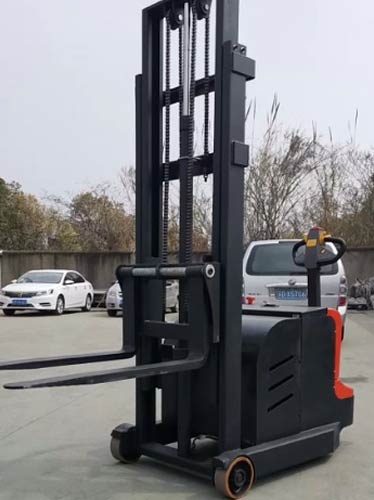
This walk-behind counterbalance stacker has no front outriggers to fit special pallets, yet its heavier weight demands more turning space than ordinary stackers and is not suitable for very narrow aisles. As a direct manufacturer, newnewton separates standard items from custom options and provides clear spec sheets to avoid hidden surcharges.
Q: Where do cheap counterbalance stackers cut corners?
A: Usually thinner mast plates, basic controllers and underrated batteries, which lead to frequent failures later.
Q: Can I replace the lithium battery with a lead-acid one afterwards?
A: It is not recommended. The battery compartment and wiring are designed differently. Mixed use brings safety risks.
Q: Is there room for negotiation on bulk orders?
A: You may discuss discounts for large purchases. Meanwhile confirm warranty terms and spare parts lead time.
-
 How Much Does a Counterbalance Electric Stacker CostWalkie counterbalance stackers have wide price gaps from specs, batteries, controls and options. Watch out for downgraded parts and hidden charges on low-price quotes.
Do you like ?0
Read more -
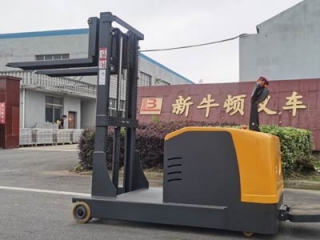 Narrow Aisle Stand-on Counterbalance Electric Stacker From newnewtonStand-on counterbalance stackers have no front legs to avoid pallet jamming and rack collision. It handles closed-bottom special pallets for compact old warehouse renovation.
Do you like ?0
Read more -
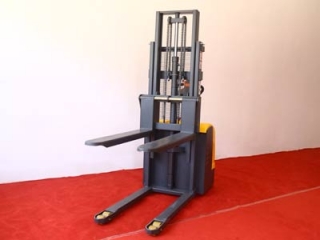 Stand-on Electric Double Pallet Stacker: Work Efficiency ComparisonStand-on double pallet stackers suit high-output warehouses. It carries two pallets at once for higher efficiency in wide aisles, not for narrow aisles or order picking.
Do you like ?0
Read more -
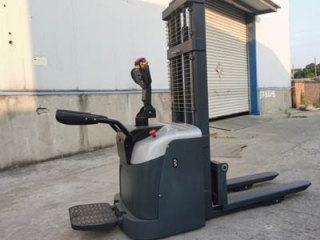 Stand-on Electric Pallet Stacker: How to Pick the Right BrandStand-on electric stackers vary by brand tiers. Avoid judging by brand only. Evaluate load, aisle, shifts and after-sales to cut long-term operation costs.
Do you like ?0
Read more -
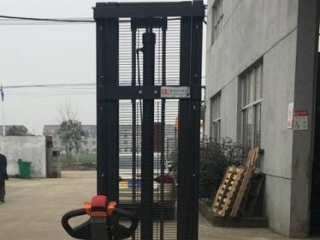 Adjustable Leg Walk-behind Electric Stacker for Multiple Pallet TypesAdjustable leg walkie straddle stackers fit mixed pallets. Variable leg width works for single/double-faced pallets, compact and stable for warehouses with mixed pallet sizes.
Do you like ?0
Read more -
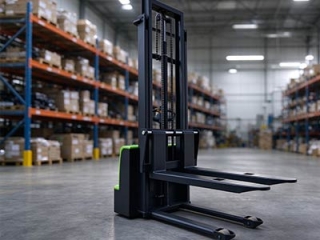 How Long Is the Runtime of an Electric Walk-behind StackerWhen warehouse customers select walkie electric stackers, battery life is a key concern. Lithium and lead-acid batteries differ greatly in runtime, charging speed and low-temperature performance.
Do you like ?0
Read more








