
Many warehouse buyers ask how long is the runtime of an electric walk-behind stacker when selecting stacking equipment. Electric walk-behind stackers mainly come with lithium or lead-acid batteries. These two types perform quite differently on compact stacking units, which will directly affect warehouse shift arrangements and handling efficiency.
Under standard indoor warehouse conditions, lead-acid versions with the same capacity usually run 4 to 6 hours continuously on a full charge. They fit single-shift warehouses with infrequent lifting operations. Their drawbacks include fast voltage drop during heavy lifting, sharp runtime loss in low temperatures and slow charging. A full charge normally takes 7 to 8 hours, and opportunity charging is not practical. Lead-acid batteries cost less upfront and suit low-budget sites with only one working shift per day.
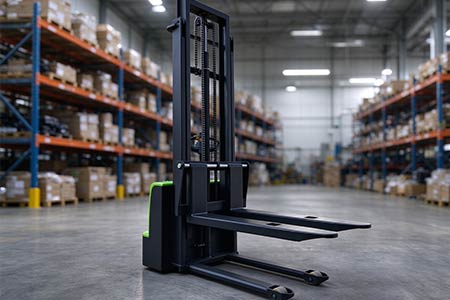
Lithium-ion walk-behind stackers deliver more usable power at the same capacity. Continuous runtime under regular full load reaches 6 to 8 hours, and some high-capacity models can cover a full single shift. Lithium batteries support fast charging and can be fully charged within 2 to 3 hours. Operators can top up power during lunch breaks, making them ideal for two-shift warehouses with frequent stacking. The lighter battery keeps the machine agile, with milder runtime reduction in cold weather and far more charge cycles. It offers better overall value for long-term heavy use.
Runtime is not a fixed figure. It changes with load weight, lifting frequency, floor condition and lifting height. Frequent full-load lifting will cut the working time noticeably. Do not choose merely by battery Ah rating. Evaluate based on your shift schedule, workload and ambient temperature.
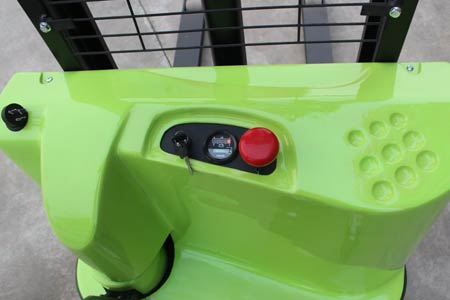
newnewton supplies small electric walk-behind stacker with both lithium and lead-acid options to match different runtime demands. They deliver reliable stacking solutions for small goods in narrow aisles. Feel free to contact us for more details.
-
 How Much Does a Counterbalance Electric Stacker CostWalkie counterbalance stackers have wide price gaps from specs, batteries, controls and options. Watch out for downgraded parts and hidden charges on low-price quotes.
Do you like ?0
Read more -
 Narrow Aisle Stand-on Counterbalance Electric Stacker From newnewtonStand-on counterbalance stackers have no front legs to avoid pallet jamming and rack collision. It handles closed-bottom special pallets for compact old warehouse renovation.
Do you like ?0
Read more -
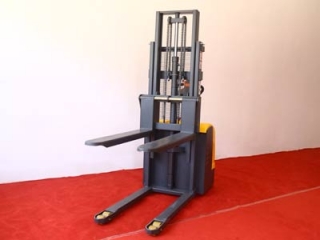 Stand-on Electric Double Pallet Stacker: Work Efficiency ComparisonStand-on double pallet stackers suit high-output warehouses. It carries two pallets at once for higher efficiency in wide aisles, not for narrow aisles or order picking.
Do you like ?0
Read more -
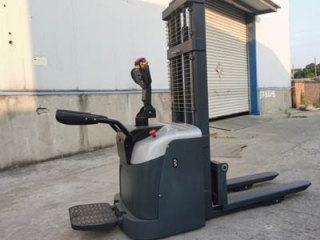 Stand-on Electric Pallet Stacker: How to Pick the Right BrandStand-on electric stackers vary by brand tiers. Avoid judging by brand only. Evaluate load, aisle, shifts and after-sales to cut long-term operation costs.
Do you like ?0
Read more -
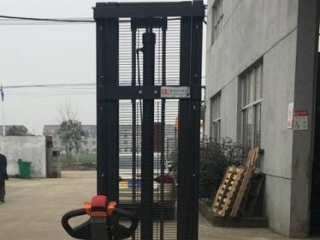 Adjustable Leg Walk-behind Electric Stacker for Multiple Pallet TypesAdjustable leg walkie straddle stackers fit mixed pallets. Variable leg width works for single/double-faced pallets, compact and stable for warehouses with mixed pallet sizes.
Do you like ?0
Read more -
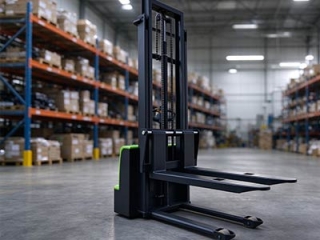 How Long Is the Runtime of an Electric Walk-behind StackerWhen warehouse customers select walkie electric stackers, battery life is a key concern. Lithium and lead-acid batteries differ greatly in runtime, charging speed and low-temperature performance.
Do you like ?0
Read more








