Legless Walk Stacker Solve Space Limits for Fixed Warehouse Racks
Many old warehouses run into the same trouble during renovation. Racks are fixed and cannot be removed or relocated. Conventional leg-type stackers are restricted by support legs, requiring wider aisles and failing to work with closed-bottom pallets and thick fixture pallets. The narrow aisle walk-behind counterbalance stacker perfectly solves these bottlenecks.
A typical case: An auto parts warehouse only has a clear aisle width of 2.3 meters after rack installation. The previously tested leg-type stacker often scratches rack uprights while turning, and gets stuck when handling closed-bottom fixture pallets. Widening the aisle would require rack removal with high renovation costs.
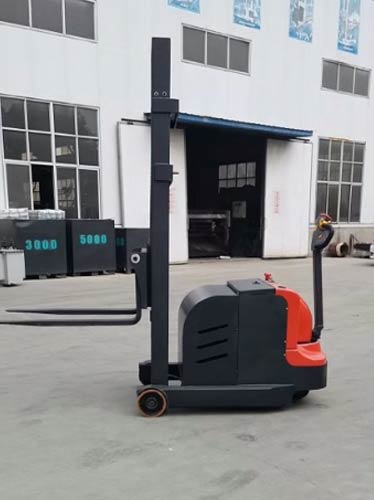
After switching to the legless walk-behind counterbalance stacker, stability is maintained by rear counterweight. Without front support legs, it needs a smaller right-angle stacking aisle and can be put into service directly under the original rack layout without warehouse reconstruction.
This counterbalance stacker has remarkable core advantages. First, it has no support legs and is not limited by pallet bottom height. It can handle chevron pallets, closed-bottom pallets and special fixture pallets normally with wider compatibility. Second, it adopts walk-behind control with a compact body and flexible turning. Operators walk alongside the machine and dodge uprights and goods closely to reduce collision risks. Third, the lithium battery version supports opportunity charging for two-shift continuous stacking. It produces no exhaust gas and works reliably in enclosed raw material and parts warehouses.
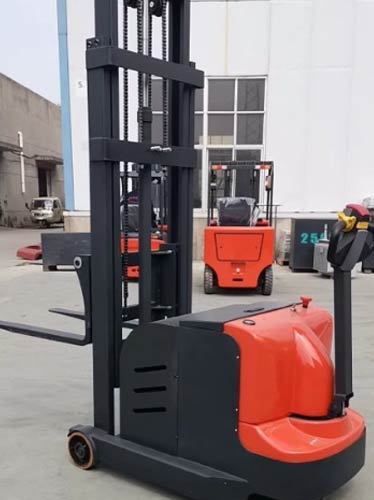
You also need to know its limitations. Stability relies on rear counterweight, so load capacity drops more obviously at high lifting heights compared with leg-type models. It is not suitable for long-term full-load high stacking. The floor must stay flat; uneven ground will weaken vehicle stability.
It features lower purchase and maintenance cost and easy operation. Operators do not need complicated training, and it fits more pallet types. If your racks are fixed, aisles are narrow, and you need to stack closed-bottom pallets and fixture goods, the legless walk stacker offers a low-cost renovation plan without rack modification.
-
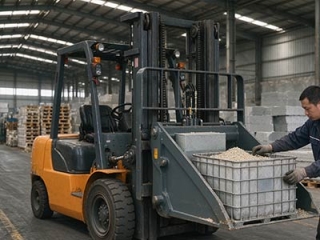 Customized Forklift Attachments to Meet Diverse Warehouse DemandsCustom forklift attachments handle irregular goods like pipes and rolls. Check gravity and load curve to avoid risks from shifted load center.
Do you like ?0
Read more -
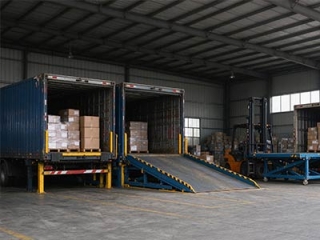 Hydraulic Dock Ramp: Fixed or Mobile Type for Warehouse LoadingFixed and mobile hydraulic dock levelers differ greatly in installation, load and flexibility. Match your dock, frequency and site to avoid mismatches.
Do you like ?0
Read more -
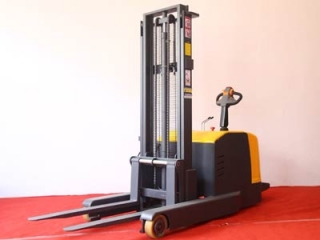 Stand-on Electric Reach Stacker Solution for Dense Racking Automated WarehouseStand-on reach stackers help new material warehouses expand storage slots without heavy construction. The telescopic mast cuts aisle width for dense racks.
Do you like ?0
Read more -
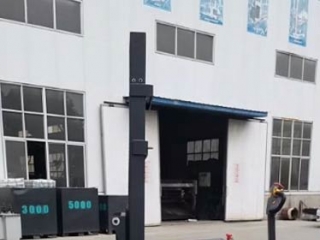 Legless Walk Stacker Solve Space Limits for Fixed Warehouse RacksLegless walkie counterbalance stackers suit renovated old warehouses. They fit narrow aisles and closed-bottom pallets without rack modification.
Do you like ?0
Read more -
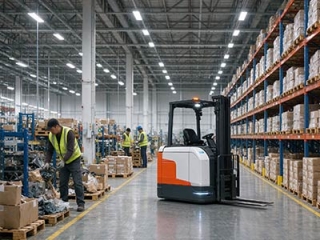 AGV Forklift Fork Alignment Error Causes and Site Working Condition NotesAGV forklifts rely on sensors for auto fork alignment. Positioning is affected by site conditions. Understand alignment logic and control surroundings to reduce failures.
Do you like ?0
Read more -
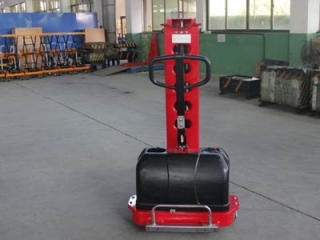 How Does Truck-Mounted Self-Lifting Stacker Work for City DeliveryLight electric self-loading stackers let one driver load pallets inside trucks without tailgates, yet they have limits on load, space and working conditions.
Do you like ?0
Read more