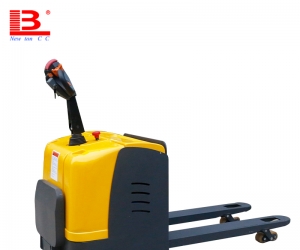
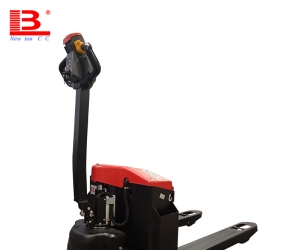
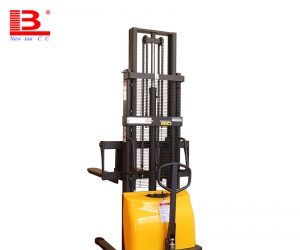
The Compact Walkie Counterbalance Stacker minimizes the impact of outriggers when handling pallets in daily operation, making it ideal for narrow aisles and sites without loading docks. Since this forklift relies on counterweight for stability, extra care is required during operation. In 2026, we hope every user can master the proper operation of this practical forklift quickly and safely.
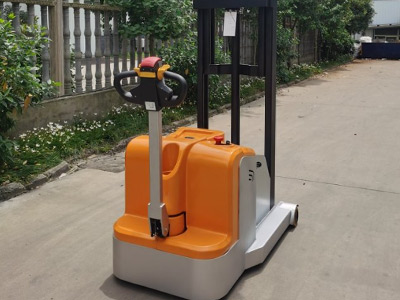
Standard Operation Steps (Step-by-Step)
Approach the Pallet and Adjust the ForksHold the control handle firmly with both hands.Slowly drive the stacker directly in front of the pallet.Set the fork height slightly below the pallet holes, then align and insert carefully.
Lift the LoadPress the lift button to raise the forks smoothly.Keep the load 10–20 cm above the ground before moving; avoid lifting too high.Ensure the load center is balanced—no offset or overloading.
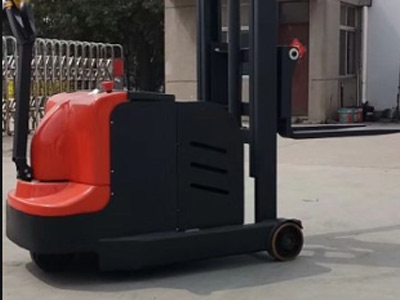
Transport the LoadGrip the control handle, push the speed switch gently, and start slowly.Move at a constant speed; avoid sudden acceleration or sharp braking.Slow down when turning and watch for nearby people and obstacles.Move carefully in small spaces and narrow aisles for maximum safety.
Stack and Place the LoadDrive to the target location, stop the Walkie Counterbalance Stacker completely.Lift slowly to the target height and align with the storage position.After confirming the load is stable, withdraw the forks slowly.Never lift or lower the forks while driving.
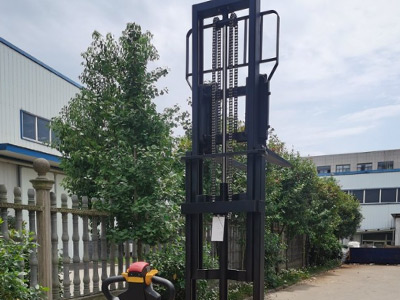
Finish the WorkLower the forks to the lowest position.Park the stacker in the designated area, apply the brake or cut off the power.Clean debris from the wheels and forks.
In summary, you will find that How to Operate a Walkie Counterbalance Stacker is not difficult, but there are many important details. These seemingly small details are the key to safe and efficient forklift operation. This guide is designed to help you work safer, easier, and more efficiently with your walkie counterbalance stacker in 2026.
-
 Reliability Of Newnewton Warehouse Forklifts For Heavy-Duty ShiftsWarehouse forklift reliability relies on industrial parts, reinforced frames and factory durability tests. Proper operation and maintenance reduce unexpected downtime.
Do you like ?0
Read more -
 Forklift Configuration Strategy For Dense Warehousing, Warehouse ForkliftDense warehousing needs matched forklifts besides racks. Reach and trilateral stackers fit different layouts, coordinate aisle, load curve and floor for smooth handling.
Do you like ?0
Read more -
 Full Container Supply For Export Forklifts, Forklift ManufacturerBulk forklift orders for overseas can ship by FCL or LCL. Newnewton FCL offers stable freight, safer packing and mixed models for large purchases.
Do you like ?0
Read more -
 Stand-on Reach Stacker For Narrow Aisle Stacking, Mast Reach StructureStand-on reach stackers feature sliding masts that stay outside racks. They boost storage density in narrow aisles and require flat floors and standard pallets.
Do you like ?0
Read more -
 Stand-on Counterbalance Stacker For Various Pallets, Why No Leg RestrictionCounterbalance stackers have no front outriggers, using rear counterweight to avoid pallet interference. They fit various odd pallets yet need wider warehouse aisles.
Do you like ?0
Read more -
 Custom Walk-Behind Counterbalance Stacker | Non-Standard ModificationsStandard walk-behind counterbalance stackers struggle with non-standard pallets and tight aisles. Customize load, lift, forks and structure, share working conditions for safe design.
Do you like ?0
Read more