
Master the Safe Unloading Procedure for Stackers · Safer Daily Operation
Master the standard safe unloading procedure for stackers, and you can use your equipment with greater confidence.
If you work with a stacker, you must follow standard steps during unloading. Proper and regulated operation ensures efficient handling and protects both operators and loaded goods. Below is the complete process.
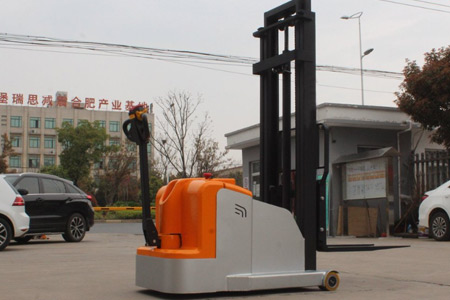
Align slowly and approach the target steadily.
A pedestrian counterbalanced stacker moves flexibly, but alignment must be slow and careful. Drive at a low speed toward racks or containers. Keep the machine straight and align the forks parallel to the pallets. Do not rush forward or push goods with tilted forks, which may cause falling pallets, drifting bodies and rollover risks.
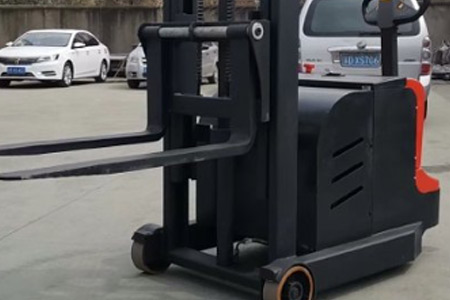
Lower and adjust the forks, and confirm balanced loading.
After alignment, lower the forks gently and adjust the height to support the pallet evenly. Check whether goods are centered, tilted or hanging outside. Do not unload when gravity deviates, as this leads to tipping. Adjust first, and then place down for better safety.
Drop the forks at a steady speed and unload slowly.
During formal unloading, keep every movement steady. Avoid fast dropping or sudden releasing. Fast falling makes goods shake and collapse, and damages the hydraulic system. Lower the forks little by little. After the forks leave the pallet and the goods stand stable, move backward slowly.
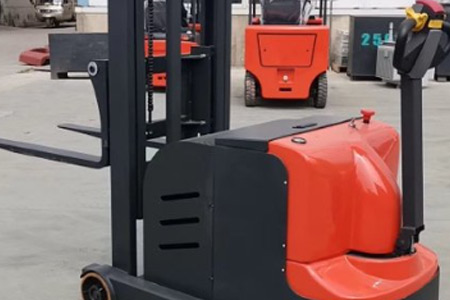
Move back and park the stacker in standard order.
Drive your pedestrian counterbalanced stacker straight backward at low speed. Do not turn sharply or lower forks while reversing. After leaving the working area, drop the forks to the lowest position, park in the marked zone, cut off power and pull the hand brake. Charge the machine in time when idle, so as to extend overall service life.
-
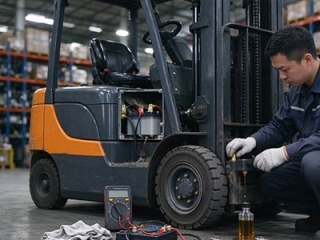 Reliability Of Newnewton Warehouse Forklifts For Heavy-Duty ShiftsWarehouse forklift reliability relies on industrial parts, reinforced frames and factory durability tests. Proper operation and maintenance reduce unexpected downtime.
Do you like ?0
Read more -
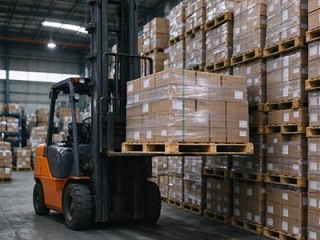 Forklift Configuration Strategy For Dense Warehousing, Warehouse ForkliftDense warehousing needs matched forklifts besides racks. Reach and trilateral stackers fit different layouts, coordinate aisle, load curve and floor for smooth handling.
Do you like ?0
Read more -
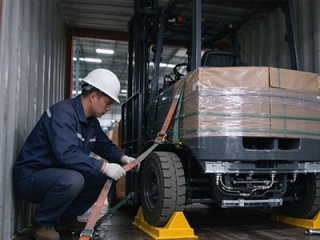 Full Container Supply For Export Forklifts, Forklift ManufacturerBulk forklift orders for overseas can ship by FCL or LCL. Newnewton FCL offers stable freight, safer packing and mixed models for large purchases.
Do you like ?0
Read more -
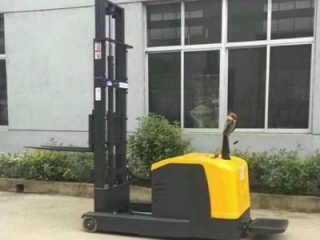 Stand-on Reach Stacker For Narrow Aisle Stacking, Mast Reach StructureStand-on reach stackers feature sliding masts that stay outside racks. They boost storage density in narrow aisles and require flat floors and standard pallets.
Do you like ?0
Read more -
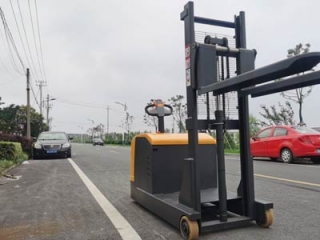 Stand-on Counterbalance Stacker For Various Pallets, Why No Leg RestrictionCounterbalance stackers have no front outriggers, using rear counterweight to avoid pallet interference. They fit various odd pallets yet need wider warehouse aisles.
Do you like ?0
Read more -
 Custom Walk-Behind Counterbalance Stacker | Non-Standard ModificationsStandard walk-behind counterbalance stackers struggle with non-standard pallets and tight aisles. Customize load, lift, forks and structure, share working conditions for safe design.
Do you like ?0
Read more








