
If you plan to buy electric pallet trucks, you need to know what the differences are between stand-on electric transporter and walk-behind electric transporter. Distinguishing these two types of pallet trucks helps you pick suitable equipment to boost warehouse efficiency. Below is the detailed comparison of stand-on and walk-behind models.
In terms of operation mode, operators walk along with walk-behind electric transporter and control moving directions via the handle. Operators need to walk together while turning. The stand-on electric pallet truck is equipped with an operating platform. Operators stand on the truck instead of walking beside it and control movement with the handle.
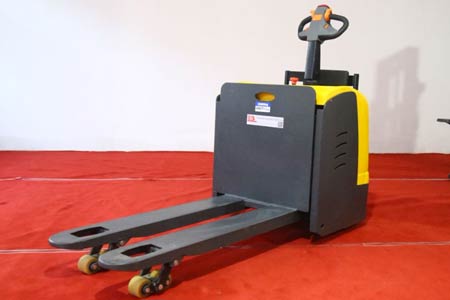
For working efficiency, walk-behind electric transporter suits small and medium warehouses with moderate cargo turnover. Its travel speed is relatively low, and operators will feel tired after long continuous work. The stand-on electric pallet truck runs faster and saves labor during long-distance transport. It improves handling efficiency greatly in high-throughput warehouses and fits frequent and long-distance pallet transportation.
When it comes to site and aisle requirements, the walk-behind model features a compact body and small turning radius. It works flexibly in narrow aisles and tight spaces and requires narrower working aisles. The stand-on electric pallet truck has an operation platform, which makes the whole body slightly longer. It needs wider aisles and works better in warehouses with sufficient aisle space.
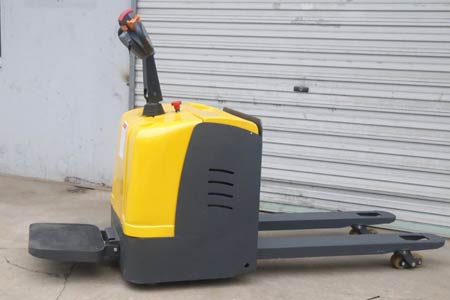
In purchase and operating cost, walk-behind electric transporter has a lower price and simple maintenance with less initial investment. The stand-on electric pallet truck owns a more complicated structure and higher purchasing cost. Its motor and electric control parts wear faster, leading to slightly higher maintenance cost later.
For application scenarios, walk-behind electric transporter fits small warehouses, scattered replenishment and short-distance transport for small enterprises with limited orders. The stand-on electric pallet truck is ideal for e-commerce warehouses and large storage sites. It is designed for long transport distance, high daily handling frequency and continuous bulk pallet loading and unloading.
You can choose the proper model according to actual conditions. Feel free to contact us if you need detailed forklift parameters.
-
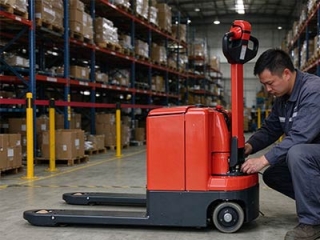 Maintenance Notes for Double Pallet Truck Under Heavy Warehouse LoadsOperators often ignore abnormal motor noise of double pallet trucks during rush orders. Continuous operation burns motors. Timely maintenance prevents failures.
Do you like ?0
Read more -
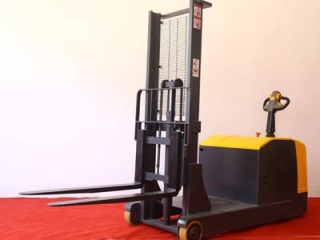 How to Get Accurate Quotations for Stand-on Counterbalance StackerStand-on counterbalance stackers rely on rear weight for stability and cost more. Battery, load, lift height and custom options affect final quotations.
Do you like ?0
Read more -
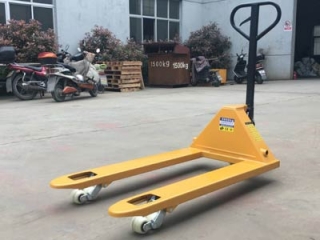 Manual Stacker Vs Pallet Jack: Key Operational Function DifferencesNew buyers confuse manual pallet trucks and manual stackers. They differ in lifting function. Pallet trucks for transfer, stackers for racking to avoid risks.
Do you like ?0
Read more -
 Custom Forklift Dimensions for Export to Fit Narrow Warehouse AislesForklift export faces size risks. Overseas orders may fail door, container or aisle fit. Customization needs balance of gravity, load and target market certifications.
Do you like ?0
Read more -
 Forklift Safety Management Guide Based on Special Equipment SpecificationsForklifts are special equipment. Follow TSG 81 with training, records, inspection and on-site control to prevent accidents and penalties.
Do you like ?0
Read more -
 Heavy-Duty Diesel Forklift High Temperature Troubleshooting Guide3.5t diesel forklifts often overheat when handling sand and stone. Inspect cooling system step by step: radiator, belt, shroud, thermostat and water pump.
Do you like ?0
Read more








