What are the common methods for fault diagnosis of the hydraulic system of a semi-electric stacker?
Before looking for a fault diagnosis method, we first understand the fault phenomenon. And the working principle of the semi-electric stacker. Carry out a detailed analysis of the hydraulic device accessories of the car, and be familiar with the structure, working principle and characteristics of each component. Analyze and diagnose the cause of the fault according to the fault phenomenon.
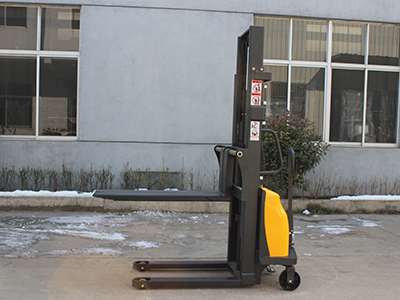
After understanding the above information, you can basically diagnose faults. Usually, professional warehouse electric forklift manufacturers will first suggest that by observing the action of each component, whether the oil level is appropriate, whether there is a difference between the oil quality and the system diagnosis range; secondly, whether the system noise is too large, and whether the overflow valve has a whistling sound , Whether the impact sound is too loud when the mechanism is moving; touch the pump valve and pipeline and other hydraulic components with your hand again to observe whether the equipment is overheated, abnormal vibration, or whether there is a flow interruption, etc.; and that is, whether the hydraulic oil has Whether the deteriorating smell is caused by the overheating of the hydraulic oil causing the rubber parts to emit an abnormal smell and whether the hydraulic pump has a sintering smell.
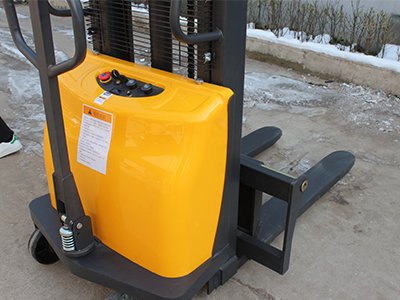
In addition to the above methods, we can use the exclusion method for diagnosis. By understanding the fault phenomenon, analyzing the principle and checking the fault location in three steps, you can list the possible causes of the fault and the faulty components, and then use the troubleshooting method to troubleshoot or determine the components that are easier to check. In this way, the fault range can be reduced, and the fault can be locked in a few or a more complex component, and then replace the suspected faulty component with a new component of the same specification to test the problem.
Generally, semi-electric stackers or other types of electric forklifts can diagnose and eliminate hydraulic system faults through the above processes.
-
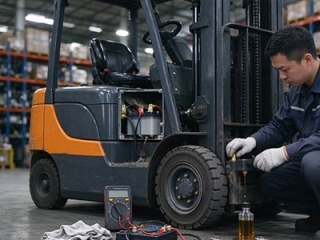 Reliability Of Newnewton Warehouse Forklifts For Heavy-Duty ShiftsWarehouse forklift reliability relies on industrial parts, reinforced frames and factory durability tests. Proper operation and maintenance reduce unexpected downtime.
Do you like ?0
Read more -
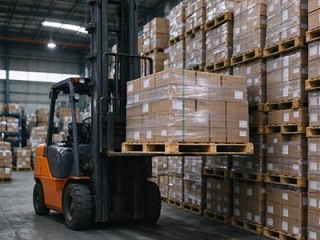 Forklift Configuration Strategy For Dense Warehousing, Warehouse ForkliftDense warehousing needs matched forklifts besides racks. Reach and trilateral stackers fit different layouts, coordinate aisle, load curve and floor for smooth handling.
Do you like ?0
Read more -
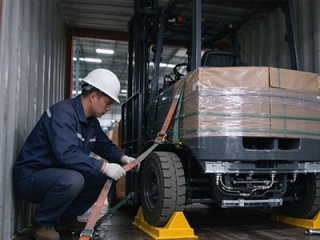 Full Container Supply For Export Forklifts, Forklift ManufacturerBulk forklift orders for overseas can ship by FCL or LCL. Newnewton FCL offers stable freight, safer packing and mixed models for large purchases.
Do you like ?0
Read more -
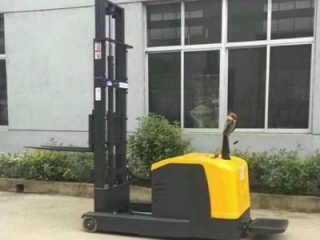 Stand-on Reach Stacker For Narrow Aisle Stacking, Mast Reach StructureStand-on reach stackers feature sliding masts that stay outside racks. They boost storage density in narrow aisles and require flat floors and standard pallets.
Do you like ?0
Read more -
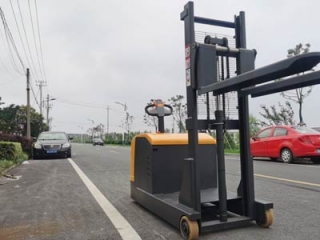 Stand-on Counterbalance Stacker For Various Pallets, Why No Leg RestrictionCounterbalance stackers have no front outriggers, using rear counterweight to avoid pallet interference. They fit various odd pallets yet need wider warehouse aisles.
Do you like ?0
Read more -
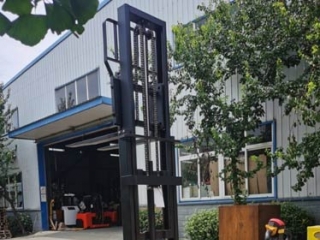 Custom Walk-Behind Counterbalance Stacker | Non-Standard ModificationsStandard walk-behind counterbalance stackers struggle with non-standard pallets and tight aisles. Customize load, lift, forks and structure, share working conditions for safe design.
Do you like ?0
Read more