
Many warehouse managers easily fall into the misunderstanding of blindly pursuing ultra-large load capacity and ultra-high lifting height when purchasing handling equipment. Small and medium warehouses are usually featured with narrow space, fluctuating workload and limited budget. If you are wondering how to choose forklifts for small warehouses, you do not need to only focus on parameter limits. Grasp three core criteria to match your actual operation demands.
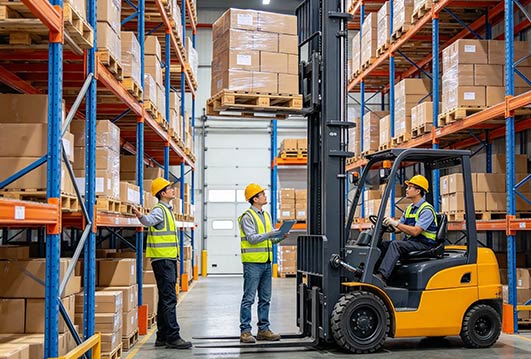
First, match the site passage conditions first. Most small warehouses have dense shelf arrangements, making aisle width the top priority. Measure the net aisle width before purchasing, because different warehouse vehicles have totally different turning radii. For narrow aisles, walk-behind or stand-on forklifts are the best choice. Counterbalance forklifts are suitable for relatively open space. Meanwhile, ground conditions cannot be ignored. Flat indoor ground adapts to electric warehouse vehicles, while bumpy ground or outdoor hybrid scenarios require forklifts with higher chassis.
Second, fit daily cargo operation requirements. Select forklift load and lifting height according to conventional cargo weight and shelf height, instead of occasional heavy goods. Long-term overload operation will accelerate equipment wear and bring potential safety hazards. Check whether the fork width and length are compatible with daily pallet specifications to avoid abnormal handling after equipment arrival.
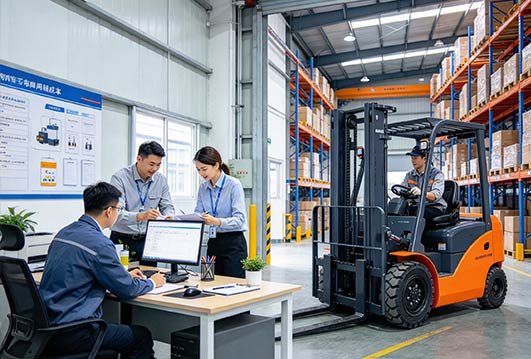
Third, calculate the full-cycle operating cost comprehensively. The purchase price is only a one-time expense. Subsequent battery replacement, parts repair and daily maintenance will generate long-term costs. For small and micro enterprises with low operation frequency, compare the maintenance differences of different power models. Choose reliable manufacturers with stable parts supply and fast after-sales response to reduce downtime losses caused by equipment faults.
In short, it is easy to select qualified special forklifts for small and medium warehouses by following the above principles. If you need warehouse equipment selection support, provide your aisle size, cargo load and lifting height to get a free customized forklift solution for small warehouses.
-
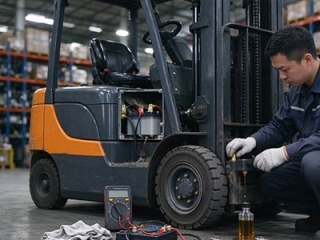 Reliability Of Newnewton Warehouse Forklifts For Heavy-Duty ShiftsWarehouse forklift reliability relies on industrial parts, reinforced frames and factory durability tests. Proper operation and maintenance reduce unexpected downtime.
Do you like ?0
Read more -
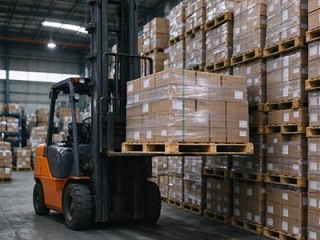 Forklift Configuration Strategy For Dense Warehousing, Warehouse ForkliftDense warehousing needs matched forklifts besides racks. Reach and trilateral stackers fit different layouts, coordinate aisle, load curve and floor for smooth handling.
Do you like ?0
Read more -
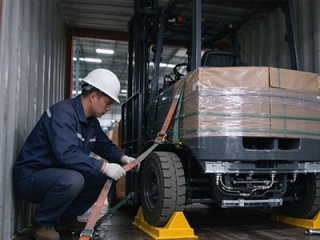 Full Container Supply For Export Forklifts, Forklift ManufacturerBulk forklift orders for overseas can ship by FCL or LCL. Newnewton FCL offers stable freight, safer packing and mixed models for large purchases.
Do you like ?0
Read more -
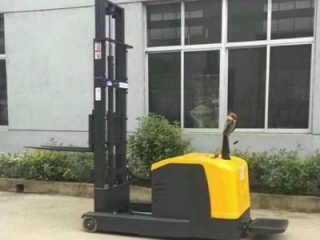 Stand-on Reach Stacker For Narrow Aisle Stacking, Mast Reach StructureStand-on reach stackers feature sliding masts that stay outside racks. They boost storage density in narrow aisles and require flat floors and standard pallets.
Do you like ?0
Read more -
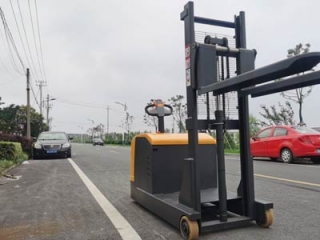 Stand-on Counterbalance Stacker For Various Pallets, Why No Leg RestrictionCounterbalance stackers have no front outriggers, using rear counterweight to avoid pallet interference. They fit various odd pallets yet need wider warehouse aisles.
Do you like ?0
Read more -
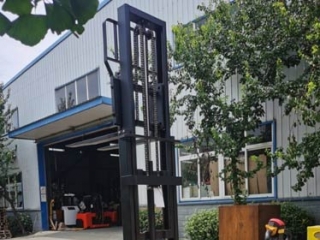 Custom Walk-Behind Counterbalance Stacker | Non-Standard ModificationsStandard walk-behind counterbalance stackers struggle with non-standard pallets and tight aisles. Customize load, lift, forks and structure, share working conditions for safe design.
Do you like ?0
Read more








