
When planning forklift purchase, many micro enterprises only compare unit prices while ignoring actual warehouse working conditions. Unsuitable equipment often cannot pass narrow aisles or match cargo load, causing waste of funds. Aimed at small and medium warehouses with compact space, limited budget and low operation frequency, forklift selection & procurement for micro enterprises can follow five core dimensions to avoid common selection errors.
First, confirm the working aisle size. Most small and medium warehouses have compact shelf layouts with narrow aisles. Different forklifts require different aisle widths. Pedestrian handling trucks occupy the smallest space, stand-on stackers are moderate, and counterbalance forklifts need wider passages. Unqualified aisle size will directly affect normal equipment operation.
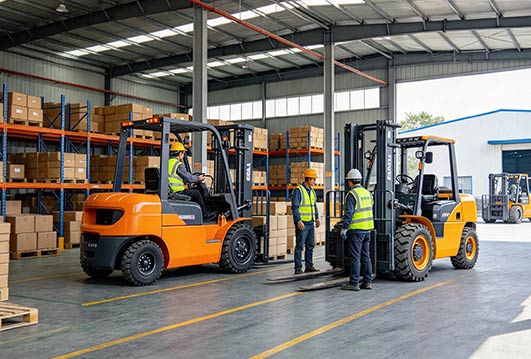
Second, match actual cargo specifications. Determine forklift load capacity and lifting height according to daily cargo weight and shelf height. It is necessary to reserve a safety margin instead of long-term full-load operation, which will accelerate equipment aging. Make sure the fork size adapts to conventional pallets in the warehouse.
Third, adapt to actual working environment. Electric forklifts are preferred for flat indoor warehouses with zero emission and low noise. For outdoor bumpy yards, rough terrain forklifts are more suitable. Cold storage warehouses need low-temperature resistant batteries and accessories to ensure stable power output.
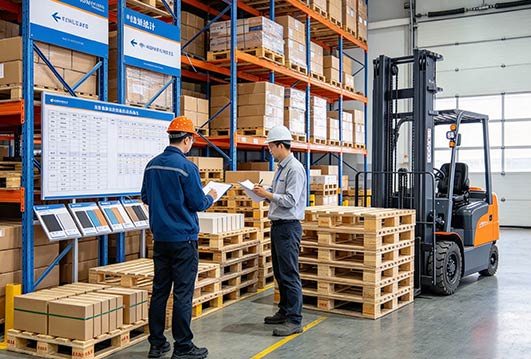
Fourth, comprehensively evaluate budget and later maintenance cost. The total procurement cost includes not only the machine price, but also battery replacement, accessories and daily maintenance expenses. Micro enterprises should choose reliable forklift manufacturer for small and medium warehouses with convenient accessory supply and fast after-sales service to reduce downtime loss.
Fifth, consider operation threshold and certification requirements. Prioritize simple and easy-to-operate forklift models that do not require complex training. For micro enterprises with high staff mobility, low-threshold equipment effectively reduces training costs and operational safety risks.
If you do not know which forklift is suitable for your warehouse working conditions, you can send us site size, cargo weight and working shifts. As a professional forklift manufacturer for small and medium warehouses, we provide targeted and customized forklift selection solutions.
-
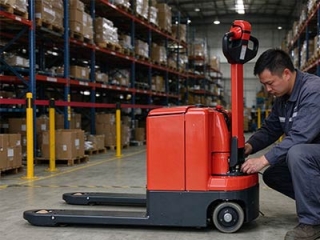 Maintenance Notes for Double Pallet Truck Under Heavy Warehouse LoadsOperators often ignore abnormal motor noise of double pallet trucks during rush orders. Continuous operation burns motors. Timely maintenance prevents failures.
Do you like ?0
Read more -
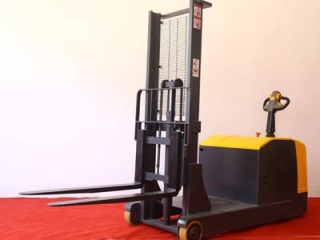 How to Get Accurate Quotations for Stand-on Counterbalance StackerStand-on counterbalance stackers rely on rear weight for stability and cost more. Battery, load, lift height and custom options affect final quotations.
Do you like ?0
Read more -
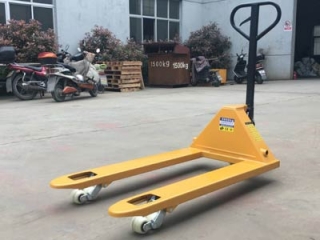 Manual Stacker Vs Pallet Jack: Key Operational Function DifferencesNew buyers confuse manual pallet trucks and manual stackers. They differ in lifting function. Pallet trucks for transfer, stackers for racking to avoid risks.
Do you like ?0
Read more -
 Custom Forklift Dimensions for Export to Fit Narrow Warehouse AislesForklift export faces size risks. Overseas orders may fail door, container or aisle fit. Customization needs balance of gravity, load and target market certifications.
Do you like ?0
Read more -
 Forklift Safety Management Guide Based on Special Equipment SpecificationsForklifts are special equipment. Follow TSG 81 with training, records, inspection and on-site control to prevent accidents and penalties.
Do you like ?0
Read more -
 Heavy-Duty Diesel Forklift High Temperature Troubleshooting Guide3.5t diesel forklifts often overheat when handling sand and stone. Inspect cooling system step by step: radiator, belt, shroud, thermostat and water pump.
Do you like ?0
Read more








