
The circuit of an electric forklift shown in Figure 1 is a schematic diagram of the principle of a DC motor. The magnetic poles N and S are a pair of magnetic poles generated by the main magnetic pole, and the coil abcd represents the armature coil (winding); A and B represent inverters, small squares represent brushes, and U represents the applied power voltage. As shown in Figure 1:
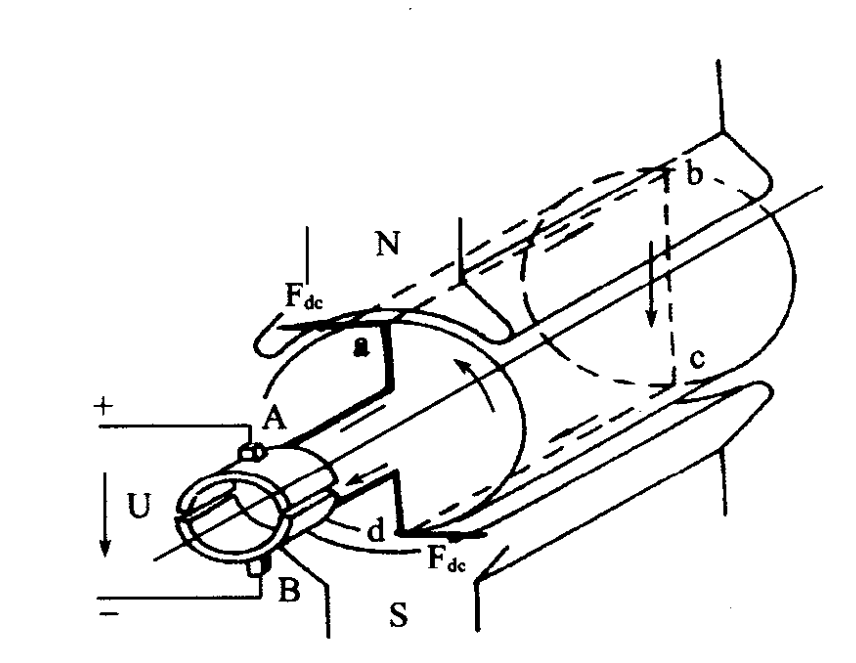
We know that the electrified conductor of an electric forklift motor is subjected to a force in a magnetic field, and the direction of the force is determined using the left-hand rule. The current on edge ab in the figure is from a-b; The current on the edge of cd is cd. Therefore, according to the left-hand rule, it can be determined that the force Fa on edge ab is to the left, while the force F on edge cd is to the right. Therefore, the coil abed is subjected to a counterclockwise rotation torque.
When the DC motor coil abcd rotates 180 degrees, the ab and cd edges align with the position shown in the diagram, and the commutator also rotates 180 degrees with the coil. As a result, the current direction of ab and cd edges is reversed. According to the left hand rule, it is determined that the force on edge cd is to the left, while the force on edge ab is to the right. The coil abcd is still subjected to a counterclockwise torque. Therefore, the coil, along with the armature core, rotates, which is the working principle of a DC motor. So, what factors are related to the torque received by the armature? From the working principle of an electric motor, it can be seen that the greater the magnetic flux generated by the main magnetic pole, the greater the current flowing into the armature winding, and the more windings the armature winding are, the greater the torque received. Since this torque is generated by the interaction between current and magnetism, we call it electromagnetic torque, represented by T. Obviously, the electromagnetic torque T can be expressed as follows:
T=CTIAφ
In the formula: C-and motor structure
I - Current in the armature;
φ— The magnetic flux of a magnetic field.
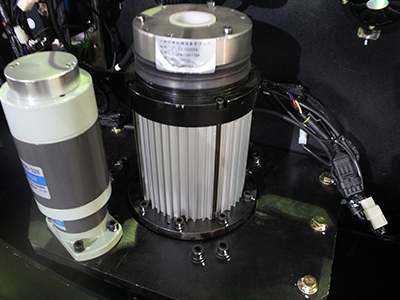
Due to the magnetic field lines generated by the armature winding (conductor) of the electric forklift DC motor cutting the main magnetic pole during rotational motion, an induced electromotive force is also generated in these windings (conductors). This induced electromotive force is opposite to the direction of the applied voltage, so it is called a back electromotive force, denoted as E. express. The magnitude of the back electromotive force EA is obviously related to the strength of the magnetic field and the speed of the rotation, and its expression is:
EA=CePn
In the formula: Ce - constant related to the motor structure;
Φ—— The magnetic flux generated by the main magnetic pole;
N-speed of an electric motor.
-
 Reliability Of Newnewton Warehouse Forklifts For Heavy-Duty ShiftsWarehouse forklift reliability relies on industrial parts, reinforced frames and factory durability tests. Proper operation and maintenance reduce unexpected downtime.
Do you like ?0
Read more -
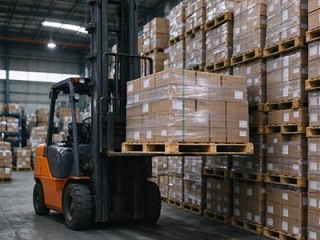 Forklift Configuration Strategy For Dense Warehousing, Warehouse ForkliftDense warehousing needs matched forklifts besides racks. Reach and trilateral stackers fit different layouts, coordinate aisle, load curve and floor for smooth handling.
Do you like ?0
Read more -
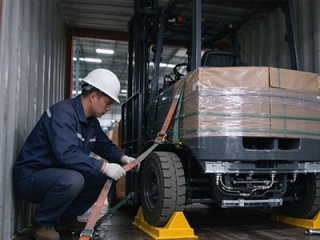 Full Container Supply For Export Forklifts, Forklift ManufacturerBulk forklift orders for overseas can ship by FCL or LCL. Newnewton FCL offers stable freight, safer packing and mixed models for large purchases.
Do you like ?0
Read more -
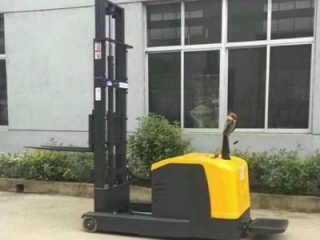 Stand-on Reach Stacker For Narrow Aisle Stacking, Mast Reach StructureStand-on reach stackers feature sliding masts that stay outside racks. They boost storage density in narrow aisles and require flat floors and standard pallets.
Do you like ?0
Read more -
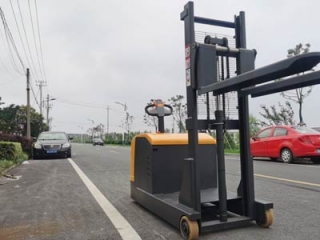 Stand-on Counterbalance Stacker For Various Pallets, Why No Leg RestrictionCounterbalance stackers have no front outriggers, using rear counterweight to avoid pallet interference. They fit various odd pallets yet need wider warehouse aisles.
Do you like ?0
Read more -
 Custom Walk-Behind Counterbalance Stacker | Non-Standard ModificationsStandard walk-behind counterbalance stackers struggle with non-standard pallets and tight aisles. Customize load, lift, forks and structure, share working conditions for safe design.
Do you like ?0
Read more








