
Technical inspection of 2t electric traction vehicle in complete condition
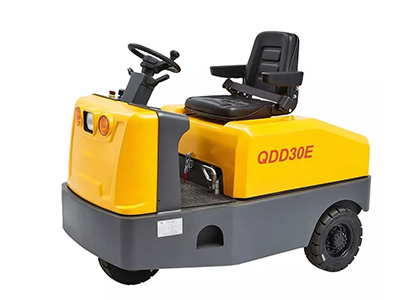
The inspection items for the complete state of the 2t electric traction vehicle by the Electric forklift manufacturer are as follows:
1. Inspection of electric traction vehicles (air return). Tie a wire to the steering shaft sleeve, one end to the outer edge of the steering wheel. Turn the steering wheel clockwise (counterclockwise) to align the front wheels in a certain direction. At this point, note the position of the iron wire on the steering wheel, and then turn the steering wheel in the opposite direction. When the front wheels are about to move, stop rotating and mark the outer edge of the steering wheel with the iron wire. Use a protractor to measure the angle between two marks, which is the free angle of the steering wheel.
2. (i.e. stationary state), use a force measuring device to pull the outer edge of the steering wheel in the tangential direction of the outer circle of the steering wheel, and the force should not exceed the specified value.
3. Inspection of the working stroke of the brake pedal of a 2t electric tractor. The Electric forklift manufacturer records the position of the center point of the pedal arc in the free state.
Step on the pedal until it stops moving, then note the position of the point and measure the distance between the two points with a ruler.
4. Check the voltage of the battery pack. Measure the voltage between the two poles of the battery pack using a multimeter, and the value is.

5. Check the maximum speed. On a flat cement road surface, measure the time t (in seconds) required for the tractor to travel 50 meters in a straight line with full load and full speed. The maximum speed is expressed as:
V=180/t
In the formula: v - maximum speed (km/h);
T - Measure the time required to travel 50m (s).
6. Inspection of emergency braking distance for 2t electric traction vehicles. On a flat cement road surface, the tractor runs at full speed with full load, quickly steps on the brake pedal, and measures the length of the black mark on the ground. The electric forklift manufacturer believes that the value should not exceed the specified value.
7. Check the smoothness of the starting transmission. Slowly press the accelerator pedal, the tractor should start slowly from a stationary state and accelerate continuously from slow to slow. The driver should have no feeling of sudden speed changes.
8. Inspection of electrical equipment. Pull the switch, and the corresponding voltmeter, lights, indicator lights and audio should be displayed; When the tractor is driving, the reading of the ammeter should change with the change of speed and be proportional.
-
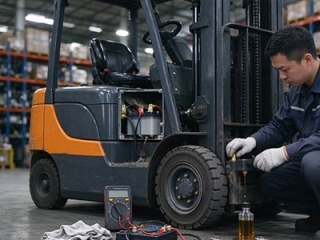 Reliability Of Newnewton Warehouse Forklifts For Heavy-Duty ShiftsWarehouse forklift reliability relies on industrial parts, reinforced frames and factory durability tests. Proper operation and maintenance reduce unexpected downtime.
Do you like ?0
Read more -
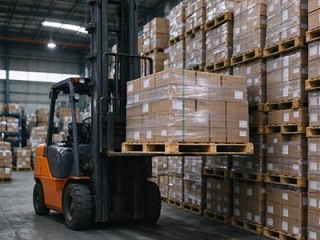 Forklift Configuration Strategy For Dense Warehousing, Warehouse ForkliftDense warehousing needs matched forklifts besides racks. Reach and trilateral stackers fit different layouts, coordinate aisle, load curve and floor for smooth handling.
Do you like ?0
Read more -
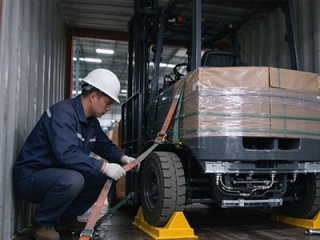 Full Container Supply For Export Forklifts, Forklift ManufacturerBulk forklift orders for overseas can ship by FCL or LCL. Newnewton FCL offers stable freight, safer packing and mixed models for large purchases.
Do you like ?0
Read more -
 Stand-on Reach Stacker For Narrow Aisle Stacking, Mast Reach StructureStand-on reach stackers feature sliding masts that stay outside racks. They boost storage density in narrow aisles and require flat floors and standard pallets.
Do you like ?0
Read more -
 Stand-on Counterbalance Stacker For Various Pallets, Why No Leg RestrictionCounterbalance stackers have no front outriggers, using rear counterweight to avoid pallet interference. They fit various odd pallets yet need wider warehouse aisles.
Do you like ?0
Read more -
 Custom Walk-Behind Counterbalance Stacker | Non-Standard ModificationsStandard walk-behind counterbalance stackers struggle with non-standard pallets and tight aisles. Customize load, lift, forks and structure, share working conditions for safe design.
Do you like ?0
Read more








