

The basic principles for disassembling and dismantling electric forklifts by forklift manufacturers are as follows: during mechanical disassembly, in order to prevent component damage, improve work efficiency, and create good conditions for future maintenance and repair, the following principles should be followed.
1. Before disassembling electric forklifts from forklift manufacturers, it is necessary to understand the structure and working principle of each mechanical part. There are many types and models of electric forklifts and tractors, and new structures are constantly emerging. Before understanding their structure and working principle, do not disassemble them blindly, otherwise it may cause component damage or other accidents.
2. Before disassembling the electric forklift from the forklift manufacturer, the entire vehicle should be cleaned to prevent dirt from entering the interior of each assembly.
Starting from reality, disassemble as needed. Disassembly is for inspection, maintenance, and repair. If individual parts of the machinery can be identified without disassembly, this part may not be disassembled. At the same time, it is necessary to avoid the phenomenon of disassembling the assembly due to small parts and multiple parts due to one malfunction. This can save labor, avoid damage to parts during disassembly and reduce assembly accuracy. For the parts that are not dismantled, it is necessary to ensure a maintenance and repair interval.

3. Forklift manufacturers' electric forklifts should be disassembled in the correct order. External cleaning is required before disassembly; When disassembling, remove first.
Remove external accessories, then disassemble and place them in the order of assembly, components, and parts. 5. Use tools reasonably. The tools used must be compatible with the dismantled parts. If disassembling threaded connecting rod components, a wrench of equivalent size should be used, and when disassembling static fitting components, a dedicated disassembly tool or press should be used; Do not hammer or damage the parts in a disorderly manner, which may cause serious deformation or damage, and do not use measuring tools, pliers, or wrenches to replace hand hammers and cause tool damage.
4. The disassembly of electric forklifts by forklift manufacturers should be prepared for assembly. Non interchangeable parts should be marked or placed in pairs during disassembly to ensure accuracy during assembly. If the valve stems and valve bodies of a multi way directional valve are not interchangeable, they should be placed in pairs and not mistaken. The disassembled parts should be classified and stored for easy retrieval to prevent loss, damage, and mistake.
-
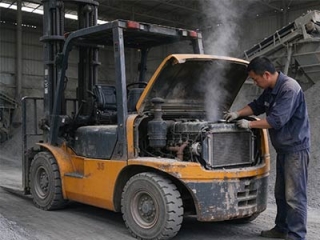 Heavy-Duty Diesel Forklift High Temperature Troubleshooting Guide3.5t diesel forklifts often overheat when handling sand and stone. Inspect cooling system step by step: radiator, belt, shroud, thermostat and water pump.
Do you like ?0
Read more -
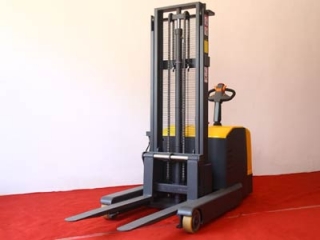 How to Choose Stackers for High-Level Access in Raw Material WarehouseRide-on reach stackers save aisle space for high racks. Good visibility for bulk raw materials. Select based on load curve and residual high-lift capacity.
Do you like ?0
Read more -
 Rain Operation Rules for Legless Walk-Behind Counterbalance StackerLegless walkie counterbalance stackers are not waterproof. Only short-time use in light rain. Stop operation in heavy rain and follow safety rules on wet floors.
Do you like ?0
Read more -
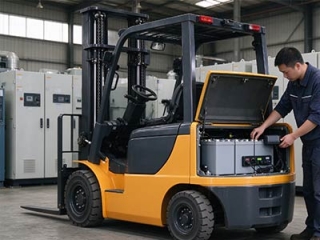 Avoid Hidden Costs When Buying Four-Wheel Electric Counterbalance ForkliftDo not compare only prices for four-wheel electric forklifts. Confirm load, lift, battery and warranty in quotes to avoid downgraded parts and extra charges.
Do you like ?0
Read more -
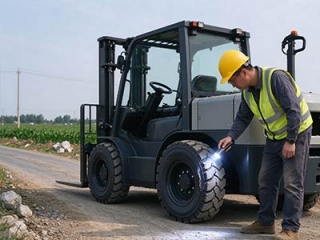 Tire Wear Inspection Methods for Rough-Terrain Walk Pallet TruckOff-road walkie pallet trucks face frequent tyre wear. Check tread pattern, sidewall damage and uneven wear to prevent skidding and blowouts.
Do you like ?0
Read more -
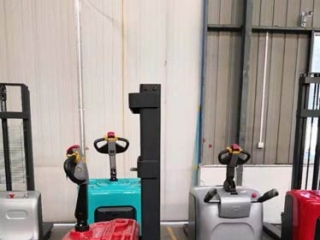 Full Electric Stacker With Foot Platform | Aisle Selection GuideWarehouse planning often overlooks turning radius. Stand-on stackers need extra aisle space. Insufficient clearance causes poor turning and reduces storage efficiency.
Do you like ?0
Read more








