
What Is the Difference Between Brushed and Brushless Forklift Drive Motors
Many warehouse managers hesitate over motor types when upgrading electric pallet trucks and stackers. Most of them only know brushless motors cost more, yet they fail to realize carbon brushes are the core part that creates a big gap in later maintenance. There are clear differences between brushed and brushless forklift drive motors. Buyers need to get the facts before making decisions.
A brushed motor contains carbon brushes and a commutator. Current commutation relies on continuous friction contact of carbon brushes. This mature design works with simple controllers and lowers the initial purchase cost. It delivers soft torque at low startup speed without sudden jerking movement.
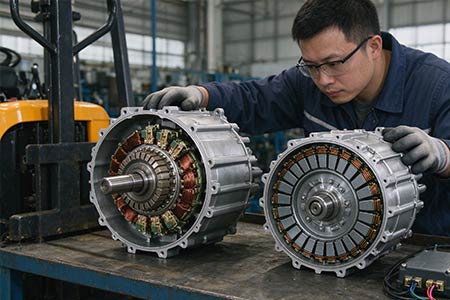
However, carbon brushes are consumable parts. They wear much faster in dusty raw material workshops and gravel yards. Carbon dust accumulates inside the motor and contaminates the commutator, requiring regular disassembly for cleaning and carbon brush replacement. If maintenance is delayed, the motor will stop working once carbon brushes are worn out and interrupt material handling.
A brushless motor removes the mechanical contact structure of carbon brushes and commutators. It runs via electronic commutation, producing no carbon dust. It operates more quietly and generates less heat, making it suitable for food and electronic workshops with strict cleanliness requirements.
It eliminates routine carbon brush replacement work. It maintains stable output during long two-shift continuous operations and enjoys a longer service life. The downside lies in its complex matching electric control system, which pushes up the overall equipment price. Faults on electric control parts are harder to repair with higher spare part costs compared to brushed models.
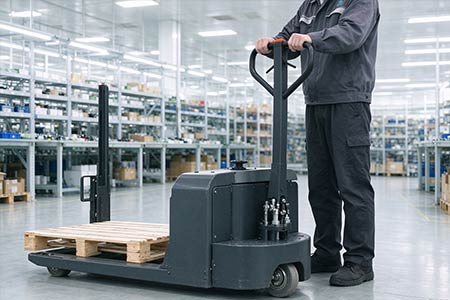
One easily overlooked point: brushless motors are not mandatory for all high-frequency scenarios. For single-shift daytime use with limited daily running hours, a brushed motor can run reliably with regular inspections. For assembly line supporting and nonstop all-day transfer, the downtime saved from maintenance makes brushless motors more cost-effective in the long run.
When choosing forklift drive motors with carbon brushes, do not judge merely by price. Weigh up workshop dust level, daily working hours and maintenance manpower. Brushed motors are suitable for tight budgets and low operation frequency. Brushless motors are preferred for low-maintenance needs, clean environments and long continuous running.
-
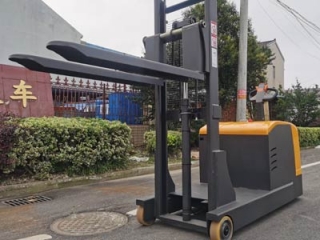 Legless Counterbalance Stacker: Solve Pallet Jamming ProblemsLegged stackers often jam thick pallets. Legless stand-on counterbalance stackers with rear weights handle irregular loads for workshops with mixed pallets and tool bins.
Do you like ?0
Read more -
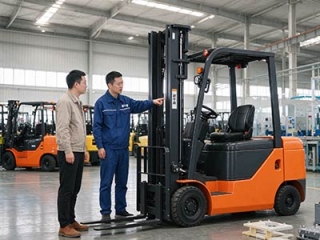 Reliable China Forklift Manufacturer for Warehouse Electric ForkliftsSourcing forklifts from multiple suppliers brings messy service. newnewton factory supplies full-range warehouse forklifts for spot, custom and export orders in one stop.
Do you like ?0
Read more -
 What Is the Difference Between Brushed and Brushless Forklift Drive MotorsBrushed and brushless drive motors differ in carbon brushes. Choose forklift motors by dust, working hours and maintenance instead of price alone.
Do you like ?0
Read more -
 Why Manual Pallet Jack Quotes Vary? Wheel Cost BreakdownPrice gaps of 2.5t manual pallet trucks mostly come from wheels. Nylon, PU and rubber wheels suit different floors. Cheap models often cut corners on wheels and bearings.
Do you like ?0
Read more -
 Walk-Behind vs Stand-On Counterbalance Stacker ComparisonCounterbalance stackers handle thick and special pallets. Walkie and stand-on versions have similar stacking capacity but differ in workload, aisle demand and operation experience.
Do you like ?0
Read more -
 How to Locate and Fix Steering Noise on Electric Towing TractorsElectric tow tractors often have recurring steering noise. Different sounds indicate different damaged parts. Locate faults and maintain properly to avoid repeated issues.
Do you like ?0
Read more








