
How To Respond When Walkie Counterbalance Stacker Tips Over, Safety Procedures
Although Walkie Counterbalance Stacker features stable structure and low rollover risk, tip-over accidents may still occur under heavy load or on uneven ground. Proper Stacker Tip-over Emergency Handling knowledge helps operators avoid severe injuries. Newnewton sorts out complete early warning signals, self-rescue skills and post-accident workflow.
Early Warning Signs of Impending Tip-over, Prevent Accidents In Advance
Once the following phenomena appear, slow down steadily, lower forks gently. Do NOT steer sharply or accelerate:
One side of the truck lifts obviously and wheels slightly leave the ground during loaded travelling;
The whole truck shakes continuously and feels unstable when turning with elevated cargo;
The truck swings violently and cannot recover stability after crossing pits or slopes;
Abnormal mast noise occurs during steering caused by unbalanced cargo load.

Industry test data: The higher the forks lift, the smaller the stable triangle of the truck. For a 1.5-ton Walkie Counterbalance Stacker, when lifting height exceeds 3m, the effective safe load drops by roughly 35%, greatly raising tip-over risks.
Correct Self-rescue Operations During Tip-over (Never Jump Blindly!)
Walkie Counterbalance Stacker is operated by walking alongside. Jumping off during overturning easily leads to crushing by frame and counterweight, which is the primary cause of serious injury. Follow requirements in DB41/T2913-2025 Operator Specification for Industrial Trucks:
Stay calm and avoid jumping outward;
Shift body toward the opposite tipping direction, stay away from squeezing areas of counterweight and mast;
Release travel control handle immediately to cut power output;
Hold the truck steadily to stabilize posture, evacuate only after the truck completely stops.
Common fatal mistake: Hasty backward or sideways escape when tilting happens. Misjudgment may result in being crushed by counterweight.

Complete Disposal Procedure After Stacker Tip-over
Evacuate surrounding personnel and set warning zones to prevent secondary overturning or cargo collapse injury;
Check for injured staff. Do not move patients with spinal injury randomly. Provide first aid and call emergency services promptly;
Cut off the main power supply of the stacker to avoid electric shock caused by short circuit from damaged cables;
Keep the accident site intact. Do not upright the truck or move cargo privately to facilitate subsequent fault investigation;
Report to warehouse safety supervisor immediately. Record working conditions: load weight, lifting height, road surface and operation actions.
Keep three core principles in mind: Identify early warning signs, avoid blind jumping, and standardize post-accident disposal. Regular safety training and standardized loading & driving rules for Walkie Counterbalance Stacker fundamentally reduce overturn hazards.
-
 Reliability Of Newnewton Warehouse Forklifts For Heavy-Duty ShiftsWarehouse forklift reliability relies on industrial parts, reinforced frames and factory durability tests. Proper operation and maintenance reduce unexpected downtime.
Do you like ?0
Read more -
 Forklift Configuration Strategy For Dense Warehousing, Warehouse ForkliftDense warehousing needs matched forklifts besides racks. Reach and trilateral stackers fit different layouts, coordinate aisle, load curve and floor for smooth handling.
Do you like ?0
Read more -
 Full Container Supply For Export Forklifts, Forklift ManufacturerBulk forklift orders for overseas can ship by FCL or LCL. Newnewton FCL offers stable freight, safer packing and mixed models for large purchases.
Do you like ?0
Read more -
 Stand-on Reach Stacker For Narrow Aisle Stacking, Mast Reach StructureStand-on reach stackers feature sliding masts that stay outside racks. They boost storage density in narrow aisles and require flat floors and standard pallets.
Do you like ?0
Read more -
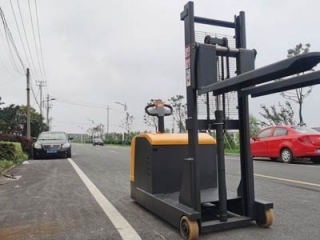 Stand-on Counterbalance Stacker For Various Pallets, Why No Leg RestrictionCounterbalance stackers have no front outriggers, using rear counterweight to avoid pallet interference. They fit various odd pallets yet need wider warehouse aisles.
Do you like ?0
Read more -
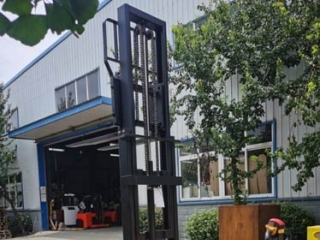 Custom Walk-Behind Counterbalance Stacker | Non-Standard ModificationsStandard walk-behind counterbalance stackers struggle with non-standard pallets and tight aisles. Customize load, lift, forks and structure, share working conditions for safe design.
Do you like ?0
Read more








