
Portable Forklift Maintenance | Practical Self-Lifting Stacker Upkeep Guide 2026
Many small and medium warehouses deploy Portable Forklift, also known as self-lifting stacker, for short-distance pallet stacking. A widespread problem among enterprises is reactive maintenance — repairing equipment only after breakdowns while ignoring daily preventive care. Proper Self-Lifting Stacker Maintenance effectively cuts unexpected downtime and long-term operating costs.
Statistics based on maintenance records from East China Warehouse Equipment Maintenance Alliance (2024–2026): 71% of severe failures on Portable Forklift originate from insufficient routine preventive maintenance. Standardized maintenance can lower overall equipment operation costs by 43%. Data Source: Summarized service tickets of more than 2,900 portable electric stacking equipment.
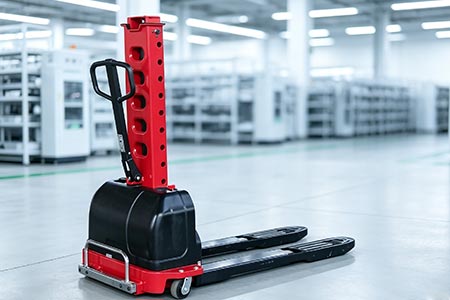
Real Customer Case Reference
One small e-commerce warehouse in Jiaxing, Zhejiang owned 7 sets of self-lifting stackers with low-frequency intermittent operation, without formal maintenance rules. Operators constantly drained batteries completely before charging, and tangled debris around wheels was never cleared. After 16 months of operation, problems including shortened runtime and hydraulic leakage occurred one after another. Annual expenses on repair and battery replacement exceeded 9,600 RMB.
Industry statistics and practical cases fully prove the value of regular maintenance. Follow these standardized upkeep procedures:
Daily Pre-shift Inspection (3 Minutes)
Check battery indicator; avoid deep discharge operation;
Clear ropes, carton scraps wrapped on load wheels and drive wheels;
Conduct no-load lifting test to check for slow descent and hydraulic oil leakage.
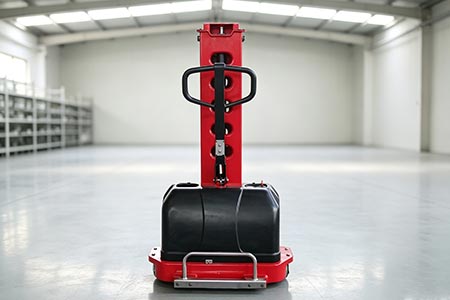
Weekly Maintenance Items
Remove dust on frame and electric control housing. Dust accumulation causes poor heat dissipation of circuits;
Visually inspect hydraulic cylinder surface; record scratches and oil seepage timely;
Check whether power plugs are loose or oxidized.
Monthly Key Maintenance
Apply lithium-based grease on rotating pin shafts to prevent jamming and abnormal noise during lifting;
Monitor battery status: check electrolyte level for lead-acid models; avoid long-term full-charge storage for lithium batteries;
Tighten all wiring terminals to eliminate hidden contact failure risks.
Warehouse operation management in 2026 should shift strategy from breakdown repair to preventive maintenance. Verified data shows standardized preventive care for Portable Forklift slows battery aging, reduces hydraulic faults, and continuously cuts costs on maintenance, downtime and spare parts replacement.
-
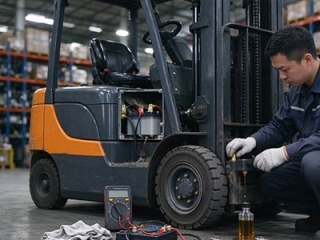 Reliability Of Newnewton Warehouse Forklifts For Heavy-Duty ShiftsWarehouse forklift reliability relies on industrial parts, reinforced frames and factory durability tests. Proper operation and maintenance reduce unexpected downtime.
Do you like ?0
Read more -
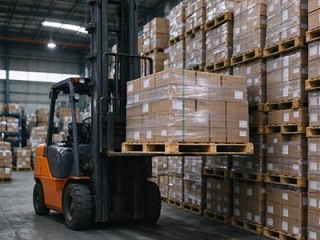 Forklift Configuration Strategy For Dense Warehousing, Warehouse ForkliftDense warehousing needs matched forklifts besides racks. Reach and trilateral stackers fit different layouts, coordinate aisle, load curve and floor for smooth handling.
Do you like ?0
Read more -
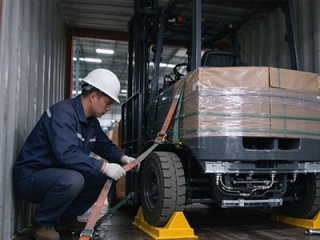 Full Container Supply For Export Forklifts, Forklift ManufacturerBulk forklift orders for overseas can ship by FCL or LCL. Newnewton FCL offers stable freight, safer packing and mixed models for large purchases.
Do you like ?0
Read more -
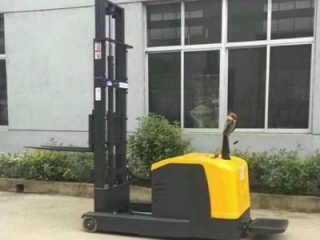 Stand-on Reach Stacker For Narrow Aisle Stacking, Mast Reach StructureStand-on reach stackers feature sliding masts that stay outside racks. They boost storage density in narrow aisles and require flat floors and standard pallets.
Do you like ?0
Read more -
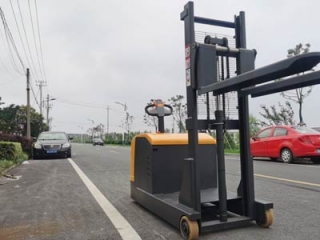 Stand-on Counterbalance Stacker For Various Pallets, Why No Leg RestrictionCounterbalance stackers have no front outriggers, using rear counterweight to avoid pallet interference. They fit various odd pallets yet need wider warehouse aisles.
Do you like ?0
Read more -
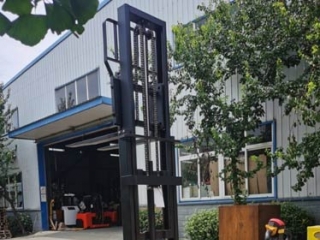 Custom Walk-Behind Counterbalance Stacker | Non-Standard ModificationsStandard walk-behind counterbalance stackers struggle with non-standard pallets and tight aisles. Customize load, lift, forks and structure, share working conditions for safe design.
Do you like ?0
Read more








