
The Outrigger-free Counterbalance Stacker is core handling equipment for daily warehouse stacking. Standardized periodic maintenance is the most effective way to extend service life and cut long-term repair costs. This full maintenance checklist complies with GB/T 44361-2024 Industrial trucks—Specification of inspection and maintenance, combined with Newnewton 2026 official service standards and long-duration durability test data, covering tiered daily, weekly and monthly maintenance items for the Daily Maintenance Items For Stand-on Counterbalance Stacker.
1. Pre-shift Daily Maintenance (5-minute mandatory inspection, eliminate sudden breakdown risks)
Daily inspection focuses on exclusive hidden hazards of outrigger-free models: counterweight stability, responsive steering and reliable braking. 2026 warehouse equipment lab tests prove standardized daily checks reduce unplanned downtime failures by over 60%.
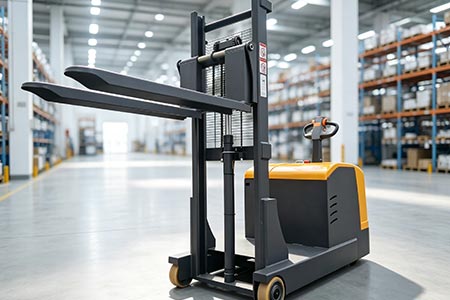
Counterweight system inspection: Visually check rear counterweight housing for cracks, impact dents and missing corners; confirm all fixing bolts are tight with no deformed rear frame to avoid tipping risks caused by offset counterweight.
Mast & fork inspection: Lift and lower full stroke with no abnormal noise or jamming, rollers run smoothly; verify forks free of bending, distortion and cracks, limit switches trigger accurately.
Hydraulic system inspection: Maintain hydraulic oil within standard level range; check cylinders, hoses and joints for oil seepage or dripping, uniform lifting speed without sudden acceleration/deceleration.
Brake & parking test: Test service brakes under empty and light load; confirm no sliding on slopes with responsive parking brake without delay.
Travel & steering inspection: Drive and steer wheels show even wear without unilateral abrasion or bulges; steering handle has no excessive free play and returns to center automatically.
Electrical safety inspection: Tight battery terminals free of oxidation; emergency stop, reverse buzzer and working lights fully functional, no dust accumulation inside electric control box.
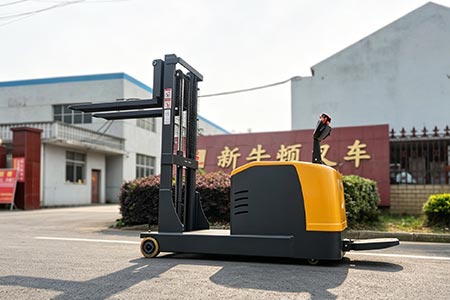
2. Weekly Maintenance (50 working hour cycle, focus on dry friction & wear parts)
Outrigger-free counterbalance stackers bear 30% higher rear steering load than conventional stackers due to frequent pivot steering, leading to premature dry wear on bearings and hinge joints. Weekly deep maintenance targets steering, transmission and fastener structures.
Clear debris from mast slide rails, apply special lithium grease to lifting chains and rollers for smooth jamming-free movement; disassemble, clean and re-grease rear steering hinge bearings to eliminate squeaking and jamming from heavy-load dry friction.
Fully retighten all critical bolts across the whole machine, including counterweight fixing screws, mast base bolts, wheel hub fasteners, stand-on platform and guardrail bolts, preventing loosening from long-term vibration.
Clean dust and impurities on hydraulic filter surfaces, unclog battery cooling air ducts, record wheel wear data and report severely worn wheels for replacement.
3. Monthly In-depth Maintenance (200 working hour cycle, mandatory national standard maintenance)
Monthly maintenance determines long-term stable operation and is a key audit item for safety supervision records. It targets exclusive counterweight assemblies, steering systems and core hydraulic & electrical components of outrigger-free stackers.
Remove counterweight protective cover, inspect internal fixing steel plates and aging shock-absorbing rubber pads, adjust counterweight gaps to eliminate unilateral stress that accelerates steering bearing damage. Actual cases from hardware warehouses in Jiangsu prove monthly counterweight shock absorber maintenance extends steering bearing service life by 1.8 times.
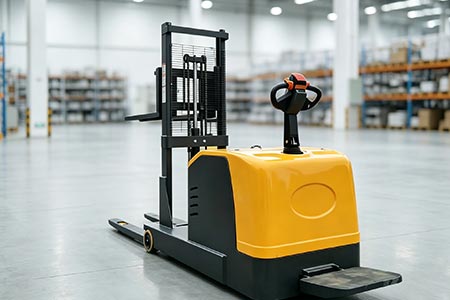
Deep brake system inspection: Replace brake shoes when residual thickness drops below 3mm, adjust brake clearance and clear internal brake dust.
Hydraulic fluid inspection: Replace hydraulic oil and sealing kits immediately if oil turns black or turbid.
Lithium battery & brushless motor service: Detect single cell voltage of lithium BMS system, remove oxidation layers from wiring terminals; blow dust off brushless motor housing and inject lubricating grease into bearings.
Mast verticality calibration to eliminate minor distortion risks. Complete maintenance logs and retain inspection records for regulatory compliance review.
Sticking to all standardized Daily Maintenance Items For Stand-on Counterbalance Stacker greatly lowers failure rates and extends equipment service life. The Outrigger-free Counterbalance Stacker delivers stable daily stacking performance while cutting labor, repair and replacement costs for warehouse operators. Contact us for full factory maintenance manuals and technical support if you have further questions!
-
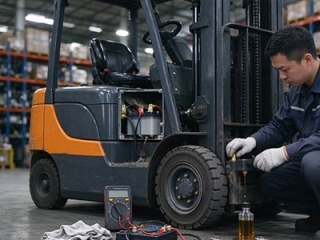 Reliability Of Newnewton Warehouse Forklifts For Heavy-Duty ShiftsWarehouse forklift reliability relies on industrial parts, reinforced frames and factory durability tests. Proper operation and maintenance reduce unexpected downtime.
Do you like ?0
Read more -
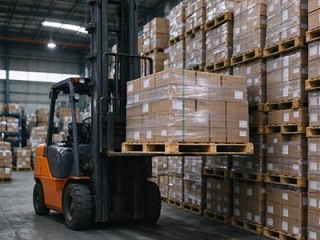 Forklift Configuration Strategy For Dense Warehousing, Warehouse ForkliftDense warehousing needs matched forklifts besides racks. Reach and trilateral stackers fit different layouts, coordinate aisle, load curve and floor for smooth handling.
Do you like ?0
Read more -
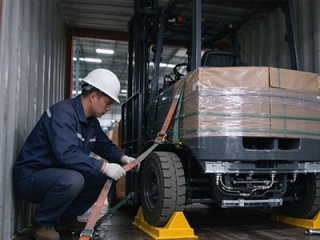 Full Container Supply For Export Forklifts, Forklift ManufacturerBulk forklift orders for overseas can ship by FCL or LCL. Newnewton FCL offers stable freight, safer packing and mixed models for large purchases.
Do you like ?0
Read more -
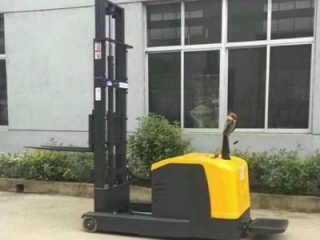 Stand-on Reach Stacker For Narrow Aisle Stacking, Mast Reach StructureStand-on reach stackers feature sliding masts that stay outside racks. They boost storage density in narrow aisles and require flat floors and standard pallets.
Do you like ?0
Read more -
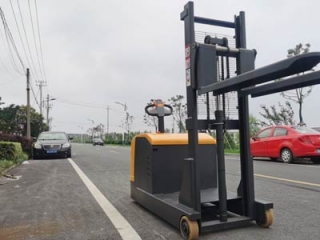 Stand-on Counterbalance Stacker For Various Pallets, Why No Leg RestrictionCounterbalance stackers have no front outriggers, using rear counterweight to avoid pallet interference. They fit various odd pallets yet need wider warehouse aisles.
Do you like ?0
Read more -
 Custom Walk-Behind Counterbalance Stacker | Non-Standard ModificationsStandard walk-behind counterbalance stackers struggle with non-standard pallets and tight aisles. Customize load, lift, forks and structure, share working conditions for safe design.
Do you like ?0
Read more








