Low-maintenance Brushless Motor Stacker VS Brushed Motor Cost Comparison 2026
Warehouse operators sourcing the Walk-behind Full Electric Stacker prioritize long-term cost control most of all. The motor configuration directly determines subsequent maintenance expenditure. Minor component damage brings low repair fees, yet motor failures trigger heavy costs. This article compares the full cost gap between brushed motors and the Low-maintenance Brushless Motor Stacker with authentic test data.
Core Test Parameters (From 2026 Industrial Electric Stacker In-depth Evaluation Report)
Design Service Life
Brushed motor: Carbon brushes wear via mechanical friction, rated lifespan 1,000–2,000 working hours. Carbon brushes reach replacement limits within 6–8 months under high-frequency continuous operation.
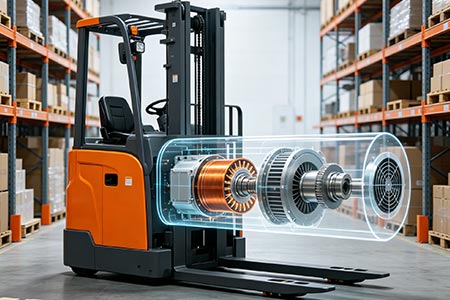
Brushless permanent magnet motor: No wearable carbon brush parts; only bearings suffer minor wear. Design life hits 20,000–30,000 hours, roughly 10 times longer than brushed counterparts.
Energy Conversion Efficiency
Brushed motor: 65%–70% efficiency, massive electric energy wasted as heat.
Brushless motor: 88%–92% efficiency, saving 15%–20% power per hour under identical load, cutting monthly electricity bills long-term.
Standard Maintenance Cycles (Compliant with GB/T36507 & Newnewton Factory Service Manual)
Brushed stacker: Disassemble to clear carbon dust and inspect brush length every 2,000 hours; replace brushes once residual length drops below 1/3; overhaul commutator copper heads every 2 years.
Brushless stacker: Zero carbon brush replacement steps. Only inject grease to motor bearings every 5,000 hours; monthly compressed-air cleaning for controller dust, no full disassembly overhaul required.
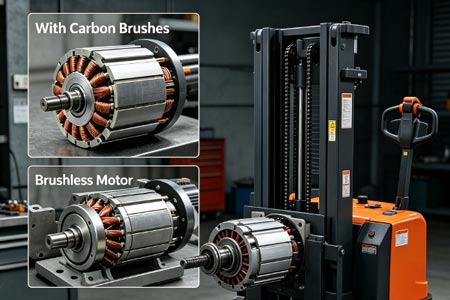
18-month Failure Shutdown Comparative Test (Industrial Motor Contrast Experiment)
Brushed motor units: Average 3 unplanned breakdowns, each repair takes over 30 minutes.
Brushless motor units: Zero motor-caused shutdowns; only routine external visual inspections with no forced production halts.
5-Year Total Cost Breakdown (1.5t Walk-behind Full Electric Stacker, 8h daily shift, 300 working days/year, power price ¥0.8/kWh)
Spare Parts & Consumable Cost
Brushed motor: Carbon brush kit ¥550, 2 sets per year; ¥1,200 commutator replacement every 2 years. 5-year total: ¥7,700.
Low-maintenance Brushless Motor Stacker: No carbon brush or commutator wear parts; only ¥50 annual grease cost. 5-year total: ¥250, saving ¥7,450 on consumables.
Manual Repair Labor Cost Factory technician labor rate ¥80/hour. Brushed models require 4 disassembly repairs yearly, 0.5 hours each; 5-year labor cost ¥960. Brushless units need no motor disassembly repair, zero labor expense here.
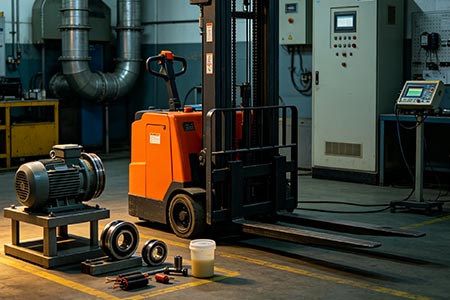
Power Consumption Expense (Factory full-load power test) Brushed model: 1.4 kWh per hour; Brushless model: 1.12 kWh per hour, saving 0.28 kWh hourly. Annual power saved: 672 kWh; total 3,360 kWh within 5 years, cutting electricity cost by ¥2,688.
Hidden Downtime Production Loss Single warehouse daily output value ¥1,200 per stacker. Brushed units average 4 downtime hours per year, accumulating 20 lost hours over 5 years, causing ¥3,000 production loss. Brushless motors have zero motor breakdown downtime with no revenue loss.
5-Year Comprehensive Cost Summary Extra accumulated expenditure of brushed walk-behind stacker: 7700 + 960 + 2688 + 3000 = ¥14,348 The Low-maintenance Brushless Motor Stacker only costs ¥250 for consumables. Even if the brushless machine costs ¥1,800 more upfront, warehouses still save a net ¥12,298 within five years.
Refer to the above test data to select the matching Walk-behind Full Electric Stacker according to your warehouse operation intensity. Contact us for further technical consultation and customized quotations.
-
 Reliability Of Newnewton Warehouse Forklifts For Heavy-Duty ShiftsWarehouse forklift reliability relies on industrial parts, reinforced frames and factory durability tests. Proper operation and maintenance reduce unexpected downtime.
Do you like ?0
Read more -
 Forklift Configuration Strategy For Dense Warehousing, Warehouse ForkliftDense warehousing needs matched forklifts besides racks. Reach and trilateral stackers fit different layouts, coordinate aisle, load curve and floor for smooth handling.
Do you like ?0
Read more -
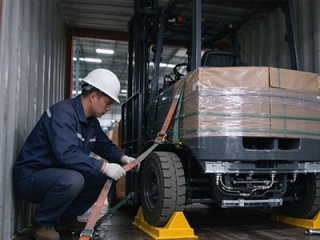 Full Container Supply For Export Forklifts, Forklift ManufacturerBulk forklift orders for overseas can ship by FCL or LCL. Newnewton FCL offers stable freight, safer packing and mixed models for large purchases.
Do you like ?0
Read more -
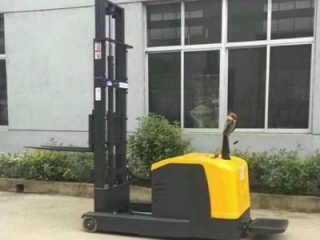 Stand-on Reach Stacker For Narrow Aisle Stacking, Mast Reach StructureStand-on reach stackers feature sliding masts that stay outside racks. They boost storage density in narrow aisles and require flat floors and standard pallets.
Do you like ?0
Read more -
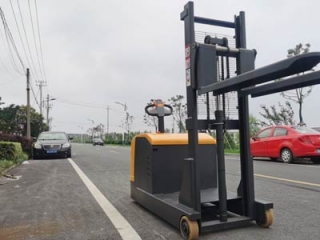 Stand-on Counterbalance Stacker For Various Pallets, Why No Leg RestrictionCounterbalance stackers have no front outriggers, using rear counterweight to avoid pallet interference. They fit various odd pallets yet need wider warehouse aisles.
Do you like ?0
Read more -
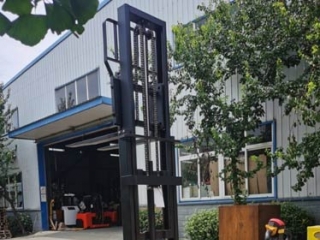 Custom Walk-Behind Counterbalance Stacker | Non-Standard ModificationsStandard walk-behind counterbalance stackers struggle with non-standard pallets and tight aisles. Customize load, lift, forks and structure, share working conditions for safe design.
Do you like ?0
Read more