Gasoline Forklift Maintenance Schedule & Common Fuel Forklift Faults
2026 Fuel Forklift Maintenance Guide: Maintenance Cycles & Common Fault Summary Fuel forklifts feature strong adaptability and can operate on various complex outdoor terrains. However, fuel consumption and harsh working conditions easily trigger various malfunctions. Proper maintenance helps prevent fuel forklift faults. This article helps you fully understand the fuel forklift maintenance schedule.
Daily Pre‑shift Inspection Check liquid levels of engine oil, coolant, diesel fuel and hydraulic oil; inspect for oil leakage. Check tyres, forks and chains for cracks or deformation; ensure proper chain tension. Test service brakes, hand brake, steering, lights and reverse alarm. Lift and tilt mast without load to ensure smooth movement without abnormal noise. Clean dust on air filter and remove dirt and oil stains from the truck body.
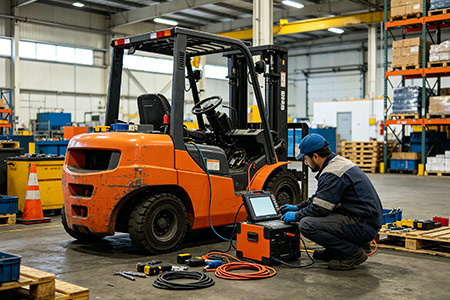
First Maintenance for New Truck: 50 Working Hours Replace engine oil and oil filter; check all pipelines for leakage; tighten bolts on chassis and engine support; lubricate mast pins and steering joints; inspect belt tension. Do not delay the first maintenance, as abundant metal debris exists during running‑in period.
Level‑1 Maintenance: 250 Working Hours / 3 Months Replace engine oil and oil filter. Clean or replace diesel filter and air filter. Apply grease to all lubrication points (mast chains, steering ball joints, axles). Check brake clearance and brake pad wear. Clean dust and debris on radiator. Inspect transmission and drive axle for oil seepage.
Level‑2 Maintenance: 500 Working Hours / 6 Months Complete all items of Level‑1 maintenance, plus additional tasks: Replace fuel filter; test coolant condition and replace if deteriorated. Inspect hydraulic hoses and oil seals; replace aged leaking parts immediately. Check gear oil level of drive axle, top up or replace when necessary. Test engine idle and acceleration conditions and observe exhaust colour. Clean oxides on battery terminals to avoid poor contact.
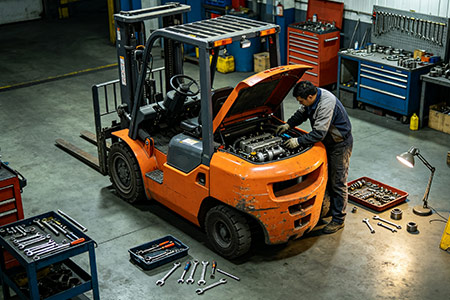
Level‑3 In‑depth Maintenance: 1000 Working Hours / 12 Months Replace hydraulic oil and hydraulic filter. Replace transmission oil and drive axle gear oil. Inspect injectors and valve clearance, adjust as needed. Comprehensively check for ageing wiring and loose connectors. Check wear of mast rollers and bearings. Carry out comprehensive performance test for engine and hydraulic system.
If working in dusty, open‑air or frequent heavy‑load environments, shorten maintenance cycles by 20%. Below are typical fuel forklift faults. Regular inspections greatly reduce failure risks. Solutions are listed for reference once faults occur.
Difficult or failed startup Causes: Low battery power, clogged diesel filter, air entering fuel pipeline, poor injector atomization, improper diesel grade under low temperature. Solutions: Check battery voltage; bleed air by manually priming diesel pipeline; replace diesel filter on schedule; use low‑temperature diesel in winter; contact technicians to inspect injectors if starting difficulty persists.
Insufficient power and weak acceleration Causes: Clogged air filter, poor fuel supply, carbon deposit on injectors, blocked intake and exhaust, overloading. Solutions: Clean or replace air filter; check diesel pipeline; avoid long‑term overloading; inspect oil pump and injection system if power remains inadequate.
Fault judgment via exhaust smoke Black smoke: Incomplete combustion, clogged air filter, poor fuel atomization, overloading. Blue smoke: Engine oil entering combustion chamber, worn piston rings or excessive engine oil filling. White smoke: Water mixed in diesel, coolant leaking into cylinder, delayed injection timing.
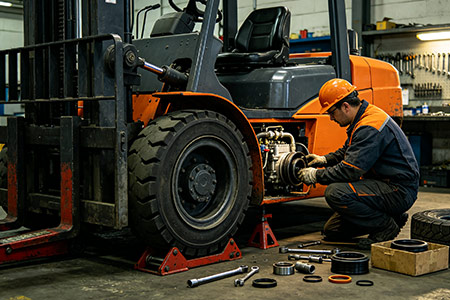
Slow lifting and weak lifting under load Causes: Insufficient or deteriorated hydraulic oil, internal leakage of multi‑way valve, worn gear pump, clogged hydraulic filter. Solutions: Check oil level; replace hydraulic oil and filters regularly; avoid mixing different types of hydraulic oil.
Soft brake and brake deviation Causes: Worn brake pads, excessive brake shoe clearance, stuck brake cylinder, air trapped in brake pipeline. Solutions: Adjust brake clearance; replace brake pads when wear exceeds limit; inspect brake system periodically.
Oil seepage and leakage Common locations: Engine oil seals, hydraulic hose joints, cylinder oil seals, transmission housing. Reminder: Minor seepage cannot be ignored. Long‑term oil shortage accelerates component wear; replace seals timely once leakage is found.
Abnormal engine noise Ticking sound usually indicates abnormal valve clearance; heavy knocking sound often relates to incorrect injection advance angle; chassis noise mainly comes from worn bearings, loose chains or fasteners. Continuous operation with abnormal noise may lead to severe damage. Stop the truck immediately for inspection.
To sum up, key information about fuel forklift faults and maintenance rules has been explained clearly. Hope this content brings you practical reference.
-
 Reliability Of Newnewton Warehouse Forklifts For Heavy-Duty ShiftsWarehouse forklift reliability relies on industrial parts, reinforced frames and factory durability tests. Proper operation and maintenance reduce unexpected downtime.
Do you like ?0
Read more -
 Forklift Configuration Strategy For Dense Warehousing, Warehouse ForkliftDense warehousing needs matched forklifts besides racks. Reach and trilateral stackers fit different layouts, coordinate aisle, load curve and floor for smooth handling.
Do you like ?0
Read more -
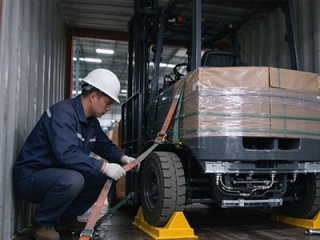 Full Container Supply For Export Forklifts, Forklift ManufacturerBulk forklift orders for overseas can ship by FCL or LCL. Newnewton FCL offers stable freight, safer packing and mixed models for large purchases.
Do you like ?0
Read more -
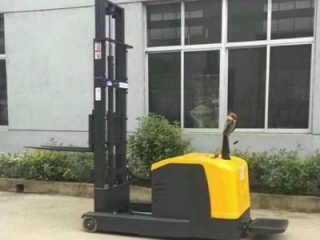 Stand-on Reach Stacker For Narrow Aisle Stacking, Mast Reach StructureStand-on reach stackers feature sliding masts that stay outside racks. They boost storage density in narrow aisles and require flat floors and standard pallets.
Do you like ?0
Read more -
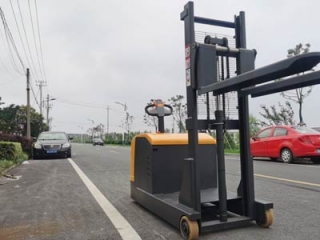 Stand-on Counterbalance Stacker For Various Pallets, Why No Leg RestrictionCounterbalance stackers have no front outriggers, using rear counterweight to avoid pallet interference. They fit various odd pallets yet need wider warehouse aisles.
Do you like ?0
Read more -
 Custom Walk-Behind Counterbalance Stacker | Non-Standard ModificationsStandard walk-behind counterbalance stackers struggle with non-standard pallets and tight aisles. Customize load, lift, forks and structure, share working conditions for safe design.
Do you like ?0
Read more