
Internal Combustion Forklift Power System Working Principle Explained
Many forklift operators master driving skills, yet struggle to find root causes when malfunctions occur. Learning the Internal Combustion Forklift Power System Working Principle helps you accurately identify and troubleshoot faults timely.
Most mainstream Diesel Forklift adopts four-stroke diesel engines. The core function is converting chemical energy of diesel into mechanical rotation energy of the crankshaft through continuous cycles of intake, compression, power and exhaust strokes.
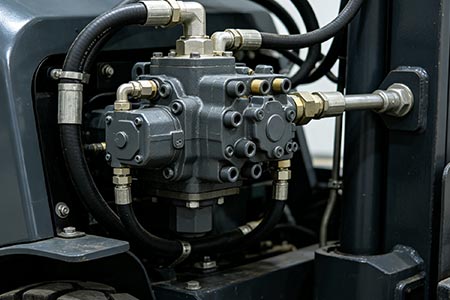
Intake stroke: Intake valve opens, piston moves downward, drawing clean air into the cylinder.
Compression stroke: All valves close; piston rises to compress air, sharply raising temperature inside the cylinder.
Power stroke: High-pressure injector sprays atomized diesel. Fuel self-ignites under high temperature, gas expansion pushes the piston down and drives the crankshaft to output torque.
Exhaust stroke: Exhaust valve opens, piston moves upward to discharge burnt exhaust gas, and a new cycle begins.
Sustained cyclic operation supplies steady power for the forklift.
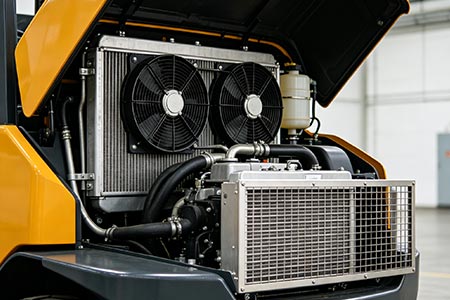
Complete Power Transmission Routes Of Diesel Forklift
Travel power line Crankshaft → torque converter → transmission → drive shaft → drive axle → drive wheels, controlling forward, reverse and steering. The torque converter transfers power via hydraulic oil, cushioning impact from frequent start-stop and enabling smooth startup during loading work. It is standard for automatic-shift internal combustion forklifts used in factories.
Hydraulic lifting line The crankshaft directly drives the hydraulic gear pump. The pump generates high-pressure oil delivered to lift cylinders and tilt cylinders to realize fork lifting, lowering and mast tilting.
In short, one single engine powers both vehicle travelling and cargo lifting. When travelling and lifting heavy loads simultaneously, the engine reaches peak load, demanding stable air intake and fuel supply.
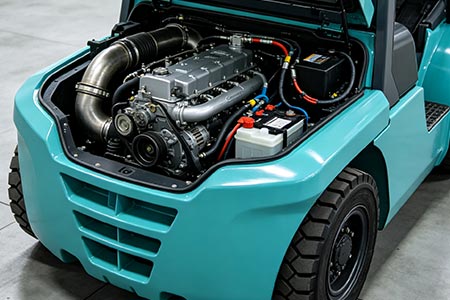
Root Causes Of Common Power Abnormalities
Clogged air filter reduces air intake → incomplete combustion → weak power & higher fuel consumption.
Carbon buildup & poor atomization of injectors → hard startup and insufficient lifting power under heavy load.
Degraded or insufficient engine oil → dry internal friction, louder noise and accelerated component wear.
Scaling inside radiator weakens heat dissipation → engine overheating activates protection mode with limited power output.
This basic introduction covers the power system of . We will release more related technical articles later. Leave a comment if you want to learn other forklift knowledge!
-
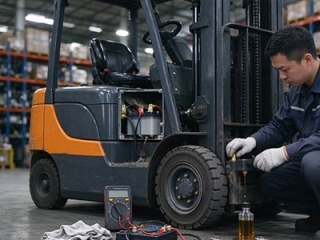 Reliability Of Newnewton Warehouse Forklifts For Heavy-Duty ShiftsWarehouse forklift reliability relies on industrial parts, reinforced frames and factory durability tests. Proper operation and maintenance reduce unexpected downtime.
Do you like ?0
Read more -
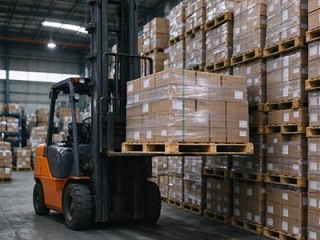 Forklift Configuration Strategy For Dense Warehousing, Warehouse ForkliftDense warehousing needs matched forklifts besides racks. Reach and trilateral stackers fit different layouts, coordinate aisle, load curve and floor for smooth handling.
Do you like ?0
Read more -
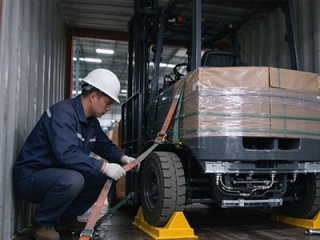 Full Container Supply For Export Forklifts, Forklift ManufacturerBulk forklift orders for overseas can ship by FCL or LCL. Newnewton FCL offers stable freight, safer packing and mixed models for large purchases.
Do you like ?0
Read more -
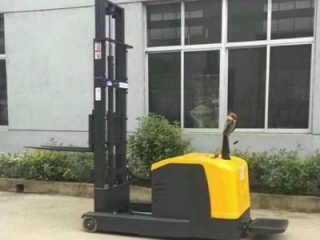 Stand-on Reach Stacker For Narrow Aisle Stacking, Mast Reach StructureStand-on reach stackers feature sliding masts that stay outside racks. They boost storage density in narrow aisles and require flat floors and standard pallets.
Do you like ?0
Read more -
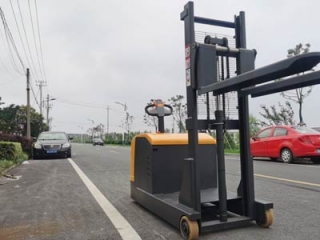 Stand-on Counterbalance Stacker For Various Pallets, Why No Leg RestrictionCounterbalance stackers have no front outriggers, using rear counterweight to avoid pallet interference. They fit various odd pallets yet need wider warehouse aisles.
Do you like ?0
Read more -
 Custom Walk-Behind Counterbalance Stacker | Non-Standard ModificationsStandard walk-behind counterbalance stackers struggle with non-standard pallets and tight aisles. Customize load, lift, forks and structure, share working conditions for safe design.
Do you like ?0
Read more








