Truck Tailgate VS Portable Self-loading Stacker Full TCO Cost Comparison
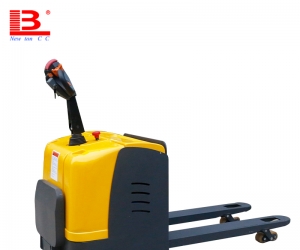
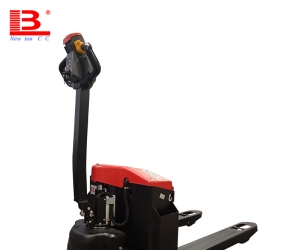
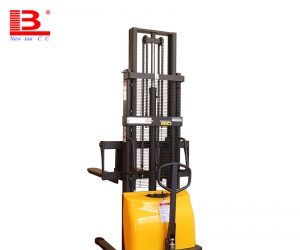
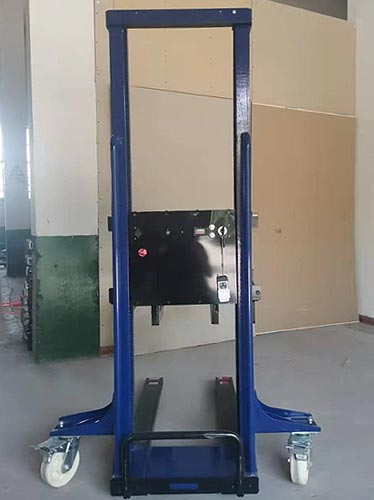
High annual inspection and maintenance costs trouble many fleet owners with truck tailgates. If daily truck loading and unloading work is required, consider the Electric Self-loading Stacker, the ideal Portable On-board Forklift For Truck Loading.
Industry field statistics show a standard domestic hydraulic tailgate costs ¥18,000–25,000 including procurement and installation, with continuous recurring expenses in subsequent years. From a cost perspective, the electric self-loading stacker delivers obvious advantages with lower price, no complicated official filing and wider adaptability.
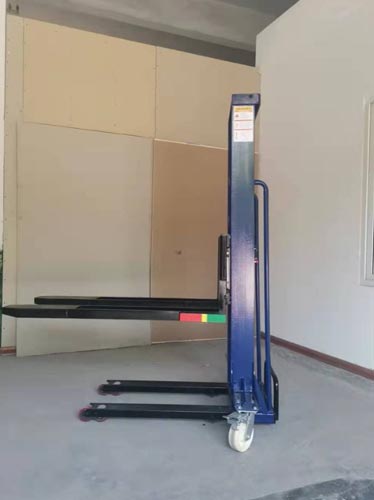
No registration or annual inspection troubles This equipment is not permanently mounted on the chassis, so it is not regarded as vehicle modification. There is no need to disassemble for vehicle inspection or apply for modification filing. When you replace trucks, the stacker can be transferred and reused without asset loss.
Superior site flexibility for multi-stop distribution City-wide distribution often involves multiple destinations and roadside temporary unloading. It works at locations without loading docks or narrow storefronts. Unlike tailgates which only operate at the truck rear, the self-loading stacker can travel to any unloading site together with the vehicle.
Simple maintenance and low long-term running costs Lithium-powered models are mainly equipped with brushless motors, without complicated vehicle-mounted hydraulic pipelines. Daily work only requires wheel cleaning and battery inspection, with annual maintenance costs under ¥300 and much lower failure risks compared with tailgates. When idle, it can be stored in the corner of cargo space, occupying less than 1 square meter.
Brief 5-year TCO comparison of two unloading solutions
Hydraulic tailgate: Around ¥20,000 for purchase and installation; additional ¥5,500 for maintenance, disassembly and inspection within 5 years. It holds little residual value when the truck is scrapped and causes vehicle load loss.
Portable On-board Forklift For Truck Loading: One-time investment far lower than tailgates. No modification fees or extra inspection charges. One unit can be shared among multiple trucks to further average down costs, perfect for small and medium fleets under 5 vehicles and scattered multi-stop delivery.
In conclusion, for small & medium intra-city distribution and roadside multi-point unloading scenarios, the relocatable, modification-free and low-maintenance Electric Self-loading Stacker is the more cost-effective choice!
-
 Reliability Of Newnewton Warehouse Forklifts For Heavy-Duty ShiftsWarehouse forklift reliability relies on industrial parts, reinforced frames and factory durability tests. Proper operation and maintenance reduce unexpected downtime.
Do you like ?0
Read more -
 Forklift Configuration Strategy For Dense Warehousing, Warehouse ForkliftDense warehousing needs matched forklifts besides racks. Reach and trilateral stackers fit different layouts, coordinate aisle, load curve and floor for smooth handling.
Do you like ?0
Read more -
 Full Container Supply For Export Forklifts, Forklift ManufacturerBulk forklift orders for overseas can ship by FCL or LCL. Newnewton FCL offers stable freight, safer packing and mixed models for large purchases.
Do you like ?0
Read more -
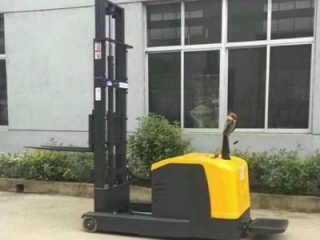 Stand-on Reach Stacker For Narrow Aisle Stacking, Mast Reach StructureStand-on reach stackers feature sliding masts that stay outside racks. They boost storage density in narrow aisles and require flat floors and standard pallets.
Do you like ?0
Read more -
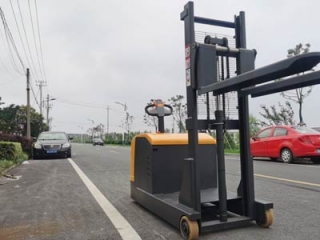 Stand-on Counterbalance Stacker For Various Pallets, Why No Leg RestrictionCounterbalance stackers have no front outriggers, using rear counterweight to avoid pallet interference. They fit various odd pallets yet need wider warehouse aisles.
Do you like ?0
Read more -
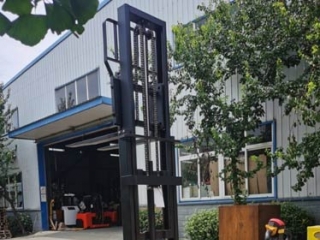 Custom Walk-Behind Counterbalance Stacker | Non-Standard ModificationsStandard walk-behind counterbalance stackers struggle with non-standard pallets and tight aisles. Customize load, lift, forks and structure, share working conditions for safe design.
Do you like ?0
Read more