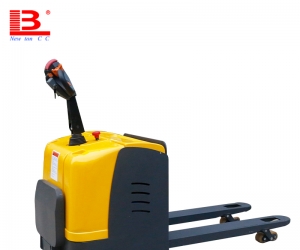
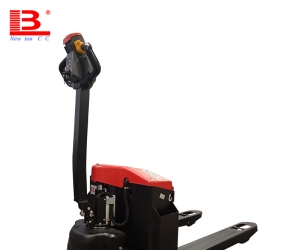
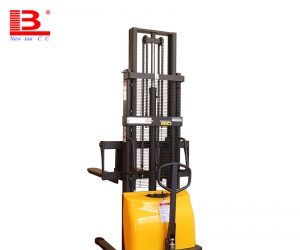
Double‑Pallet Electric Stacker: 4 Typical Application Scenarios
The double‑pallet electric stacker can transport two pallets in one trip, cutting round‑trip frequency by up to 40% in theory and lifting warehouse throughput. Still, this material‑handling equipment is not fit for every warehouse. Blind procurement may raise costs without obvious efficiency gains. Below are 4 typical application scenarios for the double‑pallet stacker.
Production‑line supporting transfer in manufacturing plants At both ends of factory assembly lines, semi‑finished and finished goods keep coming off‑line and need mass transfer to buffer zones. The double‑pallet stacker moves two pallet‑loads simultaneously and reduces shuttles between production lines and storage areas. It works well for auto‑parts, home‑appliance and food‑processing factories with steady output. Sufficient space beside lines is required for placing two pallets at one time.
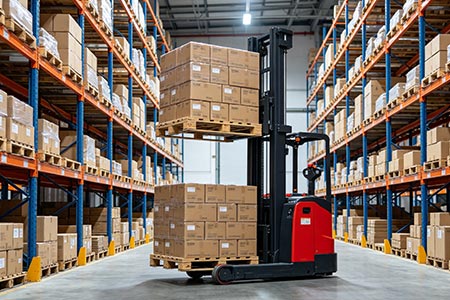
Full‑pallet handling for large‑scale e‑commerce warehouses During big‑sale seasons, e‑commerce warehouses face heavy full‑pallet inbound & outbound tasks with daily turnover over 500 pallets. The double‑pallet electric stacker shines in bulk replenishment and order consolidation. It reduces trips between picking zones, storage bays and loading docks and eases equipment pressure in peak hours. Note: its advantages apply to full‑pallet operations only; little benefit comes from split‑order picking or sporadic cargo.
Bulk storage for food & daily‑chemical industries Food and daily‑chemical goods usually come in standardized pallets with large‑batch turnover. The double‑pallet electric stacker handles two pallets of identical‑batch goods at once to speed up put‑away and order preparation. For cold‑storage warehouses, fewer vehicle trips shorten operators’ working time under low temperature. Low‑temperature modification for the stacker shall be confirmed before cold‑room deployment.
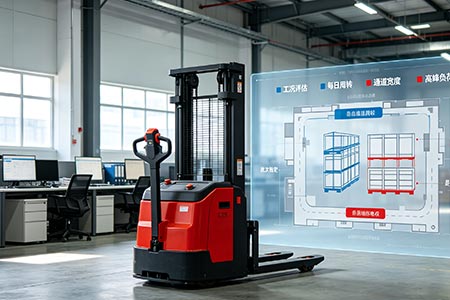
Batch transfer in logistics transit warehouses Regional logistics transit warehouses frequently shift full pallets between loading docks and temporary buffer areas. Provided aisle width meets equipment passing requirements, the double‑pallet stacker greatly improves dock loading‑unloading turnover efficiency.
If your warehouse does not fall into the above‑mentioned scenarios, offer your aisle width, average pallet weight and daily pallet turnover volume. We can evaluate whether the double‑pallet electric stacker fits your working conditions.double pallet electric stacker
-
 Reliability Of Newnewton Warehouse Forklifts For Heavy-Duty ShiftsWarehouse forklift reliability relies on industrial parts, reinforced frames and factory durability tests. Proper operation and maintenance reduce unexpected downtime.
Do you like ?0
Read more -
 Forklift Configuration Strategy For Dense Warehousing, Warehouse ForkliftDense warehousing needs matched forklifts besides racks. Reach and trilateral stackers fit different layouts, coordinate aisle, load curve and floor for smooth handling.
Do you like ?0
Read more -
 Full Container Supply For Export Forklifts, Forklift ManufacturerBulk forklift orders for overseas can ship by FCL or LCL. Newnewton FCL offers stable freight, safer packing and mixed models for large purchases.
Do you like ?0
Read more -
 Stand-on Reach Stacker For Narrow Aisle Stacking, Mast Reach StructureStand-on reach stackers feature sliding masts that stay outside racks. They boost storage density in narrow aisles and require flat floors and standard pallets.
Do you like ?0
Read more -
 Stand-on Counterbalance Stacker For Various Pallets, Why No Leg RestrictionCounterbalance stackers have no front outriggers, using rear counterweight to avoid pallet interference. They fit various odd pallets yet need wider warehouse aisles.
Do you like ?0
Read more -
 Custom Walk-Behind Counterbalance Stacker | Non-Standard ModificationsStandard walk-behind counterbalance stackers struggle with non-standard pallets and tight aisles. Customize load, lift, forks and structure, share working conditions for safe design.
Do you like ?0
Read more