
The selection of warehouse handling equipment plays a vital role in warehouse turnover efficiency and operating costs. Many enterprises wonder how to choose between double pallet jack and standard pallet jack. These two types of equipment adapt to greatly different working conditions. Blind purchase may lead to idle equipment, unsuitable aisles and unsatisfactory working efficiency. It is recommended to make comprehensive selection according to warehouse throughput, aisle conditions and cargo specifications.
The ordinary single pallet jack is general warehouse equipment with high cost performance and wide application scenarios. Compact and flexible, it features a small turning radius and low requirements for warehouse aisles and ground conditions. It can adapt to most conventional warehouses, narrow aisle racks and scattered cargo handling tasks.
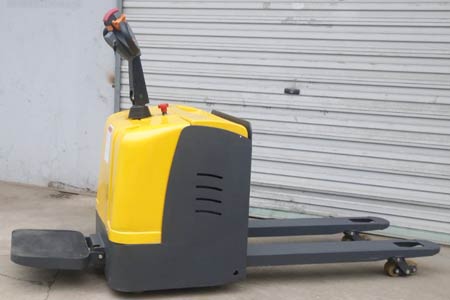
Its limitation is that it can only carry one pallet at a time. It is more suitable for warehouses with medium inbound and outbound frequency and limited daily handling volume, focusing on scattered replenishment and order picking. Ordinary pallet jack is the preferred choice for small and medium warehouses, store preparation and workshop material transfer with simple maintenance and lower long-term operating costs.
Warehouse double pallet truck equipment focuses on high-efficiency operation. Its biggest feature is carrying two standard pallets at one time, reducing round trips and greatly improving inbound and outbound efficiency. It is highly applicable to high-throughput scenarios such as e-commerce warehouses and distribution centers with mass full-pallet handling.
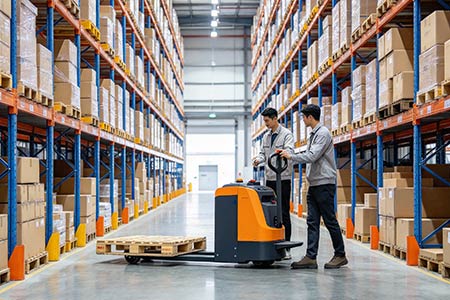
However, the double pallet truck has a longer overall body and requires wider working aisles, so it cannot turn smoothly in dense narrow aisle warehouses. Heavier in weight, it puts forward certain requirements for ground flatness and bearing capacity. Its purchase price and later maintenance cost are higher than ordinary pallet jack.
Distinguishing their applicable scenarios helps you make more appropriate decisions.
Warehouses with small scale and low cargo turnover frequency can give priority to ordinary pallet jack to balance investment and flexibility. For warehouses with large daily inbound and outbound volume dominated by bulk pallet transfer, warehouse double pallet truck equipment is a good option to raise the overall warehouse turnover speed. You can consult manufacturers for equipment parameters and warehouse layout solutions if needed.
-
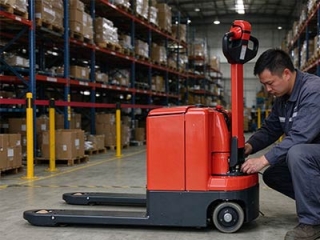 Maintenance Notes for Double Pallet Truck Under Heavy Warehouse LoadsOperators often ignore abnormal motor noise of double pallet trucks during rush orders. Continuous operation burns motors. Timely maintenance prevents failures.
Do you like ?0
Read more -
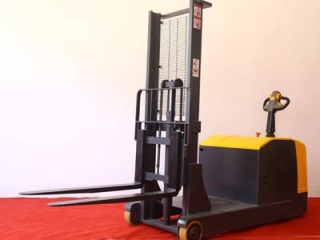 How to Get Accurate Quotations for Stand-on Counterbalance StackerStand-on counterbalance stackers rely on rear weight for stability and cost more. Battery, load, lift height and custom options affect final quotations.
Do you like ?0
Read more -
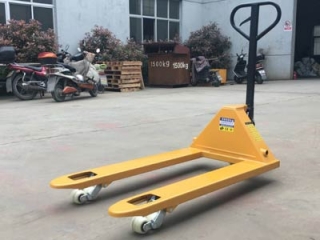 Manual Stacker Vs Pallet Jack: Key Operational Function DifferencesNew buyers confuse manual pallet trucks and manual stackers. They differ in lifting function. Pallet trucks for transfer, stackers for racking to avoid risks.
Do you like ?0
Read more -
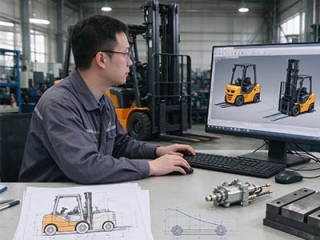 Custom Forklift Dimensions for Export to Fit Narrow Warehouse AislesForklift export faces size risks. Overseas orders may fail door, container or aisle fit. Customization needs balance of gravity, load and target market certifications.
Do you like ?0
Read more -
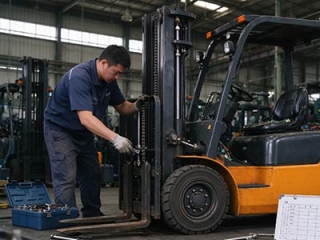 Forklift Safety Management Guide Based on Special Equipment SpecificationsForklifts are special equipment. Follow TSG 81 with training, records, inspection and on-site control to prevent accidents and penalties.
Do you like ?0
Read more -
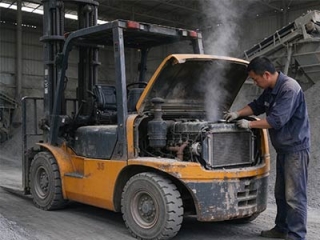 Heavy-Duty Diesel Forklift High Temperature Troubleshooting Guide3.5t diesel forklifts often overheat when handling sand and stone. Inspect cooling system step by step: radiator, belt, shroud, thermostat and water pump.
Do you like ?0
Read more








