
High Warehouse Turnover? Double Pallet Stacker VS Standard Stacker
High frequency of back-and-forth transportation? Electric double pallet stacker vs standard stacker Are you running an e-commerce warehouse, logistics center or manufacturing plant with heavy material handling workload? If your stackers travel constantly between racks and loading docks, and traffic jams often appear during peak hours, it is time to optimize warehouse efficiency. You can achieve obvious productivity improvement by learning the differences between double pallet stacker and standard stacker.
Differences in Loading Capacity Standard stacker: Equipped with one set of forks, only one standard pallet can be transported per trip. Electric double pallet stacker: Designed with two independent upper and lower fork sets. The forks can lift separately or simultaneously, enabling transportation of two pallets in one trip.
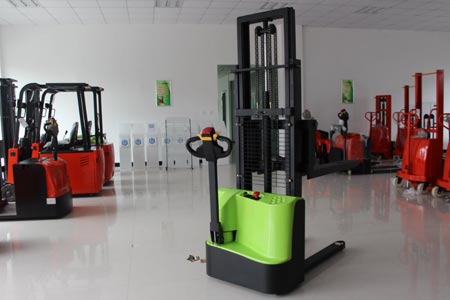
Aisle Adaptation Parameters Standard 1.5-ton walkie or ride-on stacker requires a minimum working aisle of 2.6m. The same tonnage double pallet stacker needs a safe aisle width of 2.7–2.9m. Most existing compact warehouses do not require large-scale aisle reconstruction.
Energy Consumption & Component Wear Vehicle start, stop and turning consume most power. Test data shows that with the same pallet throughput, double pallet stackers nearly halve driving distance and start-stop times. Power consumption drops by 22%, and the service life of wheels and hydraulic components is prolonged.
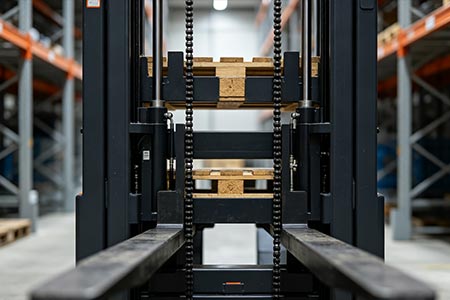
Data Source: 2025 Light Warehouse Electric Vehicle Energy Efficiency Test Report
Suitable working scenarios for two types of stackers
Electric Double Pallet Stacker
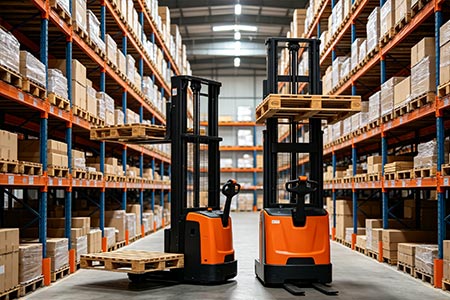
Recommended scenarios: Mass pallet loading and unloading, assembly line material transfer, high daily pallet turnover, long-distance shuttle work, and warehouses aiming to reduce aisle congestion. Not recommended: Sporadic small-order picking, irregular goods of uneven heights, and small warehouses with low daily pallet volume, where the extra procurement cost cannot be offset.
Standard Single Pallet Stacker
Recommended scenarios: Scattered goods picking, diversified cargo sizes, intermittent low-frequency operations, limited procurement budget, and sites where goods cannot be placed on two layers.
To sum up, double pallet stacker brings outstanding efficiency for warehouses with frequent shuttle work and massive pallet handling. Standard stacker delivers better cost performance for low-frequency sporadic operations. Neither model is universally superior. You should select equipment according to your actual warehouse operating conditions.
-
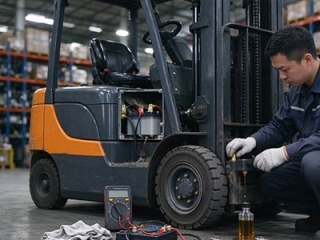 Reliability Of Newnewton Warehouse Forklifts For Heavy-Duty ShiftsWarehouse forklift reliability relies on industrial parts, reinforced frames and factory durability tests. Proper operation and maintenance reduce unexpected downtime.
Do you like ?0
Read more -
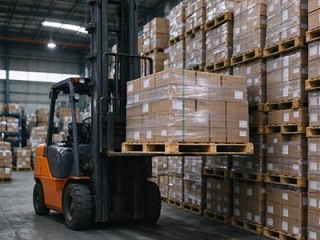 Forklift Configuration Strategy For Dense Warehousing, Warehouse ForkliftDense warehousing needs matched forklifts besides racks. Reach and trilateral stackers fit different layouts, coordinate aisle, load curve and floor for smooth handling.
Do you like ?0
Read more -
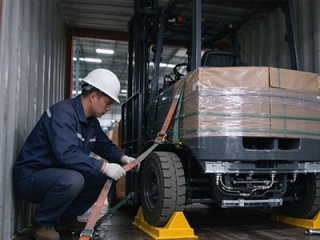 Full Container Supply For Export Forklifts, Forklift ManufacturerBulk forklift orders for overseas can ship by FCL or LCL. Newnewton FCL offers stable freight, safer packing and mixed models for large purchases.
Do you like ?0
Read more -
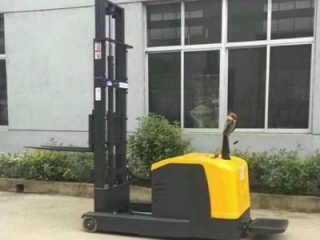 Stand-on Reach Stacker For Narrow Aisle Stacking, Mast Reach StructureStand-on reach stackers feature sliding masts that stay outside racks. They boost storage density in narrow aisles and require flat floors and standard pallets.
Do you like ?0
Read more -
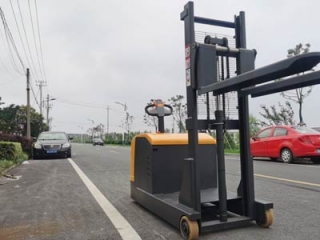 Stand-on Counterbalance Stacker For Various Pallets, Why No Leg RestrictionCounterbalance stackers have no front outriggers, using rear counterweight to avoid pallet interference. They fit various odd pallets yet need wider warehouse aisles.
Do you like ?0
Read more -
 Custom Walk-Behind Counterbalance Stacker | Non-Standard ModificationsStandard walk-behind counterbalance stackers struggle with non-standard pallets and tight aisles. Customize load, lift, forks and structure, share working conditions for safe design.
Do you like ?0
Read more








