
High Repair Costs? Preventive Maintenance for Stand-on Counterbalance Stacker
High maintenance costs? Implement preventive maintenance for counterbalance stacker It’s frustrating to face frequent breakdowns and expensive repair bills when operating stand-on counterbalance stacker. In fact, regular preventive maintenance can effectively extend equipment service life and reduce failure frequency. This guide shares standard electric counterbalance stacker maintenance procedures for compliant and proper equipment care.
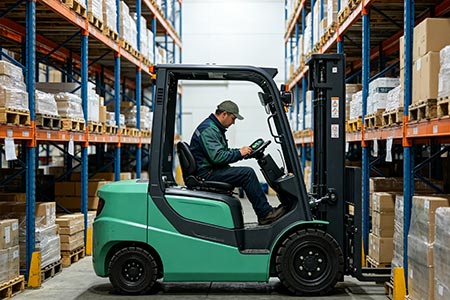
Pre-shift Daily Inspection (3–5 Minutes)
Check battery level on the dashboard and watch for error codes; Test mast lifting and lowering without load to detect abnormal noise or hydraulic pressure leakage; Inspect drive wheels and load wheels for tangled debris and deformation; Test steering performance to ensure smooth operation without jamming.
Weekly Routine Maintenance
Clear dust on the frame and electrical control box to avoid poor heat dissipation; Check hydraulic hoses and cylinders for oil seepage; Tighten wiring connectors to prevent looseness and oxidation caused by vibration; Clean dust on the battery and inspect charging connectors.
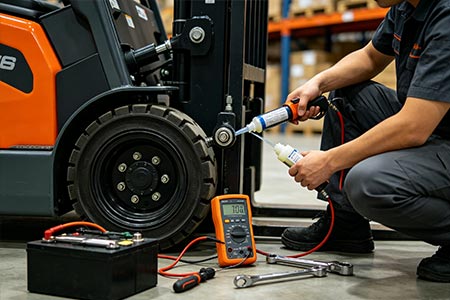
Monthly In-depth Maintenance
Add lubricating grease to mast pins and steering shafts to eliminate noise during lifting and steering; Inspect fixing bolts of counterweights to avoid rollover risks caused by loose parts; Test voltage of each battery cell. Standard charging and discharging habits slow battery degradation; Adjust brake travel regularly to guarantee operational safety.
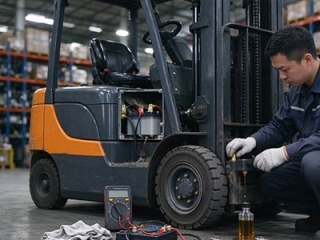
Maintenance for Long-term Storage (Over 30 Days)
Lower forks fully to release hydraulic pressure; keep the battery charged at 50%-60%; start the stacker monthly to lift and lower forks without load repeatedly. This prevents oil seal aging and circuit dampness.
Warehouse operators and stacker trucks manufacturers all recognize the huge gap between well-maintained and neglected stand-on counterbalance stacker. Your long-term repair expenses largely depend on whether you stick to preventive maintenance schedules. Is your stacker receiving proper maintenance regularly?
-
 Reliability Of Newnewton Warehouse Forklifts For Heavy-Duty ShiftsWarehouse forklift reliability relies on industrial parts, reinforced frames and factory durability tests. Proper operation and maintenance reduce unexpected downtime.
Do you like ?0
Read more -
 Forklift Configuration Strategy For Dense Warehousing, Warehouse ForkliftDense warehousing needs matched forklifts besides racks. Reach and trilateral stackers fit different layouts, coordinate aisle, load curve and floor for smooth handling.
Do you like ?0
Read more -
 Full Container Supply For Export Forklifts, Forklift ManufacturerBulk forklift orders for overseas can ship by FCL or LCL. Newnewton FCL offers stable freight, safer packing and mixed models for large purchases.
Do you like ?0
Read more -
 Stand-on Reach Stacker For Narrow Aisle Stacking, Mast Reach StructureStand-on reach stackers feature sliding masts that stay outside racks. They boost storage density in narrow aisles and require flat floors and standard pallets.
Do you like ?0
Read more -
 Stand-on Counterbalance Stacker For Various Pallets, Why No Leg RestrictionCounterbalance stackers have no front outriggers, using rear counterweight to avoid pallet interference. They fit various odd pallets yet need wider warehouse aisles.
Do you like ?0
Read more -
 Custom Walk-Behind Counterbalance Stacker | Non-Standard ModificationsStandard walk-behind counterbalance stackers struggle with non-standard pallets and tight aisles. Customize load, lift, forks and structure, share working conditions for safe design.
Do you like ?0
Read more








