
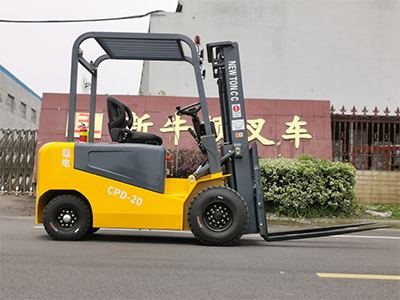
The stability of electric forklifts, as explained by the manufacturer of electric forklifts, refers to the ability of forklifts to prevent overturning and skidding during operation. Stability is divided into two types: longitudinal stability and lateral stability, which are directly related to vehicle speed, road, wheelbase, wheelbase, center of gravity position, steering speed, etc.
1. Longitudinal stability of electric forklifts. When a forklift goes up, down, or during operation, losing longitudinal stability may cause longitudinal overturning.
When electric forklifts go uphill and downhill in the opposite direction, as long as emergency braking is not used, it is generally impossible to lose longitudinal stability, which is determined by the maximum climbing slope when designing forklifts. When heavy-duty forklifts go uphill or downhill in the opposite direction, as well as unloaded forklifts go downhill in the opposite direction, it is easy to lose longitudinal stability and capsize.
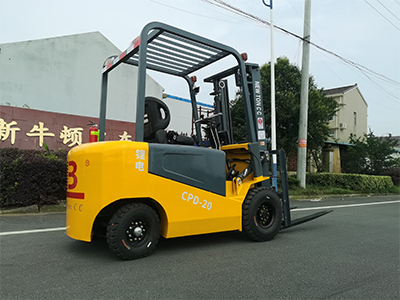
2. Electric forklifts are fully loaded with forklifts, and when the gantry is in the forward tilt position to lift the forks, they are also prone to losing longitudinal stability and tipping forward.
From this, it can be seen that heavy-duty forklifts should travel straight up slopes and backward down slopes, and emergency braking should be avoided on slopes; When it is necessary to lift the forks, the gantry must be in a backward tilt position to prevent the forklift from tipping forward. 2. Lateral stability. Forklifts press on the road surface with their own weight, creating adhesion and maintaining stability. At the same time, they may also be subjected to a lateral force (lateral force). When the lateral force exceeds the lateral stability capacity of the forklift, it will cause the forklift to slide or tip over.
Electric forklift manufacturers point out that the main factors causing lateral force on electric forklifts are as follows: (1) excessive lateral inclination of the road surface during driving; (2) Driving too fast or turning too quickly when turning; (3) The braking force of the left and right wheels is different, and (4) the adhesion coefficient of the road surface under the wheels is different; (5) Partial loading of goods and high center of gravity
-
 Newnewton Forklift Manufacturer, Forklift CE Certification for ExportNewnewton forklift factory offers full CE certification complying with EN ISO 3691, complete technical documents and OEM service to reduce customs detention risks.
Do you like ?0
Read more -
 Electric Forklift Vs Diesel Forklift, Warehouse Selection GuideElectric forklift is zero-emission and quiet for indoor clean warehouses. Diesel forklift offers strong power for outdoor heavy-duty tasks.
Do you like ?0
Read more -
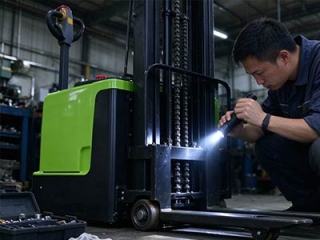 Narrow Aisle Stacker Forklift Custom Manufacturer for WarehouseCustom narrow aisle stacker for non-standard racking. Adjust body, mast and fork specs, upgrade power and protection, site survey available.
Do you like ?0
Read more -
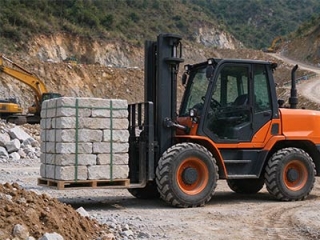 4WD All Terrain Rough Terrain Forklift Climbing for Mountain Sites4WD rough terrain forklift works on unpaved roads. Observe load climbing limit, attachments optional for forest and construction sites.
Do you like ?0
Read more -
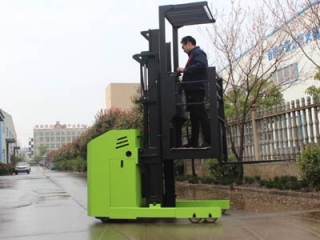 Man-Up Order Picker for High Level Picking, Suitable Warehouse ModesMan-up high level order picker for high-level split picking. Not for full pallet stacking, check rack, aisle and floor before selection.
Do you like ?0
Read more -
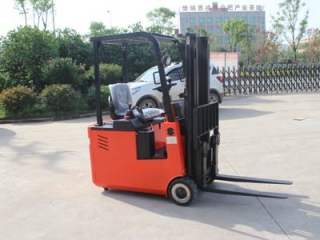 Narrow Aisle Operation Of Three-Wheel Forklift With Compact Turning RadiusThree-point electric forklift features small turning radius for narrow aisles. Reserve safety margin and check floor condition during selection.
Do you like ?0
Read more








