Heavy-duty Stacker Selection: Calculate Load Margin For High-level Stacking
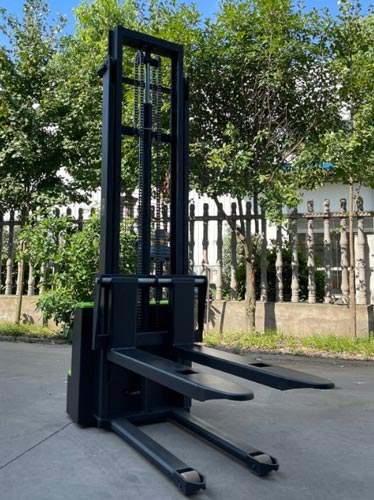
For high-level stacking tasks, stackers need sufficient load margin. The effective residual load capacity keeps dropping as the lifting height increases. Long-term operation close to load limit easily causes frame deformation and structural cracks. Many purchasers wonder how to select tonnage for large capacity stacker.
It is necessary to distinguish rated load and residual effective load clearly: Lifting height ≤2.5m (low-level stacking): residual load is close to rated value, with 5%-10% capacity attenuation; 2.5m–3.5m lifting height (medium & high stacking): effective load decreases by 12%-20%; 3.5m–5m lifting height (high-level stacking): effective load attenuation reaches 22%-32%.
Reference Standards for Reserved Load Margin Under Different Working Conditions
In accordance with general selection specifications of the industrial vehicle industry, three reference schemes are sorted out: Smooth indoor ground, lifting height below 3 meters 10% load margin is recommended. For example, if the maximum cargo weight is 1.8 tons, a stacker with rated load of 2 tons is the minimum option.
High racking, lifting height 3–4.5m with daily frequent continuous operation Reserve 20%-25% load margin. If the heaviest cargo reaches 1.6 tons under high lifting conditions, a 2-ton heavy load stacker is recommended.
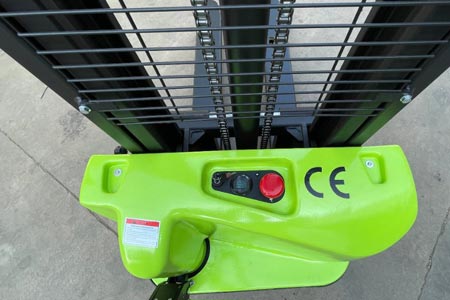
Extreme working conditions: lifting over 4.5m, uneven ground, ramps, two-shift nonstop operation Reserve 30% load margin. Uneven ground leads to center of gravity offset and further weakens the vehicle’s stable carrying capacity.
Obviously, tonnage selection should not only take pallet size, cargo weight and operation frequency into consideration. The impact brought by lifting height cannot be ignored. If full-load operation is frequent, counterbalance type large capacity stacker is highly recommended.
Feel free to inform us of your warehouse rack height, and we can provide customized warehouse handling solutions.
-
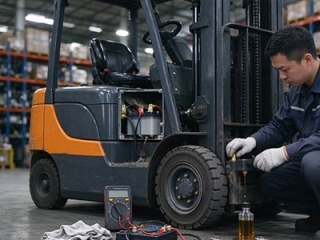 Reliability Of Newnewton Warehouse Forklifts For Heavy-Duty ShiftsWarehouse forklift reliability relies on industrial parts, reinforced frames and factory durability tests. Proper operation and maintenance reduce unexpected downtime.
Do you like ?0
Read more -
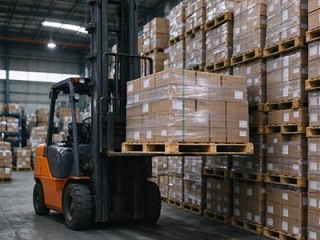 Forklift Configuration Strategy For Dense Warehousing, Warehouse ForkliftDense warehousing needs matched forklifts besides racks. Reach and trilateral stackers fit different layouts, coordinate aisle, load curve and floor for smooth handling.
Do you like ?0
Read more -
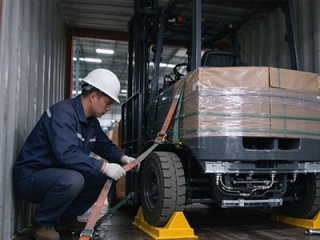 Full Container Supply For Export Forklifts, Forklift ManufacturerBulk forklift orders for overseas can ship by FCL or LCL. Newnewton FCL offers stable freight, safer packing and mixed models for large purchases.
Do you like ?0
Read more -
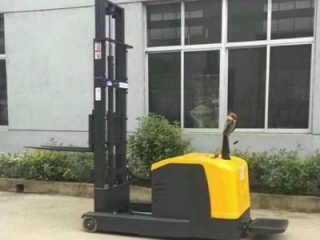 Stand-on Reach Stacker For Narrow Aisle Stacking, Mast Reach StructureStand-on reach stackers feature sliding masts that stay outside racks. They boost storage density in narrow aisles and require flat floors and standard pallets.
Do you like ?0
Read more -
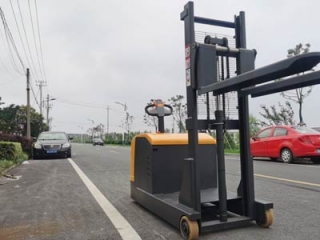 Stand-on Counterbalance Stacker For Various Pallets, Why No Leg RestrictionCounterbalance stackers have no front outriggers, using rear counterweight to avoid pallet interference. They fit various odd pallets yet need wider warehouse aisles.
Do you like ?0
Read more -
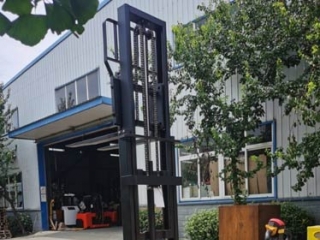 Custom Walk-Behind Counterbalance Stacker | Non-Standard ModificationsStandard walk-behind counterbalance stackers struggle with non-standard pallets and tight aisles. Customize load, lift, forks and structure, share working conditions for safe design.
Do you like ?0
Read more