LiFePO4 VS Lead Acid Electric Forklift Battery: Pros & Cons For Warehouse Operat
The overall operating cost of electric forklifts is largely determined by power batteries. Many buyers only compare battery upfront prices, ignoring later maintenance expense and downtime loss caused by battery replacement, which leads to high long-term operation costs. Currently, warehouse electric vehicles mainly adopt two power solutions: lithium iron phosphate battery and valve-regulated lead-acid battery. Based on the 2026 industrial vehicle power system research data from China Industrial Vehicle Network, we analyze the advantages and disadvantages of different electric forklift battery.
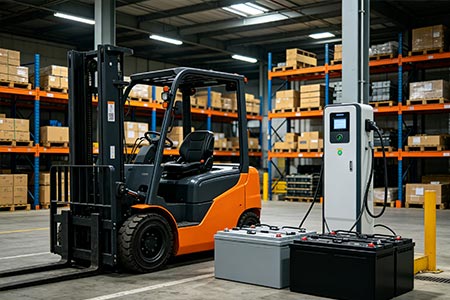
Lead-acid Battery (Traditional Standard Configuration)
Advantages
Lower initial procurement cost. For the same capacity, its price is 35%-50% lower than lithium iron phosphate battery;
Mature technology, abundant spare parts and extensive maintenance service channels;
Complete waste battery recycling system with stable residual value.
Disadvantages
Short cycle life: only 1000–1500 charge-discharge cycles under standard working conditions, needing replacement within 3–5 years for single-shift operation;
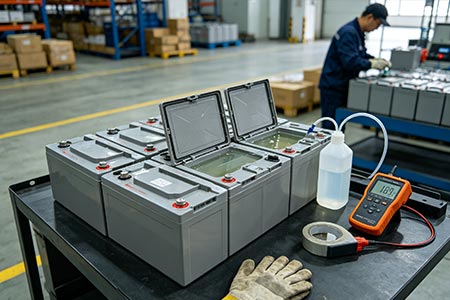
Long charging cycle: 6–10 hours for full charging. Cooling time is required after charging, and opportunity charging is unavailable. Frequent shallow charging and discharging easily cause plate sulfation;
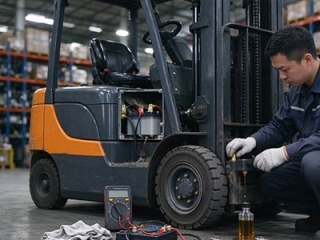
Regular maintenance required: check electrolyte level and clean terminals weekly, consuming labor. Hydrogen will be released during charging, so charging areas need mandatory ventilation;
Low energy density and heavier weight. The discharging voltage gradually drops, resulting in obvious power attenuation of forklifts in later operation.
Special Lithium Iron Phosphate Battery For Forklifts (Mainstream Upgraded Solution)
Advantages
Longer cycle service life, reaching 3000–5000 cycles. It can work for 7–10 years under standardized use;
Support opportunity charging. Operators can top up power during lunch breaks or shutdown intervals without draining the battery, suitable for continuous two-shift and three-shift operation;
Fully sealed structure without daily water replenishment maintenance. No acid mist overflow, ideal for food and pharmaceutical clean workshops;
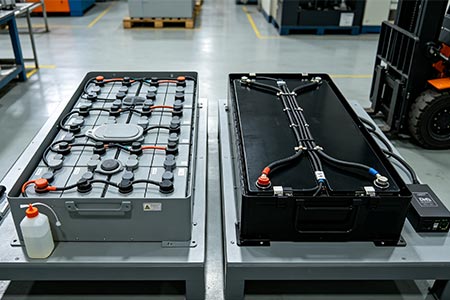
Built-in BMS intelligent management system with multi-protection against overcharge, overdischarge and overheating. Stable discharging voltage ensures steady power output throughout operation.
Disadvantages
Higher initial purchasing cost, bringing greater pressure on upfront budget;
Poor-quality lithium cells carry potential safety hazards. Buyers must select complete battery packs from formal manufacturers and avoid simply modified battery assemblies.
Carry out comprehensive evaluation based on warehouse working conditions and budget through comparison of lithium battery and lead acid battery, so as to select the most suitable battery scheme for your electric forklifts.
-
 Reliability Of Newnewton Warehouse Forklifts For Heavy-Duty ShiftsWarehouse forklift reliability relies on industrial parts, reinforced frames and factory durability tests. Proper operation and maintenance reduce unexpected downtime.
Do you like ?0
Read more -
 Forklift Configuration Strategy For Dense Warehousing, Warehouse ForkliftDense warehousing needs matched forklifts besides racks. Reach and trilateral stackers fit different layouts, coordinate aisle, load curve and floor for smooth handling.
Do you like ?0
Read more -
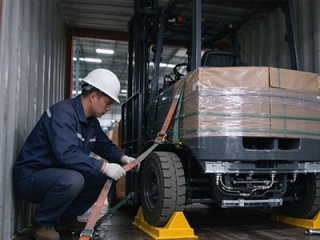 Full Container Supply For Export Forklifts, Forklift ManufacturerBulk forklift orders for overseas can ship by FCL or LCL. Newnewton FCL offers stable freight, safer packing and mixed models for large purchases.
Do you like ?0
Read more -
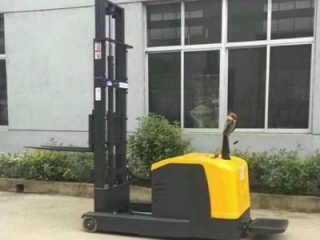 Stand-on Reach Stacker For Narrow Aisle Stacking, Mast Reach StructureStand-on reach stackers feature sliding masts that stay outside racks. They boost storage density in narrow aisles and require flat floors and standard pallets.
Do you like ?0
Read more -
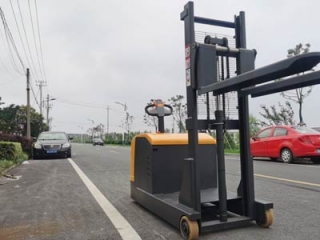 Stand-on Counterbalance Stacker For Various Pallets, Why No Leg RestrictionCounterbalance stackers have no front outriggers, using rear counterweight to avoid pallet interference. They fit various odd pallets yet need wider warehouse aisles.
Do you like ?0
Read more -
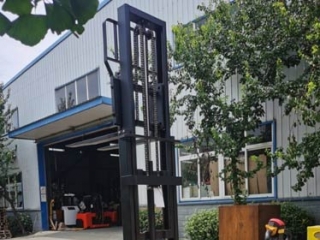 Custom Walk-Behind Counterbalance Stacker | Non-Standard ModificationsStandard walk-behind counterbalance stackers struggle with non-standard pallets and tight aisles. Customize load, lift, forks and structure, share working conditions for safe design.
Do you like ?0
Read more