How Much Is A Stand-on Electric Stacker? Complete Pricing Guide
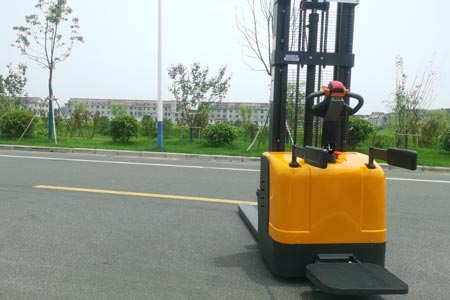
Many buyers simply assume stacker price only depends on load capacity. In fact, multiple factors create price gaps of thousands of dollars for the Small Electric Stacker, including lifting height, mast design, battery, controller and frame material. Master these pricing rules to avoid overspending.
1. Load Capacity (Base Price Difference)
Every 0.5-ton load increase raises production cost by 10%-15%, as tonnage defines frame thickness, cylinder size and motor power.
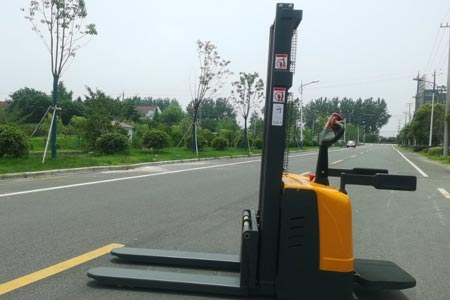
1-ton light model: Thin frame & simplified hydraulic system, lowest factory price for light goods and low racks.
1.5-ton mainstream model: Reinforced mast and cylinders, $138–$345 higher than 1-ton units, bestseller for small warehouses.
2-ton heavy-duty model: Upgraded steel, pump and drive motor, extra $276–$483 above 1.5-ton models, no deformation under full loads long-term.
2. Lifting Height (Easily Overlooked Cost Factor)
Same load capacity costs more with higher lift, with larger price gaps than tonnage differences.
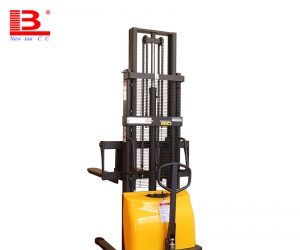
2–3m two-stage mast: Standard basic model with the lowest price.
3.5–4.5m triple full-free mast: Extended mast profiles, dual cylinders and thick lifting chains. Every extra meter adds $207–$414. Most buyers only compare tonnage while ignoring lift height, leading to incomparable quotations.
3. Battery Type (Major Cost Variable)
Batteries account for over 20% of total machine cost, with obvious gaps between lead-acid and lithium versions:
Lead-acid battery: Cost-effective standard option, suitable for daily 4-hour shifts.
Lithium battery: Maintenance-free, fast charging and longer lifespan, extra $110–$276 upgrade cost, ideal for two-shift high-frequency operation.
4. Controller & Frame Configuration (Quality Price Gap)
Controller: Cheap domestic standard controllers; imported CURTIS PWM controllers deliver smooth startup and fewer faults, costing extra around $138.
Body structure: Straddle leg models cost less; legless narrow aisle customized trucks require new molds with higher prices.
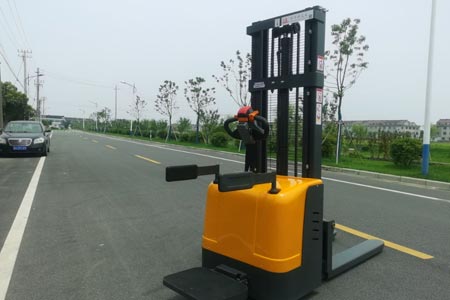
Hydraulic parts: Thickened cylinders, imported oil seals and anti-leak valves cost hundreds to over a thousand dollars more than basic hydraulic systems.
5. Channel Price Gap: 25% Difference Between Factory & Dealers
Identical models sold by dealers carry layered markups, usually $276–$414 more than direct factory prices. Our Taixing workshop manufactures and sells directly without middleman premium, factory price available for single-unit orders.
If you are wondering How Much Is A Stand-on Electric Stacker, calculate the price range by adjusting for the above factors to avoid overpaying during procurement.
-
 Reliability Of Newnewton Warehouse Forklifts For Heavy-Duty ShiftsWarehouse forklift reliability relies on industrial parts, reinforced frames and factory durability tests. Proper operation and maintenance reduce unexpected downtime.
Do you like ?0
Read more -
 Forklift Configuration Strategy For Dense Warehousing, Warehouse ForkliftDense warehousing needs matched forklifts besides racks. Reach and trilateral stackers fit different layouts, coordinate aisle, load curve and floor for smooth handling.
Do you like ?0
Read more -
 Full Container Supply For Export Forklifts, Forklift ManufacturerBulk forklift orders for overseas can ship by FCL or LCL. Newnewton FCL offers stable freight, safer packing and mixed models for large purchases.
Do you like ?0
Read more -
 Stand-on Reach Stacker For Narrow Aisle Stacking, Mast Reach StructureStand-on reach stackers feature sliding masts that stay outside racks. They boost storage density in narrow aisles and require flat floors and standard pallets.
Do you like ?0
Read more -
 Stand-on Counterbalance Stacker For Various Pallets, Why No Leg RestrictionCounterbalance stackers have no front outriggers, using rear counterweight to avoid pallet interference. They fit various odd pallets yet need wider warehouse aisles.
Do you like ?0
Read more -
 Custom Walk-Behind Counterbalance Stacker | Non-Standard ModificationsStandard walk-behind counterbalance stackers struggle with non-standard pallets and tight aisles. Customize load, lift, forks and structure, share working conditions for safe design.
Do you like ?0
Read more