
GB3836-2021 Standard Explosion Proof Forklift Grade Price Difference Analysis
Facilities including chemical warehouses, coating plants, pharmaceutical factories and powder hazardous material storage must deploy certified explosion-proof forklifts. Many buyers ask How Much Is An Explosion Proof Forklift, and this article breaks down tiered Electric Explosion Proof Forklift Price gaps based on different explosion-proof grades. It helps you avoid two major procurement pitfalls: overspending on unnecessarily high explosion grades, or buying low-cost unqualified units with hidden safety risks.
All data complies with GB3836-2021 Explosive Atmospheres Standard and GB/T19854-2018 Industrial Vehicles For Explosive Environments. We analyze hardware configurations, cost gaps and matching chemical working scenarios by hazard zone classification and gas group grading, enabling precise condition matching and controlled procurement budgets.
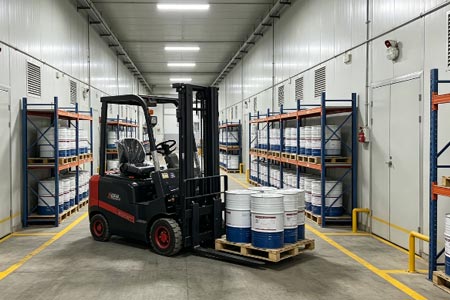
1. Hazard Zone Classification: Zone 2 vs Zone 1, Price Gap 20%–35%
Zone 2 Basic Explosion Proof (General Finished Chemical Warehouses)
Applicable scenarios: Flammable gas only leaks briefly under abnormal faults; finished chemical storage, raw material outer stacking zones, peripheral areas of regular paint warehouses with low explosion risk. Standard hardware configuration: Basic flameproof electric control box, sealed wiring harness, anti-static tires, explosion-proof switches, simplified explosion-proof motor without multi-point temperature monitoring. Price benchmark: Lithium electric explosion-proof forklifts of the same tonnage take Zone 2 models as the base price floor.
Zone 1 High-grade Explosion Proof (Production & Blending Workshops)
Applicable scenarios: Solvents, alcohol and ink volatilize frequently during normal production; paint mixing rooms, electrolyte filling zones, hazardous material packaging aisles with constant explosive gas mixtures. Upgraded explosion-proof hardware: Full intrinsic safety circuit design, double-layer flameproof enclosures, isolated explosion-proof battery compartments, multi-point over-temperature power-off protection, real-time static discharge devices, full IP65 sealed protection. Price gap explanation: Identical tonnage & configuration Zone 1 units cost 20%–35% more than Zone 2 versions. All motors, controllers and battery compartments adopt reinforced explosion-proof structures, with double explosion-proof testing procedures leading to substantially higher production costs.
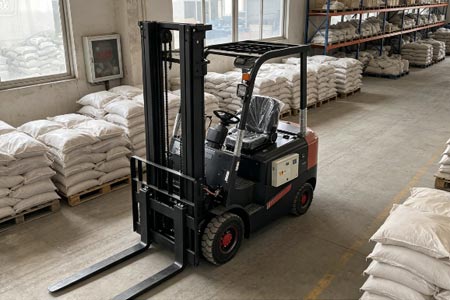
2. Gas Group Grading: IIA < IIB < IIC, Price Gap 15%–40%
Gas groups represent the ignition transmission risk of combustible gases; higher grades require stricter structural protection with incremental price hikes:
IIA (Propane, kerosene, low risk) Mainly for conventional oil storage, basic simplified explosion-proof structure with the lowest cost; roughly 15% cheaper than IIB grade forklifts.
IIB (Ethylene, ethanol, coating solvents, mainstream chemical standard) Default specification for over 90% chemical warehouses, balanced cost and explosion-proof performance as the most cost-effective mainstream grade.
IIC (Hydrogen, acetylene, ultra-high hazard) Exclusive for lithium electrolyte workshops and hydrogen production warehouses, equipped with thickened flameproof casings and full intrinsic safety wiring. Same-tonnage IIC forklifts cost 30%–40% higher than IIB models due to expensive customized explosion-proof spare parts.
Supplementary Reminder
Multiple additional factors also affect the final Electric Explosion Proof Forklift Price, including load tonnage, mast height, lithium battery capacity and dust explosion-proof upgrades. We cannot list all cost variables due to length limits. If you have inquiries about pricing, certification matching or site selection rules for hazardous warehouses, contact us for one-on-one detailed technical quotation and scheme support.
-
 Reliability Of Newnewton Warehouse Forklifts For Heavy-Duty ShiftsWarehouse forklift reliability relies on industrial parts, reinforced frames and factory durability tests. Proper operation and maintenance reduce unexpected downtime.
Do you like ?0
Read more -
 Forklift Configuration Strategy For Dense Warehousing, Warehouse ForkliftDense warehousing needs matched forklifts besides racks. Reach and trilateral stackers fit different layouts, coordinate aisle, load curve and floor for smooth handling.
Do you like ?0
Read more -
 Full Container Supply For Export Forklifts, Forklift ManufacturerBulk forklift orders for overseas can ship by FCL or LCL. Newnewton FCL offers stable freight, safer packing and mixed models for large purchases.
Do you like ?0
Read more -
 Stand-on Reach Stacker For Narrow Aisle Stacking, Mast Reach StructureStand-on reach stackers feature sliding masts that stay outside racks. They boost storage density in narrow aisles and require flat floors and standard pallets.
Do you like ?0
Read more -
 Stand-on Counterbalance Stacker For Various Pallets, Why No Leg RestrictionCounterbalance stackers have no front outriggers, using rear counterweight to avoid pallet interference. They fit various odd pallets yet need wider warehouse aisles.
Do you like ?0
Read more -
 Custom Walk-Behind Counterbalance Stacker | Non-Standard ModificationsStandard walk-behind counterbalance stackers struggle with non-standard pallets and tight aisles. Customize load, lift, forks and structure, share working conditions for safe design.
Do you like ?0
Read more








