Which forklift is best for workshop material handling? Let’s find out.
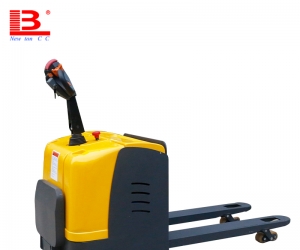
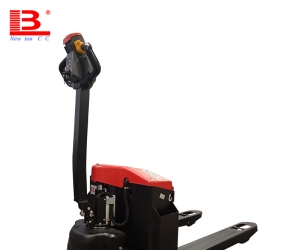
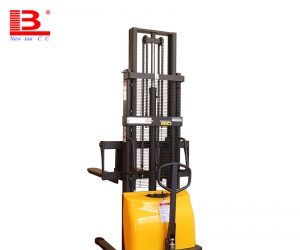
Many workshops have narrow aisles, with goods and production lines taking up most of the space. Choosing the right forklift for material handling can be a real challenge. It’s understandable—with limited room to maneuver, figuring out efficient transport is no easy task. Today we’ll introduce the 2‑ton fully electric walkie stacker, designed to make workshop material handling simpler and more efficient.

This walkie stacker for workshop material handling combines stacking and transporting in one unit. Its walk‑behind design keeps the body narrow and highly maneuverable, allowing safe, stable operation even in tight workshop areas. With normal operation, there is little risk of collisions or damage.
For small‑to‑medium workshops and warehouses, load sizes and weights are typically moderate. A 2‑ton capacity offers the ideal balance: it handles most common stacking and transport jobs while keeping equipment cost and efficiency well‑aligned.
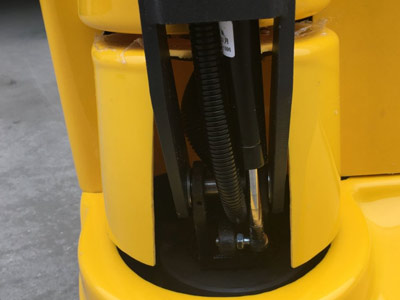
This model also boasts premium construction features, including heavy‑duty structural steel, a compact integrated casting design, multi‑layer plate chains, and a vertical drive motor. These details reflect its strong build quality and reliable performance.
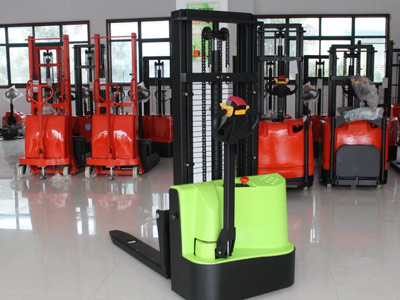
In short, if you handle materials in workshops and need to move and stack loads both inside and outside the warehouse, this fully electric stacker for small spaces delivers excellent value. It’s a cost‑effective solution perfectly matched to tight working environments—an investment you won’t regret.
-
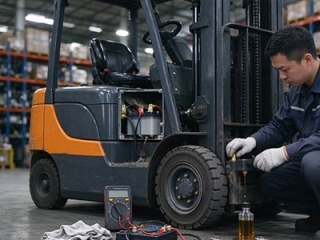 Reliability Of Newnewton Warehouse Forklifts For Heavy-Duty ShiftsWarehouse forklift reliability relies on industrial parts, reinforced frames and factory durability tests. Proper operation and maintenance reduce unexpected downtime.
Do you like ?0
Read more -
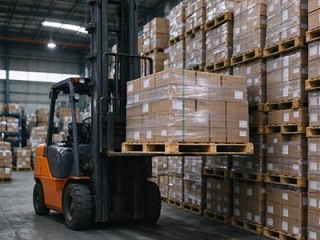 Forklift Configuration Strategy For Dense Warehousing, Warehouse ForkliftDense warehousing needs matched forklifts besides racks. Reach and trilateral stackers fit different layouts, coordinate aisle, load curve and floor for smooth handling.
Do you like ?0
Read more -
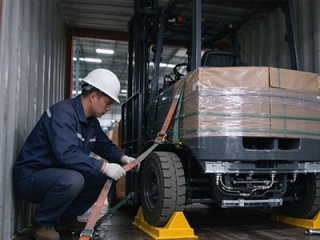 Full Container Supply For Export Forklifts, Forklift ManufacturerBulk forklift orders for overseas can ship by FCL or LCL. Newnewton FCL offers stable freight, safer packing and mixed models for large purchases.
Do you like ?0
Read more -
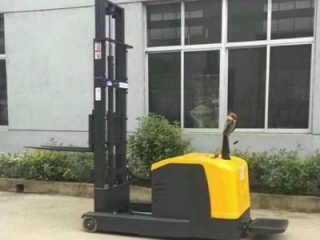 Stand-on Reach Stacker For Narrow Aisle Stacking, Mast Reach StructureStand-on reach stackers feature sliding masts that stay outside racks. They boost storage density in narrow aisles and require flat floors and standard pallets.
Do you like ?0
Read more -
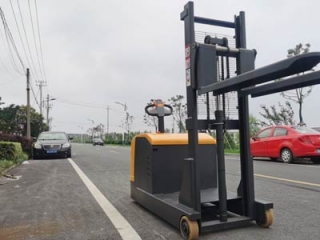 Stand-on Counterbalance Stacker For Various Pallets, Why No Leg RestrictionCounterbalance stackers have no front outriggers, using rear counterweight to avoid pallet interference. They fit various odd pallets yet need wider warehouse aisles.
Do you like ?0
Read more -
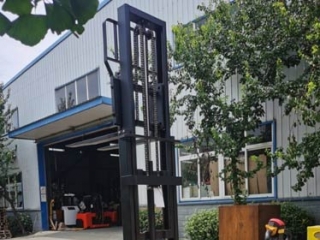 Custom Walk-Behind Counterbalance Stacker | Non-Standard ModificationsStandard walk-behind counterbalance stackers struggle with non-standard pallets and tight aisles. Customize load, lift, forks and structure, share working conditions for safe design.
Do you like ?0
Read more